
How Ultherapy and Thermage Actually Work
Before diving into prices and protocols, it is essential to understand the science behind each device. Both stimulate collagen production, but they use completely different forms of energy delivered to different anatomical layers. This distinction is critical when determining which treatment — or which combination — suits your specific skin concerns.
Ulthera (超声刀): Micro-Focused Ultrasound with Visualization (MFU-V)
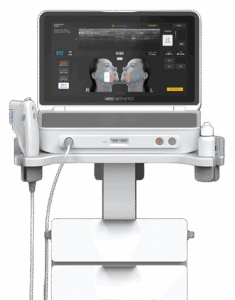
Ulthera is the only FDA-cleared non-invasive procedure that uses micro-focused ultrasound energy to lift and tighten skin on the face, neck, and chest. The device delivers precise thermal energy to depths of 1.5 mm, 3.0 mm, and 4.5 mm — the deepest of which reaches the SMAS (Superficial Muscular Aponeurotic System), the same tissue layer surgeons manipulate during a traditional facelift.
The “visualization” component is critical. Ulthera includes real-time ultrasound imaging that allows the physician to see the tissue layers being targeted. This means the doctor can identify optimal depth and skip areas with insufficient tissue (such as over bony prominences), reducing unnecessary pain and nerve-injury risk. No other non-invasive lifting device offers this real-time anatomical guidance.
Each pulse creates a tiny thermal coagulation point (TCP), heating tissue to 60–70°C. This controlled thermal injury triggers neocollagenesis — new collagen production over 2–6 months, resulting in gradual lifting and firming. A full-face treatment typically involves 600–800 lines across multiple transducer depths. Korean clinics customize line counts and depth combos based on individual anatomy, especially for the thinner subcutaneous fat layer common in East Asian patients.
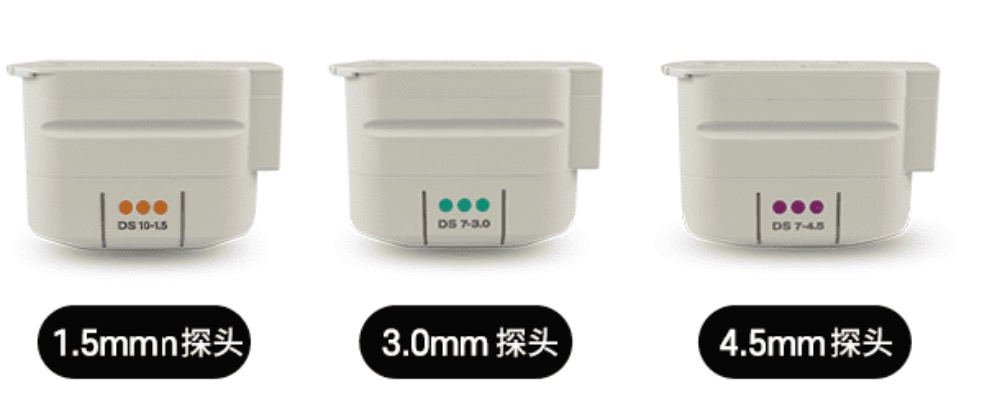
Energy: Micro-focused ultrasound (MFU-V) • Depth: 1.5 / 3.0 / 4.5 mm • Target: SMAS + deep dermis
FDA clearance: Lift (not just tightening) • Session: 60–90 min (full face) • Peak results: 3–6 months post
Thermage FLX (热玛吉): Monopolar Radiofrequency
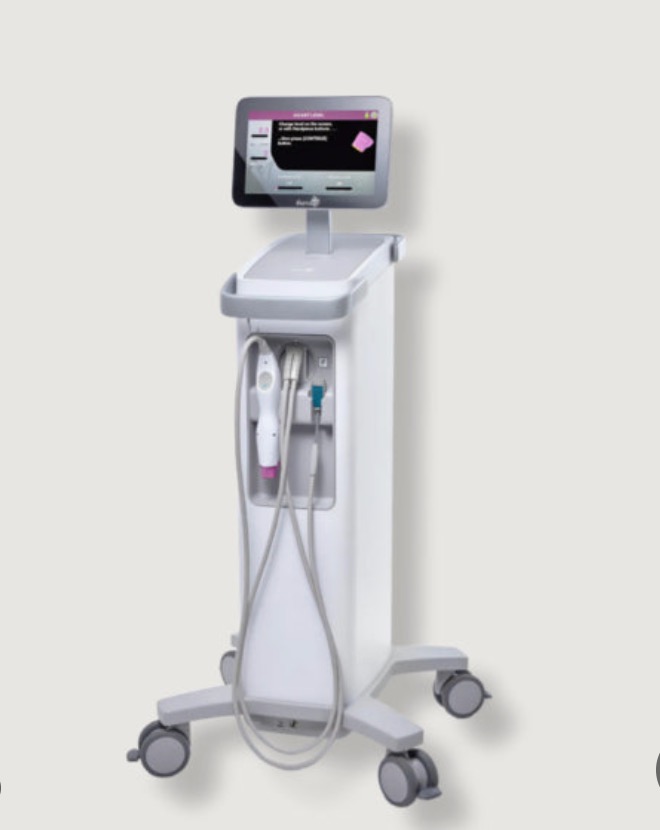
Thermage FLX uses monopolar radiofrequency (RF) energy to heat the full thickness of the dermis, primarily targeting depths of 2.4–3.0 mm. Unlike Ulthera’s tiny focused points, Thermage delivers a broader, volumetric heating pattern across a larger surface area per pulse. This makes it exceptionally effective for overall skin tightening, texture refinement, and contouring.
The “FLX” generation (4th-gen) introduced the AccuREP™ algorithm, which automatically adjusts energy delivery based on the impedance of each specific skin area. It also features a larger 4.0 cm² tip (versus the older 3.0 cm²), cutting treatment time by roughly 25% while covering more surface area per pulse.
Thermage FLX delivers immediate collagen contraction (visible tightening on the day of treatment) followed by long-term collagen remodeling over 3–6 months. It excels at treating jawline definition, cheek contouring, periorbital skin (around the eyes), and body areas like the abdomen and upper arms — areas where Ulthera is less commonly applied.
Energy: Monopolar RF • Depth: 2.4–3.0 mm (full-thickness dermis) • Target: Dermis + subdermal collagen
Tip size: 4.0 cm² • Session: 30–45 min (full face) • Immediate tightening + progressive 3–6 month improvement
Head-to-Head Comparison: Ulthera vs Thermage FLX
The following table summarizes the fundamental differences. Understanding these distinctions will help you determine which treatment — or combination — is most appropriate for your goals.
| Feature | Ulthera (超声刀) | Thermage FLX (热玛吉) |
|---|---|---|
| Energy Type | Micro-focused ultrasound (MFU-V) | Monopolar radiofrequency (RF) |
| Primary Depth | 1.5 / 3.0 / 4.5 mm (reaches SMAS) | 2.4–3.0 mm (full dermis) |
| Primary Effect | Deep lifting & structural tightening | Surface tightening & contouring |
| FDA Clearance | Non-invasive lift | Non-invasive tightening |
| Pain Level | Moderate–high (5–7/10) | Mild–moderate (3–4/10) |
| Session Time | 60–90 min | 30–45 min |
| Result Onset | Gradual over 3–6 months | Immediate + progressive 3–6 mo |
| Duration | 12–18 months | 12–24 months |
| Best For | Sagging brows, nasolabial folds, neck, jowls | Jawline, cheek contour, eye area, body |
| Downtime | Minimal (slight redness 1–2 hrs) | None to minimal |
2026 Korea Pricing Guide
Korea remains one of the most cost-effective destinations for premium non-surgical treatments. Below are realistic price ranges from reputable Seoul-area dermatology clinics as of early 2026. Prices vary based on shot count, treatment area, and clinic tier.
| Treatment | KRW Range | USD Approx. | Notes |
|---|---|---|---|
| Ulthera – Full Face | 800,000–2,500,000 | $580–1,800 | 600–800 lines typical |
| Ulthera – Neck Only | 400,000–1,200,000 | $290–870 | 200–300 lines |
| Thermage FLX – 900 shots | 1,200,000–3,000,000 | $870–2,170 | Full face standard |
| Thermage FLX – 600 shots | 800,000–1,800,000 | $580–1,300 | Lower face / eyes only |
| Thermage FLX – Body (1200 shots) | 2,000,000–4,000,000 | $1,450–2,900 | Abdomen / arms |
| Combo (Ulthera + Thermage FLX) | 1,800,000–4,500,000 | $1,300–3,260 | Most popular 2026 package |
Who Should Choose Which? Ideal Candidate Guide
Choose Ulthera If You…
- Have noticeable skin laxity or sagging — particularly along the jawline, under the chin, or on the neck. Ulthera’s ability to reach the SMAS layer provides structural lifting that RF cannot match.
- Want brow lifting — Ulthera is the only non-surgical device FDA-cleared specifically for brow lifting.
- Are in your late 30s to 50s with moderate laxity and willing to tolerate a more intense treatment for deeper results.
- Don’t mind waiting for results — peak improvement develops gradually over 3–6 months.
- Want to address nasolabial folds and neck bands non-surgically.
Choose Thermage FLX If You…
- Want overall tightening and contouring rather than deep structural lifting. Thermage excels at improving skin texture, reducing pore size, and refining facial contours.
- Have mild to moderate laxity and are looking for preventive maintenance (common among patients in their late 20s to early 40s).
- Prioritize comfort — Thermage FLX is significantly less painful than Ulthera.
- Need body treatment — abdomen, arms, or thighs (Ulthera is primarily facial/neck).
- Want immediate visible results on treatment day with continued improvement over months.
- Have periorbital concerns — the specialized 0.25 cm² eye tip is designed specifically for delicate eye-area skin.
The 2026 Korean Combo Protocol: Ulthera + Thermage FLX
The dual-device combo has become one of the most requested treatment plans at top-tier Korean dermatology clinics. Here is the standard protocol followed by leading Seoul clinics:
The physician evaluates skin thickness, fat distribution, bone structure, and degree of laxity using manual assessment and sometimes ultrasound imaging. A customized treatment plan is created specifying energy levels, line counts (Ulthera), shot counts (Thermage), and targeted depths for each facial zone.
The Ulthera session addresses deep lifting needs first: SMAS-layer treatment (4.5 mm transducer) on cheeks and jawline, deep dermal treatment (3.0 mm) across the mid-face, and superficial treatment (1.5 mm) on the forehead and perioral area. Topical numbing is applied 45–60 minutes before. Full-face treatment takes 60–90 minutes.
The skin begins its collagen-remodeling response from Ulthera before Thermage is applied. Strict sun protection (SPF 50+), gentle moisturizing, and avoidance of exfoliating acids or retinols is recommended during this period.
The Thermage session targets superficial dermal tightening and contouring. The AccuREP algorithm optimizes energy per pulse. The 900-shot full-face protocol takes 30–45 minutes and is significantly more comfortable than Ulthera. Body areas can be treated in the same session.
Korean dermatologists recommend annual maintenance: a single Thermage FLX session every 12 months or a mini combo (reduced Ulthera lines + Thermage) every 18 months. Starting maintenance early preserves cumulative collagen gains and delays surgical intervention by years.
Real Results: Before & After
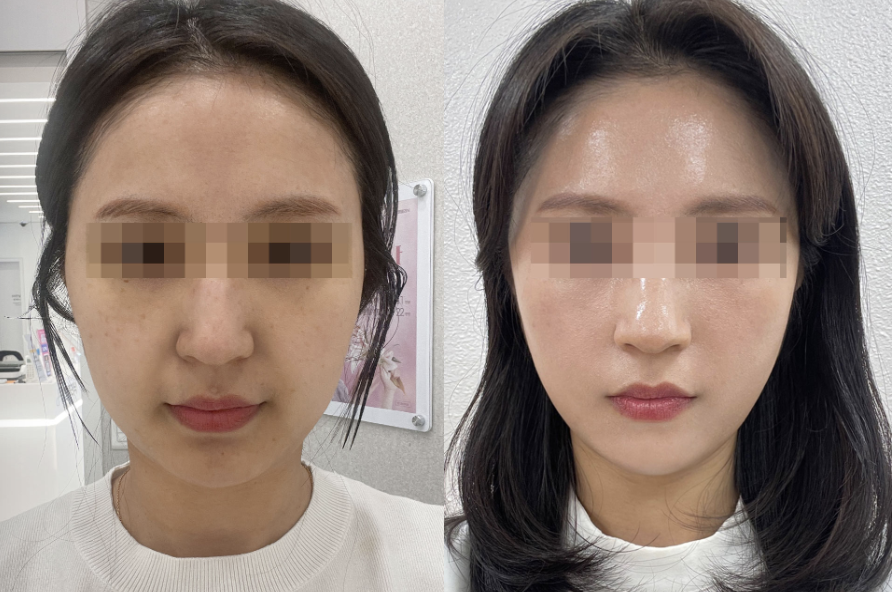
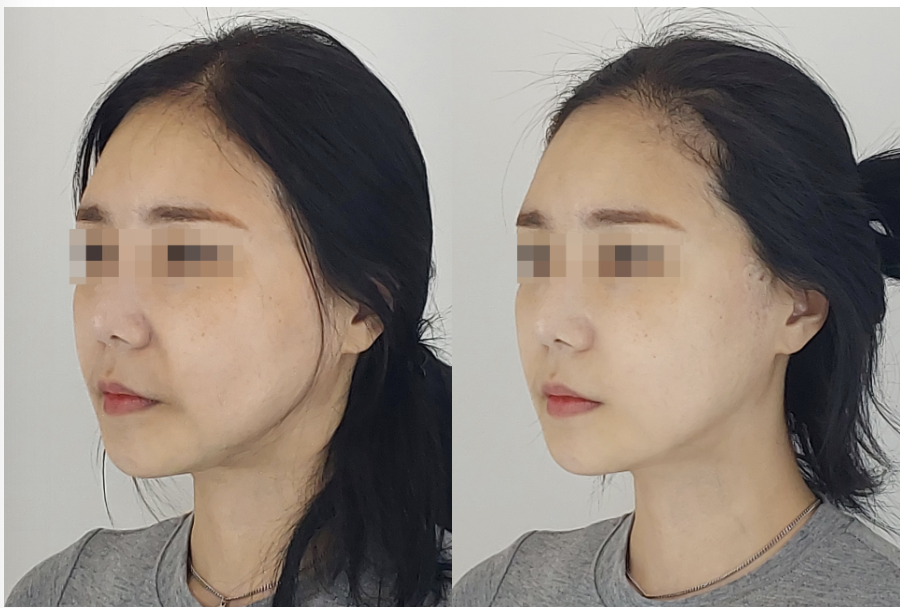
The following before-and-after images show typical results achievable with Ultherapy and Thermage FLX treatments at Korean clinics. Individual results may vary depending on skin condition, age, treatment protocol, and aftercare compliance.
Pitfalls to Avoid: The 5 Most Common Mistakes
The cheapest clinic is rarely the best value. Below-market prices often mean counterfeit devices, recycled tips (Thermage), or reduced line counts (Ulthera). A “600-line Ulthera” at a budget clinic may actually deliver only 300 genuine lines.
Counterfeit Ulthera machines and re-used Thermage tips are a real problem. Always ask to see the device’s certification hologram and watch the tip/cartridge being unsealed from its original packaging.
Neither Ulthera nor Thermage can replicate a facelift. They are best for mild-to-moderate laxity. If you have significant sagging (Grade III–IV), a surgical consultation may be more appropriate.
Both devices are highly operator-dependent. The same Ulthera machine can produce dramatically different results depending on the physician’s skill. Always research the treating doctor’s experience, not just the clinic brand.
Poor aftercare can significantly diminish results. UV exposure accelerates collagen breakdown, harsh skincare disrupts healing, and dehydration impairs remodeling. Follow your clinic’s aftercare protocol strictly for 4–6 weeks.
How to Verify Genuine Devices at Korean Clinics
Device authenticity is one of the most important factors in treatment safety and efficacy.
Verifying Genuine Ulthera
- Hologram sticker — Look for the official Merz-certified hologram on the device body. It should be tamper-evident.
- Transducer serial numbers — Each transducer has a unique serial. Ask the clinic to show you and verify it matches purchase records.
- Real-time visualization screen — Genuine Ulthera displays ultrasound images of tissue layers during treatment. A static image or turned-away screen is a red flag.
- Startup screen — Authentic Ulthera displays the official Merz/Ulthera logo and software version on boot-up.
Verifying Genuine Thermage FLX
- Tip box hologram — Solta Medical places a holographic security seal on every genuine tip box. Ask to see the box before opening.
- Sealed packaging — Insist on watching the tip unsealed from its original shrink-wrap. Never accept a pre-loaded tip.
- Shot counter — The machine displays remaining shots. A genuine 900-shot tip starts at exactly 900.
- Machine screen — The official Thermage FLX startup screen shows the Solta Medical logo and “FLX” designation.
Recovery Timeline & Aftercare Protocol
Understanding the recovery process helps you set realistic expectations and maximize results.
After Ulthera
- Day 0–1: Mild redness and slight swelling. Some tenderness or “sunburn-like” sensation. Resolves within hours for most.
- Week 1–2: Minor tingling or numbness in treated areas is normal. Continue gentle skincare and strict SPF 50+.
- Month 1–2: Initial subtle tightening. Collagen remodeling actively occurring beneath the skin.
- Month 3–6: Peak results. Most patients notice the greatest improvement — lifted brows, defined jawline, smoother neck.
- Month 6–18: Results gradually stabilize. Maintenance recommended at 12–18 months.
After Thermage FLX
- Day 0: Immediate mild tightening visible. No significant downtime. Makeup and normal activities same day.
- Week 1–4: Progressive improvement as collagen contracts and remodels.
- Month 1–3: Noticeable texture improvement, jawline definition, pore refinement.
- Month 3–6: Continued collagen production delivers peak results.
- Month 12–24: Results gradually diminish. Annual maintenance recommended.
1. Apply SPF 50+ sunscreen daily for at least 4 weeks
2. Avoid saunas, hot yoga, and intense exercise for 48 hours
3. Stop retinols, AHAs/BHAs, and vitamin C serums for 1 week pre and post treatment
4. Hydrate aggressively — hyaluronic acid serum + ceramide moisturizer
5. Do not undergo other energy-based treatments (laser, IPL) for at least 4 weeks
6. Sleep on your back if possible for the first 2–3 nights to minimize swelling
Side Effects & Risk Comparison
| Side Effect | Ulthera | Thermage FLX |
|---|---|---|
| Redness | Mild, 1–2 hours | Minimal to none |
| Swelling | Mild, 1–3 days | Rare |
| Bruising | Rare but possible | Very rare |
| Numbness / Tingling | Possible, resolves 1–6 weeks | Rare |
| Nerve Injury | Very rare (<0.1%), temporary | Extremely rare |
| Burns | Very rare with proper technique | Very rare (AccuREP reduces risk) |
| Fat Loss | Possible if over-treated on thin areas | Rare |
How to Choose the Right Korean Clinic
Selecting the right clinic is just as important as choosing the right device. Here are the key factors:
- Board-certified dermatologist or plastic surgeon — Ensure the treating doctor holds Korean board certification. Korea has strict licensing requirements.
- Device-specific case volume — Ask how many Ulthera/Thermage procedures the doctor performs monthly. High-volume (50+ cases/month) practitioners deliver more consistent results.
- Before-and-after photos — Request the clinic’s own portfolio, not stock images. Look for consistent angles/lighting with 3–6 month follow-ups.
- Transparent pricing — Reputable clinics provide clear, itemized quotes. Beware of deals that seem too good to be true.
- Foreign patient support — If you don’t speak Korean, confirm experienced medical interpreters (not basic translators) are available.
- Location and accreditation — Clinics in Gangnam’s medical district tend to have higher device volumes. Look for KGMP or JCI accreditation as quality indicators.
Frequently Asked Questions
Is Ultherapy or Thermage more painful?
Ultherapy is generally more intense because it targets deeper tissue layers. Most patients rate it 5–7 out of 10, though Korean clinics commonly provide numbing cream, nerve blocks, or light sedation. Thermage FLX, with its built-in vibration and comfort pulse technology, is significantly gentler — most patients rate it 3–4 out of 10.
How much does Ultherapy cost in Korea compared to Thermage?
Full-face Ulthera: 800,000–2,500,000 KRW ($580–$1,800). Full-face Thermage FLX 900 shots: 1,200,000–3,000,000 KRW ($870–$2,170). Combo packages: 1,800,000–4,500,000 KRW. These prices are 40–60% lower than equivalent treatments in the US, UK, or Australia.
Can I get both treatments together?
Absolutely — the Ulthera + Thermage FLX combo is one of the most popular protocols in Korean clinics. Ulthera targets the deep SMAS layer first, followed by Thermage FLX 2–4 weeks later for superficial tightening. This dual-layer approach delivers synergistic results.
How long do results last?
Ulthera results peak at 3–6 months and typically last 12–18 months. Thermage FLX results appear sooner (within weeks) and last 12–24 months. Annual maintenance sessions are recommended to sustain collagen remodeling benefits.
How do I verify a Korean clinic uses genuine devices?
For Ulthera: check the Merz-certified hologram, verify transducer serials, confirm the visualization screen shows real-time imaging. For Thermage FLX: inspect the Solta Medical hologram on the tip box, watch the tip being unsealed, verify the shot counter starts correctly. BeautsGo partner clinics are pre-verified.
Ready to Start Your Skin Tightening Journey?
BeautsGo connects you with verified Korean dermatology clinics offering genuine Ulthera and Thermage FLX treatments at transparent prices. Your first consultation is 100% free.
BeautsGo — Your beauty journey starts with one free consultation