
Want to go to Korea to have two-jaw surgery, but are confused by the two suggestions: “Wear braces for more than a year first” and “You can have surgery first”? What really needs to be compared is: can the current position of the teeth support surgical planning, and who is responsible for adjusting the bite into place after surgery. For those who live overseas for a long time, Make arrangements for orthodontic consultations and follow-up consultations before surgery , is as important as choosing a surgeon.
1. Three treatment pathways—and why the order matters
| path | What to do first | Post-operative tasks | A situation suitable for discussion |
|---|---|---|---|
| Orthodontics first, then surgery | Align and adjust tooth inclination and dental arch to create conditions for jaw movement | Continue orthodontics and finely adjust the contact between upper and lower teeth | Preoperative dentition requires more preparation; holiday length cannot be used as a substitute for diagnosis |
| Surgery first, then orthodontics | Orthodontics and surgery plan together, first adjusting the skeletal relationship | Undertake more dentition adjustment work and continue to observe occlusion and skeletal stability | The dentition and occlusal conditions are approved by the team’s evaluation and can cooperate with subsequent treatment. |
| Short-term pre-operative orthodontics and re-operation | Solve key dental problems that affect surgery first | The rest of the adjustments continue after surgery | Between the two, you need to ask what goals you want to achieve before surgery. |
“Surgery First” is not another bone-cutting program. Bi-jaw surgery usually involves adjustment of the maxillary and mandibular positions; single-jaw surgery, chin osteotomy, and zygomatic/mandibular angle contouring surgery address different issues. The treatment sequence and surgical scope must be written in the plan separately, and the combined name of “bijaw + contour” cannot be used as an occlusal diagnosis.
2. Who may be assessed for a surgery-first approach—and who needs caution?
People with less anterior crowding, more favorable tooth tilts, and more favorable occlusal curves are more likely to be evaluated for the surgical route first. Severe crowding, deep overbite, uncoordinated dental arch width, periodontal or temporomandibular joint problems will increase the difficulty of planning; these conditions cannot be eliminated by taking a selfie, nor can they be decided based on just three words: “the sky is too big”.
First, during the orthodontic process, the tilt of the teeth that originally masked the skeletal problem may be gradually corrected, and the facial shape and bite may sometimes temporarily appear more prominent. This requires preoperative explanation and does not automatically mean treatment failure. Conversely, surgery first may also require more complex postoperative adjustments; “faster” alone does not prove more stable. Relevant studies are not entirely consistent in their conclusions on stability, and case selection and treatment options will affect the results.
3. If you live overseas, arrange follow-up care before booking surgery
The most common thing to miss in cross-border treatment is not the air ticket, but the handover. Do not assume that any dentist will be willing to take over the orthodontic surgery that has already been started after returning to your country. It is recommended that the Korean surgeon, the orthodontic doctor and the receiving party in your place of residence confirm the same treatment plan before making payment.
| stage | What to get | Need clear responsibilities |
|---|---|---|
| before surgery | Diagnostic, imaging and dentition data; planned jaw movements; whether to extract teeth or use anchorage devices; estimated orthodontic path | Who approves the timing of surgery and who is responsible for postoperative tooth movement |
| Discharge and before leaving Korea | Operation records, fixation material information, medication and diet instructions, instructions for using bite splints or rubber bands, and follow-up dates | Who determines whether it is appropriate to return; which medical institution to contact in case of abnormalities |
| After returning home | Follow-up timetable, information delivery methods, fees and referral arrangements | Whether the local doctor has agreed to receive the treatment; what issues must be returned to the surgical hospital for treatment? |
| After orthodontic treatment | Retainer program and ongoing follow-up arrangements | Who evaluates bite, joint symptoms, and long-term stability |
Videos and photos are good for communication but are not a substitute for all intraoral exams, imaging, or brace adjustments. When regular follow-up visits are not possible, the treatment location or time schedule should be adjusted first, and it is not appropriate to fill the plan with “finding a doctor after returning home”.
4. Recovery follows three different timelines
Swelling reduction, bone healing, and completion of orthodontics are three different progresses. Improvement in appearance cannot be used as a basis for stopping follow-up visits. The following is a reference for itinerary planning. Personal discharge, return, diet and exercise times must be determined according to the instructions of the surgical team.
| stage | Common recovery points | itinerary |
|---|---|---|
| first few days | Swelling, restricted mouth opening, and swallowing discomfort; swelling is often more obvious on the 2nd to 3rd day | Reserve space for accompanying and follow-up consultations, and replenish water and nutrition as directed by the doctor |
| About 1-2 weeks | Wound, oral hygiene and bite examination; significant swelling gradually reduces | Complete the re-examination arranged by the hospital before leaving Korea, and the flight will not be automatically determined based on the suture removal date. |
| About 3-6 weeks | Gradually resume daily activities and diet; ability to chew will be determined by your doctor | Work intensity needs to be flexible, and avoid eating hard food or exercising strenuously in advance |
| The following months and beyond | Subtle swelling continues to change, orthodontics, bite and sensory recovery continue to be evaluated | Follow up your follow-up consultation according to your personal plan, and do not regard the time of postoperative photos as the length of treatment. |
5. Separate surgical and orthodontic costs
Having surgery first does not mean that you are exempt from orthodontic expenses. Please provide the hospital with separate information during the in-person consultation. Written quotation in Korean won, applicable period, included items and additional charging conditions . The total personal budget should also include out-of-town follow-up visits, accommodation, transportation and possible treatment extensions.
| Expenses | Specifications that must be written clearly | Easy to miss when comparing |
|---|---|---|
| Bone surgery | Single jaw/two-jaw, whether to add chin or contour; specific scope of surgery | The combination plan cannot be compared with the single jaw only for the total price. |
| Orthodontics | Whether preoperative and postoperative pricing are combined; type, adjustment, removal and retainer of braces | How to calculate transfer to hospital for re-examination, admission fee, and extended treatment |
| Preoperative planning | CT, dental scans, models, surgical guides and necessary examinations | Whether the initial consultation fee will be deducted, and whether repeated examinations will be charged separately |
| perioperative period | General anesthesia, immobilization materials, length of stay, medications and nursing care | Charge Boundaries for Extra Hospitalizations and Unplanned Treatments |
| Follow-up consultation and taxes | Number of follow-up visits, imaging reviews, applicable VAT and whether it is included | Don’t assume tax refunds, tax exemptions or free cross-border follow-up visits |
Before paying, you should also check: if you change to orthodontics first after the examination, what will happen to the paid surgery? How will you get a refund if the surgery is postponed or canceled? Whether the orthodontic expenses in Korea and the place of residence are settled separately. The package amount without complete diagnosis cannot replace the individual complete treatment quotation.
6. Real cases from four hospitals
Faceline: combined two-jaw and facial-contouring planning


ID: no-tie two-jaw surgery and combined facial contouring
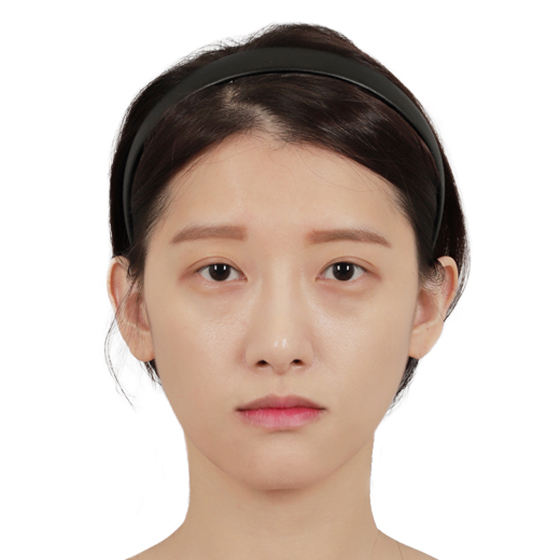


Wonjin Plastic Surgery: two-jaw and orthognathic cases


1% Plastic Surgery: Orthognathic and custom V-line combination
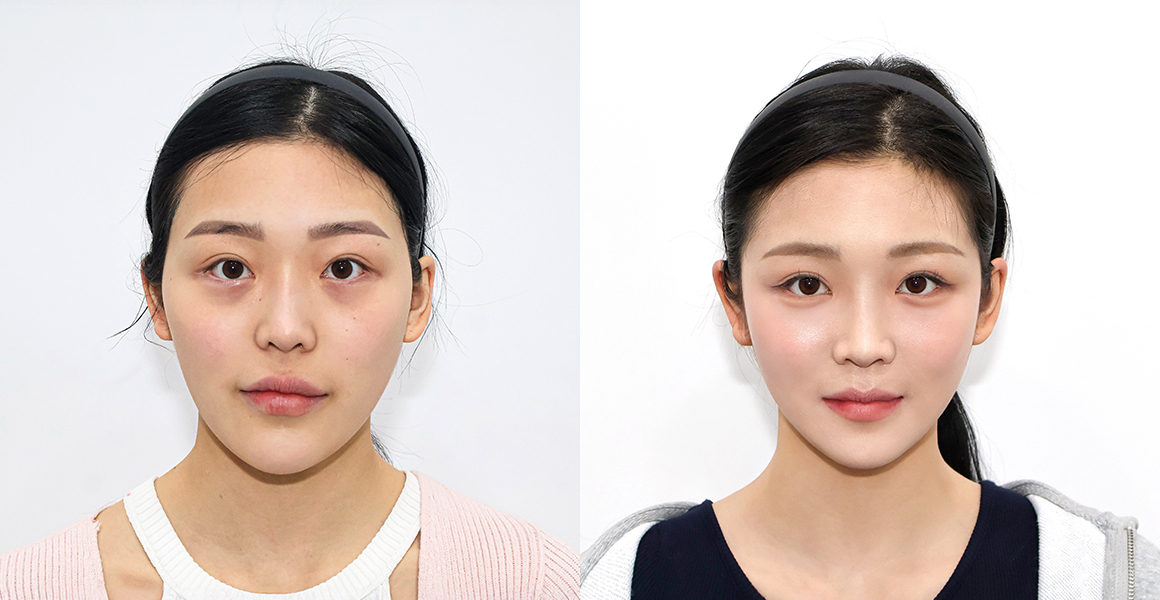
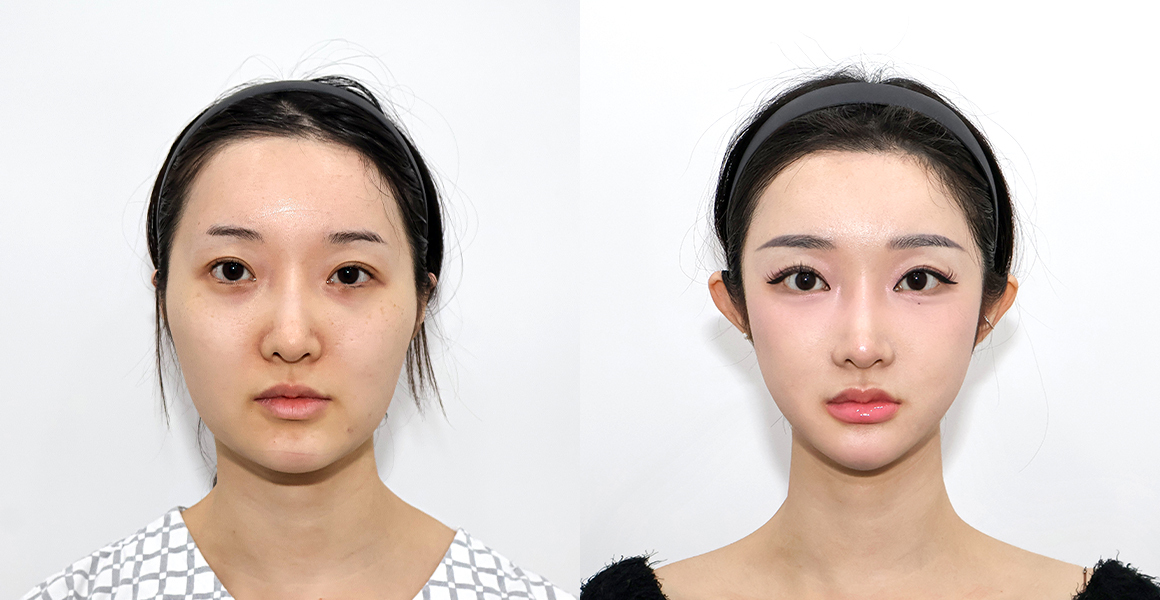
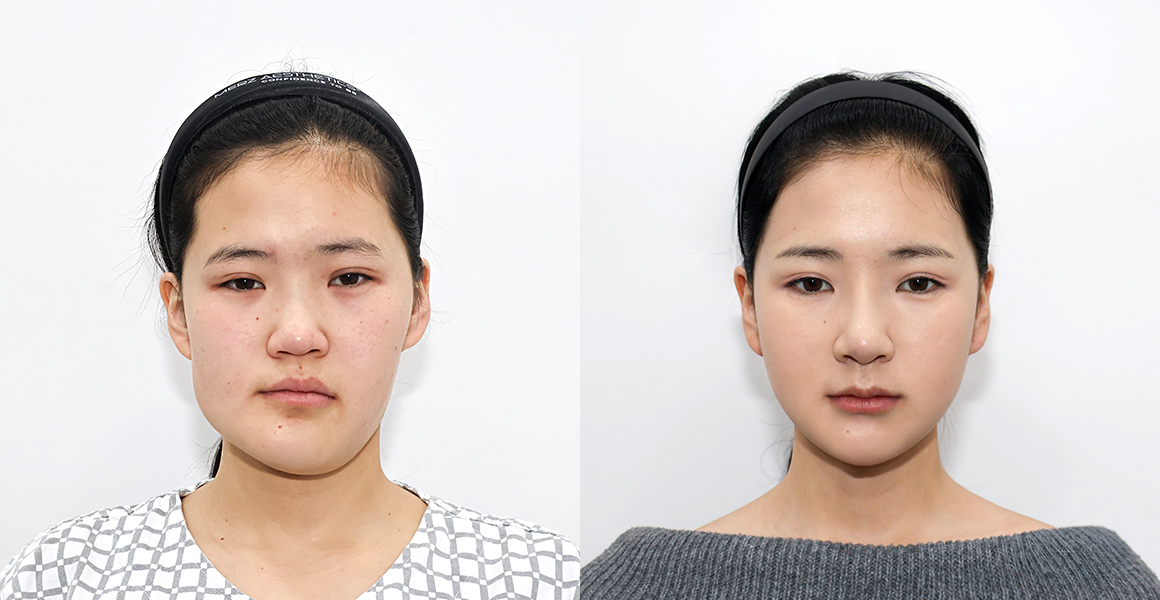

Most of these cases include a combination of contour, eye, or soft tissue items. The facial changes cannot all be attributed to both jaws, and it cannot be used to determine whether orthodontics or surgery comes first. “No ligation” and “surgery first” are not the same concepts. Cases can only observe individual morphological changes and cannot prove that the bite has been stabilized or that orthodontics has been completed.
7. Four hospitals’ surgical approaches, explained in plain language

Faceline Plastic Surgery: assess the bite first, then decide whether facial contouring should be combined
The characteristic of Faceline is that the jaws and facial contours are placed in the same “skeletal proportion picture”. For example, if a person has a protruding mouth from the side, a wide front face, and a significant angle in the lower half of the face, the doctor will first distinguish: the protruding mouth comes from the position of the upper jaw or mandible, or from the forward tilt of the teeth; the front face width comes from the cheekbones, or the angle of the mandible; whether the chin is short or deviated requires separate treatment. The value of doing this is to avoid putting all the problems into the word “two-jaw”.

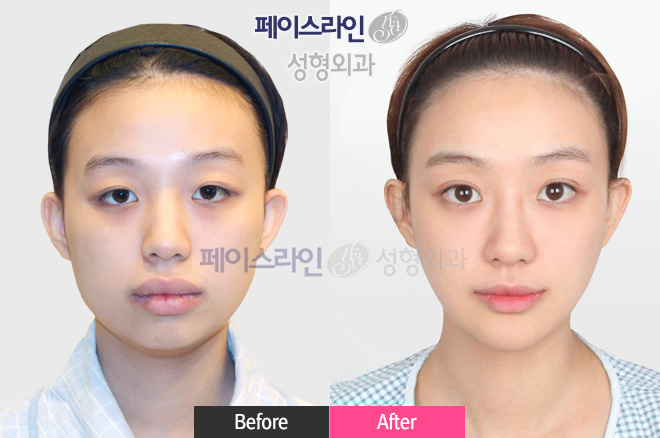
For hospital use Smart Two-Jaw Surgery, JSRO and other branded procedure names, but these names alone cannot tell the reader exactly how to cut, how much to move, or how to fix. The real surgical plan must be written in plain language: whether the maxillary bone is cut as a whole, and whether it is to be moved upward or backward; how to cut both sides of the mandible, and whether it is to be moved forward, backward, or rotated; how to align the midline of the upper and lower teeth; whether to use titanium miniplate screws for fixation; if the cheekbone or mandibular angle needs to be done, what specific problems will be solved by adding this item. If you can’t translate the brand name into these actions, you don’t understand the plan.
Faceline often appears in the combined design of “two-jaw + mandibular angle” and “two-jaw + cheekbone/V line”. The two-jaw surgery are responsible for the jaw relationships such as bite, long face, bony protrusion or protruding mouth; the mandibular angle and V-line mainly change the front width, mandibular edge and chin shape; zygomatic surgery mainly changes the width of the midface. Combined surgery can change the overall proportions, but the risk of bone cutting range, swelling, numbness and soft tissue sagging will also increase. Therefore, it cannot be assumed that each item must be done just because the case changes obviously.
3D CT can help doctors observe bone asymmetry, tooth roots and nerve positions, and 3D simulation is suitable for communicating the direction of movement. They cannot accurately guarantee that the soft tissues of the nose, lips, and cheeks will turn into simulated images after surgery. During the in-person consultation, it is best to ask the doctor to point out both “the parts that are necessary for the bite” and “the parts that are optional for the appearance.”
Must get answers: How the upper and lower jaws move respectively, whether facial contouringing is necessary, who completes each step, and which step Smart Two-Jaw Surgery/JSRO corresponds to in your personal plan.

ID Hospital: surgery-first and no-tie are different concepts
ID is most easily misread Surgery on both jaws first and No ligation of both jaws . Surgery first refers to the treatment sequence: in the traditional approach, braces are usually worn first, and the compensatory tilted teeth are adjusted to a position suitable for surgery, and then the jaw is moved; in the surgery first approach, the surgical and orthodontic teams first plan the jaw position, and then braces are used to complete more tooth adjustments after surgery. It may still require a longer period of postoperative orthodontics, but it does not mean that you don’t have to wear braces after the surgery.
“No ligation” means Do not tie the upper and lower teeth completely together for a long time after surgery . Traditional management may require intermaxillary fixation (IMF) (IMF) (IMF); the ligation-free method disclosed by ID omits this step of completely binding the upper and lower jaws, allowing the patient to open his mouth after surgery, and cooperates with bite plates, rubber bands or other medical instructions. It does not mean that the bones will not be fixed – the moved jaw still needs to be fixed with titanium miniplates, screws, etc. according to the plan; nor does it mean that there are no surgical risks such as breathing, bleeding, swelling, and bite changes.


ID also publicly introduced that during the operation, the lower jaw is adjusted first, and then the upper jaw is adjusted according to the position of the lower jaw. Reverse the setting order . In plain English, it means to first place the lower jaw where the chin is in the planned position, and then allow the upper jaw to match the new occlusion relationship. This is the order of operations within the surgery, which does not mean that everyone is better than the conventional order, and it is not the same thing as “surgery first, orthodontics later”.
ID has both plastic surgery and dental-related diagnosis and treatment systems, which is suitable for discussing jaw movement and tooth correction in one consultation. During the in-person consultation, both teams should jointly explain: what skeletal problems are concealed by the current tilt of the teeth, whether the temporary bite after surgery can be stable, how soon the braces will be adjusted, and who will handle the brackets, rubber bands, and bite changes after returning to the country.
Must get answers: Whether you meet the requirements for surgery first, how to fix the jaw, what bite plate or rubber band to use after surgery, and whether orthodontics should be completed in Korea or back home.
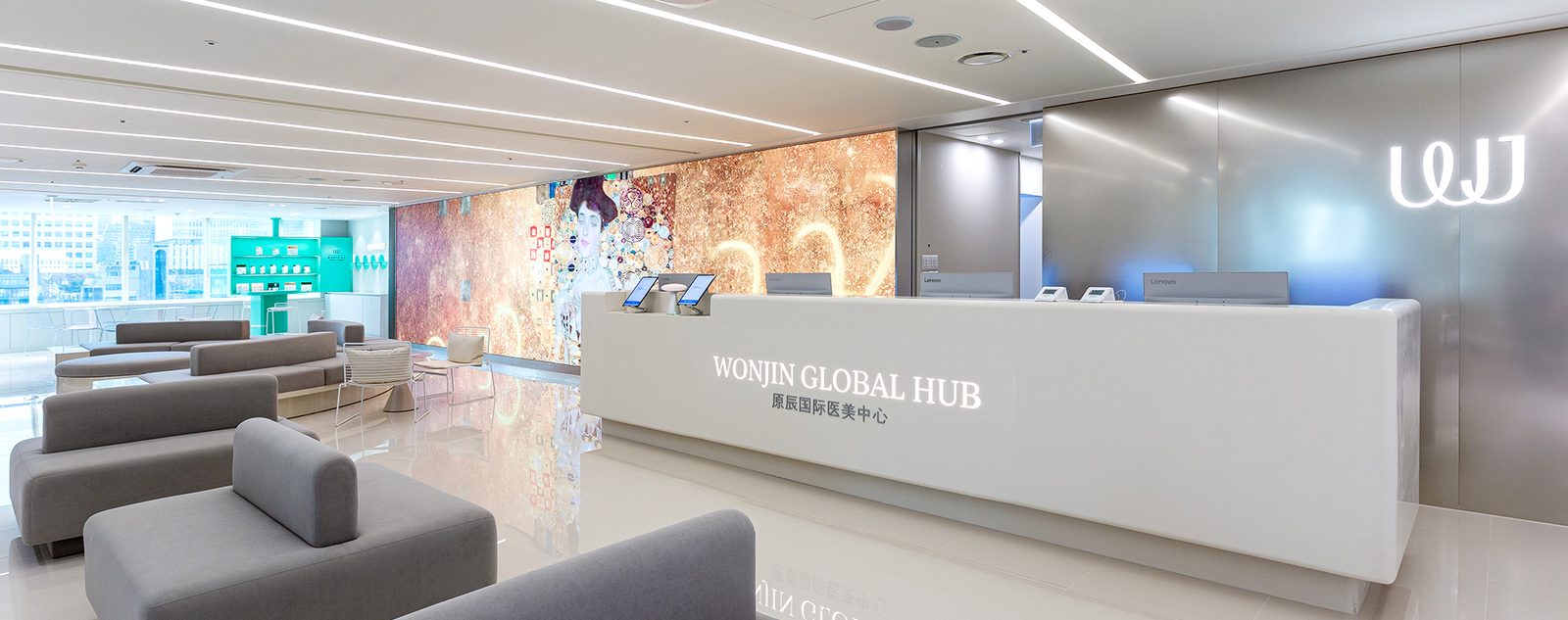
Wonjin Plastic Surgery: multidisciplinary planning for major orthognathic surgery
In the current public information of Wonjin Plastic Surgery, the most clear feature is not a unique osteotomy name, but Oral and maxillofacial surgery, plastic surgery, anesthesia and pain medicine and postoperative management Can collaborate around the same major surgery. General anesthesia is required in both jaws, and the surgical plan also addresses the bite, teeth, jaws, nerve locations, airways, and facial contours. For those whose plans are complex or whose outlines need to be discussed simultaneously, the value of multiple departments is that each is responsible for different issues, rather than simply “the more procedures are done, the better.”

Specific to surgery, the oral and maxillofacial direction should determine where the occlusion and maxillary and mandibular bones are to be moved; the plastic surgery direction can evaluate whether the cheekbones, mandibular angle, chin and soft tissue shape really need to be jointly adjusted; the anesthesia team is responsible for general anesthesia and perioperative safety; the postoperative team is responsible for hospitalization observation, oral cleaning, diet and recovery management. What patients need to confirm is not the number of hospital departments; Who is the actual surgeon, who determines the occlusion, who is responsible for orthodontics, and who takes over when problems arise .
Three-dimensional CT can see the left and right bone differences, tooth roots, mandibular nerve canal and planned osteotomy area more clearly. It helps doctors decide where to cut bones and avoid important structures, but it cannot determine the final bite based on CT alone, nor can it accurately predict how the skin and muscles will contract. A truly complete plan also combines intraoral examination, dentition scans or models, orthodontic judgment and facial photos.
The Wonjin Plastic Surgery case does not disclose the complete orthodontic sequence and the entire surgical composition one by one, so the case pictures are only suitable for looking at the appearance and direction. Overseas patients should obtain surgical records, titanium miniplate and screw information, postoperative imaging, medication, diet and orthodontic referral information before leaving Korea.
Must get answers: The actual surgeon and his specialty, maxillary and mandibular movement plan, scope of anesthesia and hospitalization, necessity of facial contouringing, and admission information after returning home.

1% Plastic Surgery: In addition to orthognathic surgery, the clinic focuses on combined zygoma and V-line contouring.
The changes in the cases of 1% Plastic Surgery are obvious. The reason is that many cases do not only have both jaws, but also join them at the same time. High-3D zygoma reduction, custom V-line or mini V-line . It must be separated here: orthognathic surgery moves the upper and lower jaws, mainly dealing with overbite, bony mouth protrusion, protruding mouth, long face and obvious asymmetry; zygomatic surgery changes the width of the midface; V-line plan changes the mandibular angle, mandibular body or chin line. After the three types of surgeries are superimposed, the front and side faces will of course change, but the full effect cannot be attributed to both jaws.
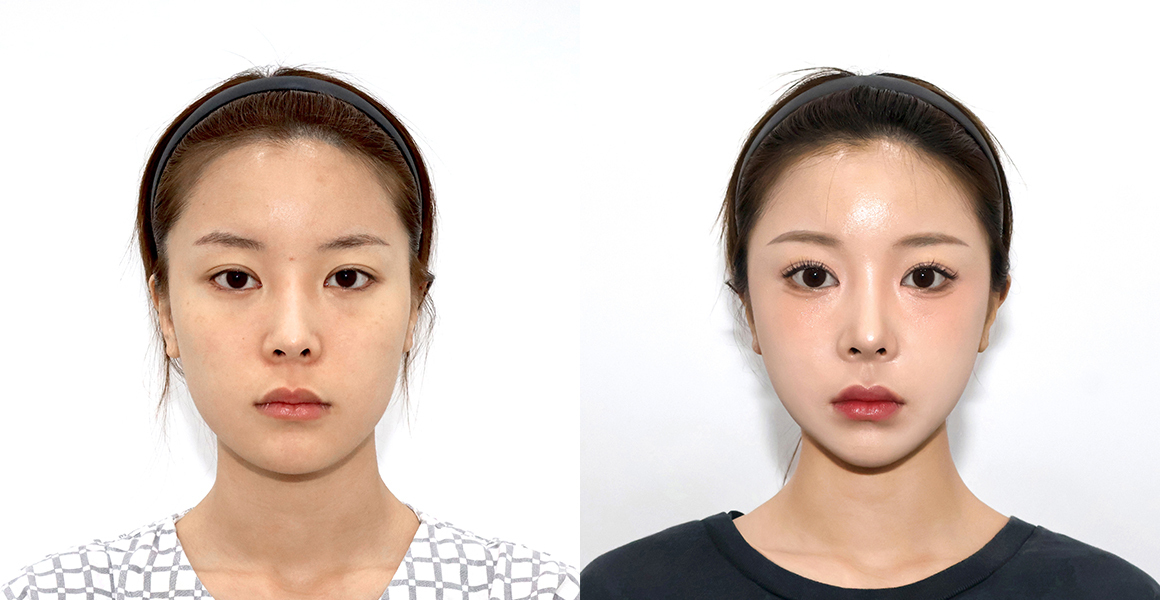
High-3D zygoma reduction is not a two-jaw surgery. According to the hospital’s public explanation, it involves making a higher L-shaped osteotomy in front of the zygomatic bone, simultaneously treating the posterior zygomatic arch, and then rotating and moving the cut zygomatic body in three dimensions inward and upward, and finally fixing it with a fixed plate. The purpose is not to simply push the cheekbones inward, but to try to take into account the three-dimensionality of the front cheeks while reducing the front and side width. What it adds is the range of zygomatic bone osteotomy and fixation, and numbness, midface soft tissue changes, asymmetry, and bone healing should also be discussed separately.
“custom V-line/mini V-line” is the name of the hospital’s lower half face contour plan, which is not a fixed knife. For one person it may focus on chin width and shape, for another it may involve mandibular body or mandibular angle articulation. During consultation, the range must be drawn on the CT: where to cut, whether to move the mandibular angle, whether to perform chin osteotomy, and whether the mandibular nerve canal will be touched. The “Pelican Surgery” in the case is also named by the hospital. It is impossible to tell whether it is treating fat, muscle, skin or bones based on the name alone. The hospital must be asked to write down the actual tissue level and operation content.
The “orthodontic-free two-jaw” announced by the hospital does not mean that everyone can avoid wearing braces. Dental crowding, dental compensation, arch width, and periodontal condition may still require pre- or post-operative orthodontics. 1% of multiple combination cases are more suitable for understanding how “occlusion surgery” and “contour surgery” stack up, rather than copying the package.
Must get answers: Which items must be done to improve the bite, and which ones are only selected for appearance; where to cut High-3D and V line respectively; how will the effects, risks and recovery change after deleting one item.
Four-hospital comparison at a glance
| hospital | Characteristics translated into plain language | cannot be misunderstood as |
|---|---|---|
| Faceline | Plan the movement of the upper and lower jaws together with the cheekbones, mandibular angle, and V-line in the same set of skeletal proportion design, and judge each item one by one. | The Smart/JSRO name alone does not prove cutting method, recovery or better results |
| ID | The surgical path can be evaluated first; no-tie means that the upper and lower teeth will not be completely tied for a long time after the operation; there is also a surgical sequence in which the lower jaw is adjusted first | It does not mean that there is no need for orthodontics, nor does it mean that the jaw does not need to be fixed with titanium miniplates and screws. |
| Wonjin Plastic Surgery | Collaborative handling of major orthognathic surgeries with oral and maxillofacial, plastic surgery, anesthesia and postoperative management | Having more departments does not mean that more facial-contouring procedures must be added. |
| 1% Plastic Surgery | Orthognathic surgery is often combined with High-3D zygoma reduction and custom V-line; High-3D is a three-dimensional rotational medial shift after zygomatic bone osteotomy. | High-3D is not a two-jaw surgery, and all the changes in the combined case are not from orthognathic surgery. |
FAQ
If I just want to improve my long face, can I skip orthodontics?
You can’t judge based on face length alone. Bone and dental relationships need to be assessed before deciding whether orthognathic surgery is needed and the sequence of treatments; contouring and chin surgery are not a substitute for bite correction.
Is it necessarily faster and cheaper to have surgery first?
It is possible to reduce the preoperative wait, but the total treatment course is affected by the complexity of the case, postoperative orthodontics and follow-up consultation cooperation. Costs should be compared based on the complete scope of treatment, not extrapolated based on omitted preoperative months.
Can follow-up after returning home be done with photos alone?
This cannot be arranged in advance. First, clarify which follow-up visits require intraoral examination, imaging, or appliance adjustment, and then confirm how the work will be divided between local treatment and follow-up visits to Korea.
This article is used to prepare for a in-person consultation and does not replace orthodontic and oral and maxillofacial surgery diagnosis. Case photos are only for individual display. Both surgery and orthodontics involve risks, and actual plans and recovery vary from person to person.