 BeautsGo
Protruding chest and bulging nipples are still obvious after chest training and fat loss, which does not mean that “it will disappear if you lose some weight.” What really determines the surgical method is whether the breasts are dominated by fat, glands, or loose skin. If there is a lot of fat, liposuction can be done; if the glands are obvious, they usually need to be removed; the actual situation of most adults is that the two coexist and require joint treatment.
1. First rule out situations where “cosmetic surgery cannot be performed directly”
Gynecomastia (gynecomastia) refers to an increase in male breast glands; simple fat accumulation is closer to pseudogynecomastia (pseudogynecomastia). The two look similar in appearance, but the causes and treatments are different. Puberty, age, weight, hormonal changes, some prescription drugs, fitness hormones, or underlying medical conditions may all be involved.
Current use of antiandrogens, some psychiatric or cardiovascular medications, anabolic steroids, supplements, and fitness medications should be proactively disclosed during the assessment. Whether the medication can be stopped or changed must be decided by the prescribing doctor, and you cannot stop the medication on your own for surgery.
2. How to classify fat type, glandular type and mixed type?
| Judgment key points | Mainly fat | Mainly glandular | Combination or loose skin |
|---|---|---|---|
| touch | Wider range, softer | There may be tougher or disc-shaped tissue under the areola | Soft tissue and tough tissue coexist |
| weight loss response | May improve with overall fat loss | The area around the nipples still protrudes after weight loss | Decreased size but still visible contours, areolas or puffy skin |
| examine | Physical examination; ultrasound if necessary | Physical examination, breast ultrasound, and further examination if necessary | Also look at glands, fat thickness, skin elasticity and nipple position |
| Common surgical directions | Mainly liposuction | glandular tissue excision, often combined with a small amount of liposuction for modification | Liposuction + gland resection; for severe sagging, skin resection/areola adjustment will be discussed |

3. The three surgeries are not “upgraded versions” but address different tissues.
1. Liposuction alone
The chest and necessary preaxillary fat are sucked out through small incisions. It is suitable for people with fat-dominated fat, inconspicuous glands, and good skin retraction conditions. The advantage is that the incision is small and the contour transition range can be adjusted; the limitation is that it has limited effect on dense glands.
2. Glandular tissue excision through an areolar-border incision
A small incision is often made from the edge of the areola and the glands below the areola are removed directly. Suitable for those with obvious protruding glands. Cutting too little may result in bulging, while cutting too deeply or too much may cause the areola to be sunken, so a reasonable soft tissue thickness must be retained.
3. Liposuction + glandular tissue excision
It is a common hybrid plan to first use liposuction to deal with the peripheral thickness and chest transition, and then remove the central glands. The point is not “the more you suck, the better”, but the natural connection between the center, lower chest, parasternal and front axillary lines.
4. Skin excision/areola adjustment
Small incisions may not be sufficient when the size is large, the skin is loose, or the nipple is low. It may be necessary to enlarge the incision, remove excess skin, or reposition the nipple and areola, at the cost of longer scarring and slower recovery.

4. Real case: look at the central bulge, the transition between the lower edge of the chest and the front of the armpit
The following are paired photos of the same customer before and after surgery published on the official website of Waterdrop Plastic Surgery in Korea. When observing, don’t just look at whether the nipples are flattened, but also look at the parasternal, lower chest edge, front axillary and symmetry on both sides. Shooting posture, lighting, weight and recovery time will also affect the visual effect.
Case 1: Overall frontal profile
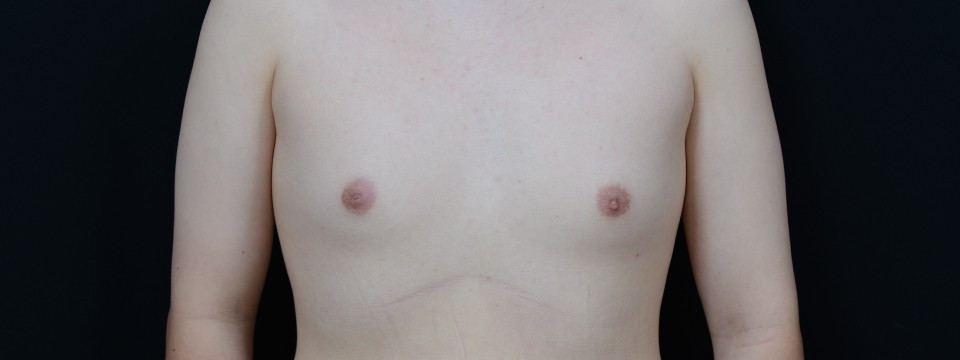
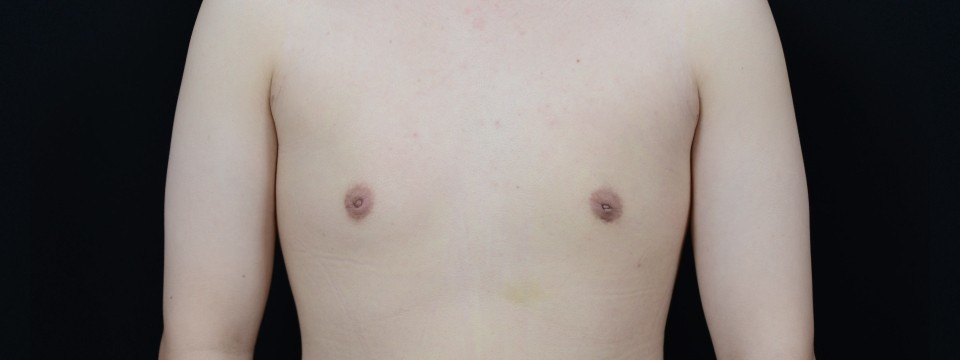
You can focus on the convexity around the nipple and areola and the flatness of the chest on both sides. The case does not represent everyone’s results.
Case 2: Transition between the lower edge of the chest and the outside
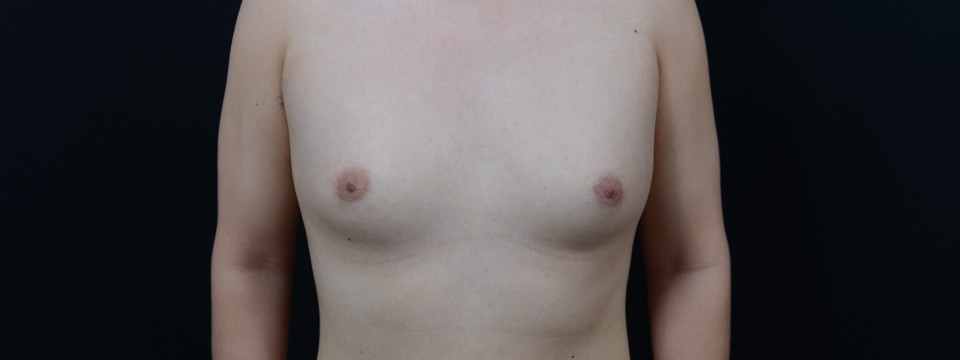
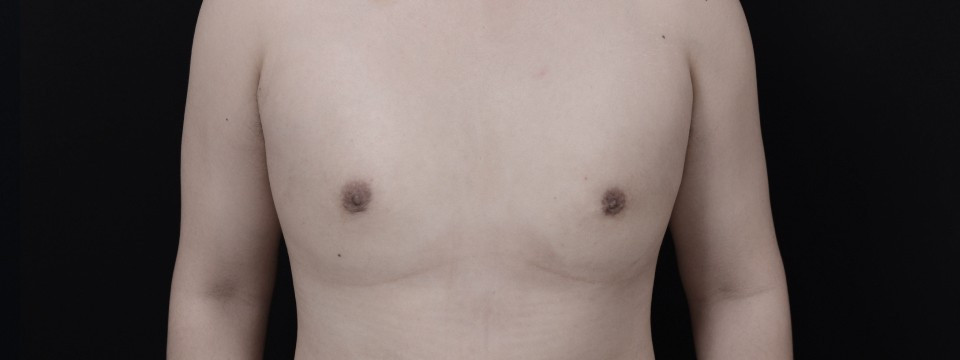
If the proportion of peripheral fat and central glands is not processed properly, it may leave a sense of steps; therefore, the entire chest should be designed as a continuous contour.
Case 3: Flattening degree when the volume is large
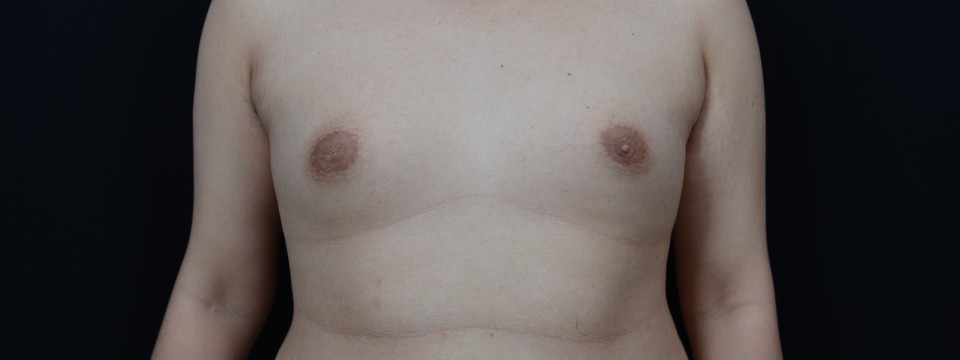
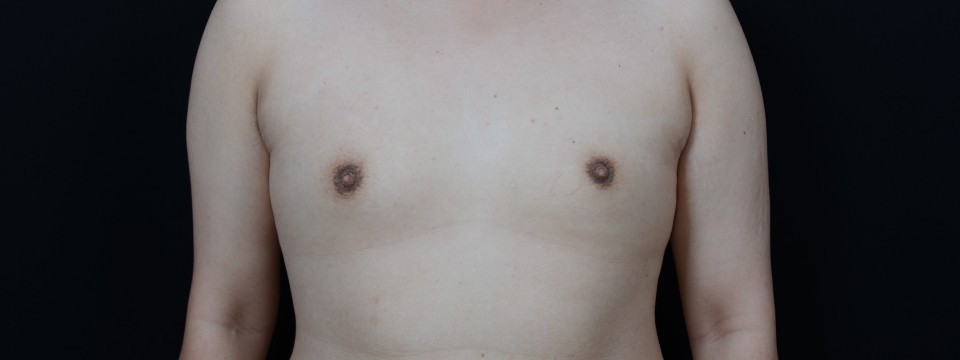
The larger the volume, the more it is necessary to simultaneously evaluate skin retraction, areola position, and postoperative compression garments; one cannot judge whether skin excision is needed based on just one photo.
5. How to match Korean hospital plans?
Stilla (Waterdrop) Plastic Surgery
The direction of breast plastic surgery is relatively concentrated, and the official website discloses multiple matched cases of gynecomastia. During the face-to-face consultation, you can focus on comparing: whether gland resection is needed, whether the liposuction range extends to the front of the armpit, whether the skin can be retracted, as well as anesthesia, pathology and postoperative review arrangements.
SeoulBreast surgeryReal male casesNewline Plastic Surgery Busan
The hospital has set up independent instructions for gynecomastia, disclosing information on areolar edge incision, joint treatment of glands and fat, NART nipple-areola fixation and postoperative management. It is suitable for people who want to have a face-to-face consultation in Busan and ask about the surgical incision, tissue proportions and recovery arrangements.
Seomyeon, BusanLiposuction + gland excisionPostoperative care6. Don’t just ask “how much does one side cost” when it comes to price?
The current public pages of the two hospitals do not provide a set of fixed total prices that can be directly applied to everyone, so this article will not fill in a seemingly accurate number with unknown actual specifications. A correct quotation should include the following items item by item for comparison:
| Quotation specifications | What must be confirmed |
|---|---|
| surgical site | Unilateral/bilateral; whether the front of the chest, outside of the chest, front of the armpit or under the armpit is included |
| tissue processing | Liposuction only, glandular tissue excision only, or liposuction + glandular tissue excision; whether skin/areola adjustment is included |
| Anesthesia and Facilities | Local anesthesia, sedation, or general anesthesia; whether preoperative examination, recovery room, and hospitalization are billed |
| pathology | Whether the excised glands are routinely sent to pathology, and whether the pathology fee is included |
| Post-operative supplies | Compression garments, drainage, medications, dressing changes, suture removal and number of reexaminations |
| Taxes and add-ons | Whether VAT is included; whether the severity level, body size, and repair surgery will increase the price |
7. Recovery time: Rework and chest training are not on the same day
Hematoma, fluid accumulation, infection, unevenness, left and right asymmetry, changes in nipple sensation, skin necrosis or scarring may occur after surgery, and repair may also be required. The larger the scope of liposuction and gland resection, the less likely the postoperative restrictions and review will be to copy the arrangements of “minimally invasive projects”.
8. Ask these 9 questions directly during the interview
- Am I fat, glandular or mixed? Is it based on palpation or ultrasound?
- Do you need to check for hormone, drug, liver, kidney, thyroid or testicle-related causes?
- What areas exactly does liposuction cover? Are the outside of the chest and front of the axilla included?
- How far will the gland be removed? How to avoid areola sunken?
- Can loose skin retract naturally, or does it require skin excision or areola adjustment?
- Should the resected tissue be sent to pathology? Are fees included?
- Should drainage be inserted, how long should the compression garment be worn, and how many reexaminations are required before returning to the country?
- When can I get back to work, driving, running, chest training, and swimming?
- Does the total price include anesthesia, examination, pathology, compression garments, drugs, re-examination and VAT?
FAQ
If my breasts still bulge after losing weight, does that mean gynecomastia?
uncertain. It may be residual fat, glandular hyperplasia, or both, and needs to be palpated and differentiated with ultrasound if necessary. Once your weight has stabilized and then evaluated again, it will be easier to see which tissue really needs to be treated.
Can glands be removed by liposuction alone?
Ordinary liposuction mainly deals with fat and cannot reliably remove dense glands. When the glands are obvious, excision via a small incision along the areola margin or combined with liposuction is usually discussed.
How soon can I exercise after surgery?
Walking can usually be resumed earlier; chest muscle training and heavy upper limb exercises generally need to wait about 4 to 6 weeks and be confirmed by the surgeon’s review. If extensive glandular tissue excision, skin resection, or hematoma and fluid accumulation are performed, the recovery plan will be longer.
Will gynecomastia recur?
Surgery does not prevent future weight gain, hormonal abnormalities, or the effects of related medications. Finding the cause before surgery, controlling weight after surgery, and dealing with triggers can reduce the risk of enlargement again.
This article is used for medical information and preparation for medical consultation in South Korea. It does not replace doctor’s examination, imaging diagnosis, pathology or emergency medical treatment. Cases are recorded on an individual basis and results are affected by tissue proportions, skin elasticity, body weight, extent of surgery and recovery process.