
Complete Guide to Stem Cell Anti-Aging in Korea: Types, Benefits, Procedures & Costs
In recent years, stem cell anti-aging technology has moved from the laboratory to clinical application, becoming one of the most sought-after cutting-edge medical treatments among high-net-worth individuals worldwide. Korea, with decades of deep expertise in regenerative medicine, has established itself as a global hub for stem cell anti-aging treatments.
If you’re considering stem cell anti-aging therapy but feel overwhelmed by the various options—adipose-derived stem cells, NK immune cells, umbilical cord blood stem cells—which one is right for you? Is it safe? How much does it cost? This article provides a comprehensive and systematic overview.
1. What Are Stem Cells? Why Can They Combat Aging?
Stem cells are a class of primitive cells in the human body with the ability to self-renew and differentiate into multiple cell types. Simply put, they are the body’s “seed cells” that can develop into bone, cartilage, ligament, muscle, nerve, skin, and various other tissue cells under specific conditions, promoting tissue regeneration and functional recovery.
As we age, both the number and activity of stem cells in our body decline significantly. A newborn has approximately 1 stem cell per 10,000 cells; by age 30, this drops to about 1 per 250,000 cells; and by age 60, it may decline to approximately 1 per 4 million cells. This decrease in stem cells is one of the fundamental causes of aging, declining tissue repair capability, and weakened immune function.
The core principle of stem cell anti-aging treatment is: supplementing the body with highly active stem cells from external sources to activate the body’s self-repair mechanisms, slowing or even reversing the aging process at the cellular level. This isn’t simply “filling” or “covering up”—it promotes tissue regeneration from the root cause.
2. Major Types of Stem Cells and Their Characteristics
Stem cells come in various types. Based on their source and function, there are six major categories commonly used in clinical practice. Understanding their respective characteristics will help you choose the best option for your needs.
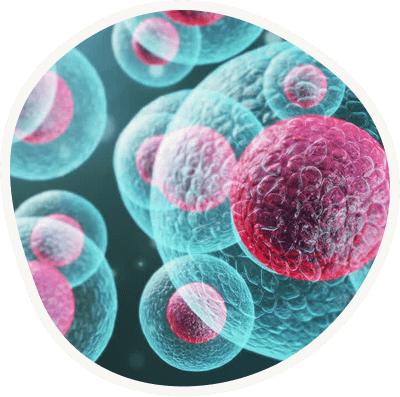
1. Adipose-Derived Stem Cells (ADSCs)
Adipose-derived stem cells are mesenchymal stem cells extracted from the body’s own adipose tissue, making them one of the most widely used stem cell types in anti-aging applications.
- Extraction method: Through minimally invasive liposuction, a small amount of fat (typically about 200cc) is collected from the abdomen or thighs, then separated and purified in the laboratory.
- Data: Approximately 40-80 million stem cells can be isolated from every 100ml of adipose tissue, with a survival rate exceeding 90%.
- Key advantages: Abundant source, minimal extraction trauma, high cell activity, extremely low risk of rejection (since they are autologous cells).
- Primary applications: Facial rejuvenation, skin regeneration, improved fat graft survival, scar repair, breast augmentation.
2. Blood/Hematopoietic Stem Cells
Hematopoietic stem cells are primarily found in peripheral blood and bone marrow, serving as the “origin” of the body’s blood and immune systems.
- Extraction method: Collected via peripheral blood draw, similar to a standard blood test with minimal invasiveness.
- Data: Survival rate of approximately 97%, with about 200,000 hematopoietic stem cells per 10ml of blood.
- Key advantages: Simple extraction, high survival rate, direct regulatory effect on the immune system.
- Primary applications: Immune function regulation, blood disorder adjunctive therapy, overall anti-aging.
3. Umbilical Cord Blood Stem Cells
Umbilical cord blood stem cells are collected from newborn umbilical cord blood—an extremely young and highly active type of stem cell.
- Extraction method: Collected from the umbilical cord at birth, causing no harm to mother or baby.
- Key advantages: Extremely young cells with strong proliferation and differentiation capabilities, low immunogenicity, minimal rejection risk.
- Primary applications: Systemic anti-aging, immune reconstruction, chronic disease adjunctive therapy.
4. NK Immune Cells (Natural Killer Cells)
NK cells are technically immune cells rather than traditional stem cells, but they are frequently used in combination with stem cell treatments in anti-aging and cancer prevention, which is why they are included here.
- Extraction method: Isolated from autologous peripheral blood and expanded through laboratory cultivation.
- Key advantages: No matching required, high safety from autologous source, precise identification and elimination of abnormal cells.
- Primary applications: Immune enhancement, tumor prevention screening, sub-health conditioning, delaying immune aging.
5. Dermal Stem Cells
Dermal stem cells reside in the dermal layer of the skin and are crucial for maintaining skin elasticity, repair capability, and youthful appearance.
- Extraction method: Through a small skin biopsy, then cultured and expanded in the laboratory.
- Key advantages: Highly targeted, directly acting on skin-level repair and regeneration.
- Primary applications: Facial skin rejuvenation, fine line reduction, skin texture improvement, pigmentation repair.
6. Bone Marrow Stem Cells
Bone marrow stem cells were the earliest discovered and applied type of stem cells, extracted from bone marrow and containing both hematopoietic and mesenchymal stem cells.
- Extraction method: Collected through bone marrow aspiration, typically from the iliac bone (hip bone).
- Data: Survival rate of approximately 87%, with about 6.76 million stem cells per 10ml of bone marrow fluid.
- Key advantages: Comprehensive differentiation capability, extensive historical research data, thorough clinical validation.
- Primary applications: Joint repair, bone regeneration, blood disorder treatment, systemic anti-aging.
3. Six Stem Cell Types Comparison Chart
| Type | Source | Extraction Invasiveness | Survival Rate | Key Advantage | Applications |
|---|---|---|---|---|---|
| Adipose Stem Cells | Autologous fat | Minimally invasive | 90%+ | Abundant, high activity | Facial anti-aging, filling, repair |
| Blood Stem Cells | Peripheral blood | Very minimal | ~97% | Easy extraction, immune regulation | Immune enhancement, anti-aging |
| Cord Blood Stem Cells | Newborn umbilical cord | Non-invasive | High | Extremely young, strong activity | Systemic anti-aging, immune rebuild |
| NK Immune Cells | Autologous peripheral blood | Very minimal | High | Precise immune surveillance | Cancer prevention, immune regulation |
| Dermal Stem Cells | Skin dermal layer | Minimal | High | Direct skin action | Skin improvement, rejuvenation |
| Bone Marrow Stem Cells | Bone marrow | Invasive | ~87% | Comprehensive differentiation | Joint repair, systemic anti-aging |
4. Why Choose Korea for Stem Cell Anti-Aging?
Globally, the United States, Japan, and Korea are the three major centers for stem cell research and application. Korea stands out in several key areas, making it the preferred destination for an increasing number of international patients.
Mature Regulatory Environment
Korea was one of the first countries to incorporate stem cell treatment into a formal regulatory framework. The Ministry of Food and Drug Safety (MFDS) maintains strict approval processes for stem cell product development, production, and clinical application, ensuring treatment safety and efficacy.
Leading Technology and Clinical Experience
Korea’s stem cell research started early with substantial investment. Multiple top universities and research institutions continuously advance stem cell technology. Korean medical institutions have accumulated extensive clinical experience with high technical maturity.
High-Quality Medical Services with Outstanding Value
Compared to equivalent treatments in Europe and America, Korean stem cell treatments typically cost only 1/2 to 1/3 of the price, while maintaining comparable standards in medical equipment, laboratory quality, and physician qualifications.
Convenient Location and Comprehensive Language Services
For those seeking professional full-service support, BeautsGo and similar medical tourism platforms can provide C-3-3 medical visa assistance, full-journey interpretation, airport transfers, and accommodation arrangements for a seamless experience.
5. Who Is Suitable for Stem Cell Anti-Aging Treatment?
Stem cell anti-aging is not a “miracle cure” and not everyone needs it. The following groups benefit most:
- Sub-healthy individuals aged 30-60: Chronic fatigue, poor sleep quality, low energy, declining immunity.
- Those with visible facial aging: Facial volume loss, deepening wrinkles, skin sagging, dull complexion seeking root-cause improvement.
- Post-surgical repair needs: Scar hyperplasia or poor skin texture after previous cosmetic surgery.
- Preventive care for those with family history: Family history of cardiovascular disease, diabetes, or degenerative joint disease.
- Health-conscious high-net-worth individuals: Those already with regular health check-ups wanting to add regenerative medicine to their wellness routine.
Not suitable for: Pregnant or breastfeeding women, patients with severe infectious diseases, those with active malignant tumors, and those with severe coagulation disorders.
6. Overview of Stem Cell Anti-Aging Treatment Process in Korea
Treatment processes vary by stem cell type, but the general framework remains consistent. Here is a typical treatment process:
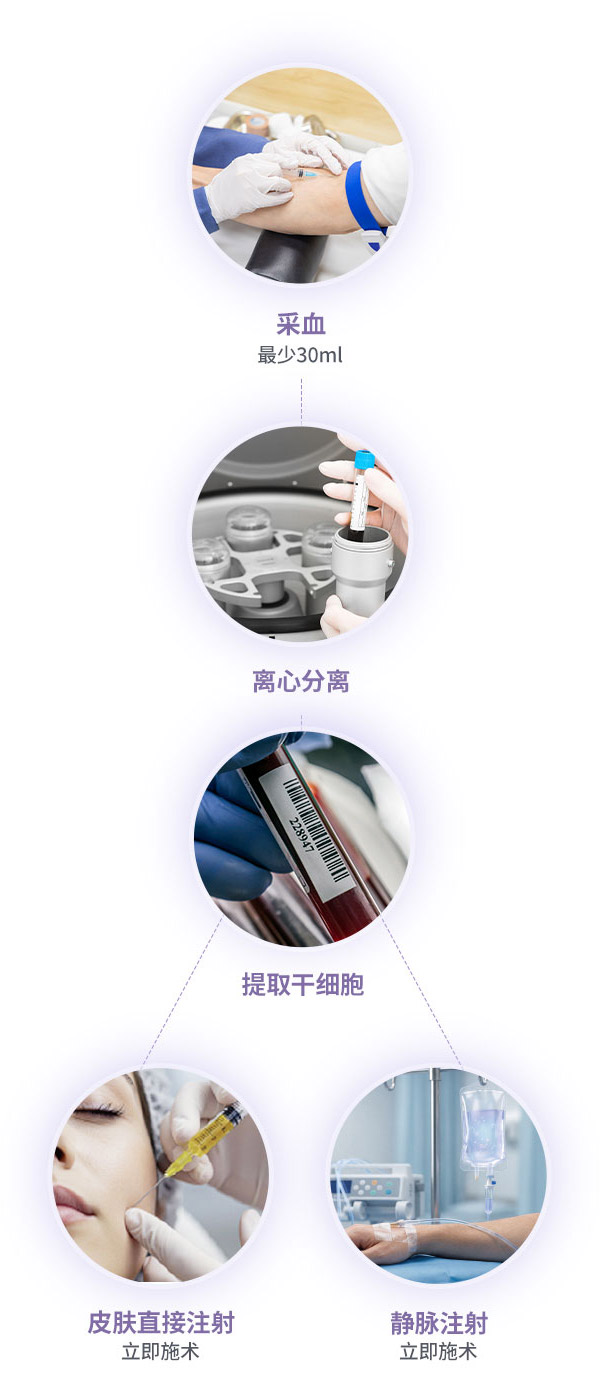
Phase 1: Pre-Consultation and Assessment (1-4 weeks before treatment)
- Remote consultation with medical team (video or text)
- Submit recent health examination reports and medical history
- Doctor develops preliminary treatment plan
- Confirm treatment plan, costs, and schedule
Phase 2: Arrival and Cell Collection (Days 1-2)
- Detailed in-person consultation and physical examination
- Stem cell collection (blood draw, minimally invasive liposuction, or bone marrow aspiration depending on type)
- Collected cells sent to GMP-standard laboratory for separation, cultivation, and expansion
Phase 3: Cell Cultivation Period (approximately 2-4 weeks)
- You can return home during this period
- Laboratory cultivates and expands stem cells to required quantity and activity standards
- Rigorous quality testing (cell viability, purity, sterility testing, etc.)
Phase 4: Cell Infusion Treatment (Second visit to Korea, 1-3 days)
- Return to Korea for stem cell infusion treatment
- Administration methods include: intravenous injection (systemic anti-aging), local skin injection (facial rejuvenation), fat graft composite injection (filling + regeneration)
- Treatment typically takes 1-3 hours
Phase 5: Post-Treatment Recovery and Follow-Up
- Observation in Korea for 1-2 days post-treatment
- Follow-up at 1, 3, 6, and 12 months post-treatment
- Results typically begin to appear 2-4 weeks after treatment, reaching optimal state at 3-6 months
7. Safety of Stem Cell Treatments
Safety is the primary concern for most people. Objectively speaking, stem cell treatments performed at legitimate Korean medical institutions have solid safety assurances, though they are not entirely risk-free.
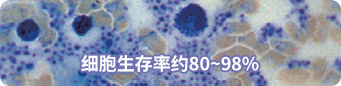
Safety Assurances:
- Extremely low rejection risk with autologous stem cells: No immune rejection when using stem cells from your own fat or blood.
- GMP-standard laboratories: All legitimate Korean stem cell laboratories must comply with GMP standards.
- Full medical supervision: From collection to infusion, the entire process is conducted under professional medical team supervision.
- Rigorous quality testing: Every batch of cultured stem cells undergoes viability, purity, and pathogen testing before infusion.
Possible Risks and Precautions:
- Collection site reactions: Mild bruising and swelling at liposuction site, typically resolving in 1-2 weeks.
- Injection site reactions: Local redness and mild pain, generally subsiding within days.
- Rare allergic reactions: Though uncommon, monitoring is required after treatment.
- Individual variation in results: Effects vary by age, baseline health, and lifestyle.
Important reminder: Always choose medical institutions with proper credentials and licensed laboratories. Avoiding unqualified institutions is the baseline for ensuring safety.
8. Cost Reference for Stem Cell Anti-Aging Treatment in Korea
| Treatment Type | Cost Range (USD) | Notes |
|---|---|---|
| Adipose Stem Cell Facial Anti-Aging | $11,000 – $28,000 | Includes collection, cultivation, and infusion |
| Adipose Stem Cell Systemic Anti-Aging | $21,000 – $56,000 | Includes IV infusion, may require multiple sessions |
| NK Immune Cell Infusion | $7,000 – $21,000 | Single treatment cost, periodic maintenance recommended |
| Umbilical Cord Blood Stem Cell Treatment | $28,000 – $70,000 | Includes cell procurement, testing, and infusion |
| Bone Marrow Stem Cell Treatment | $21,000 – $49,000 | Includes collection, cultivation, and infusion |
| Comprehensive Anti-Aging Package | $42,000 – $112,000 | Multi-cell combination protocols |
These costs typically include preliminary examinations, cell collection and cultivation, infusion treatment, and short-term follow-up. International airfare, visa, accommodation, and daily meals are not included.
9. Pre-Trip Preparation Tips
- Get a health check in advance: Bring a health report from within the last 3 months (CBC, liver/kidney function, coagulation, infectious disease screening).
- Prepare your medical visa: Korea offers a C-3-3 medical visa. BeautsGo can assist with the application process.
- Plan your schedule: You may need 1-2 trips to Korea. First trip: 3-5 days; second trip: 2-3 days.
- Understand post-treatment precautions: Typically avoid strenuous exercise, saunas, and alcohol after treatment.
- Maintain realistic expectations: Stem cell treatment is a gradual process with results appearing over weeks to months.
10. Frequently Asked Questions
Q1: Are there side effects? Could it cause cancer?
When conducted at legitimate medical institutions with rigorously quality-controlled stem cells, safety is well-assured. Autologous stem cells carry no immune rejection risk. Current clinical research and long-term follow-up data show no increased tumor risk from legitimate stem cell treatments.
Q2: How long do results last? Is repeat treatment necessary?
Results duration varies by treatment type and individual. For adipose stem cell facial anti-aging, a single treatment typically lasts 6-12 months. Most doctors recommend incorporating stem cell treatment into long-term health management, with maintenance treatments every 6-12 months for optimal results.
Q3: How many days should I stay in Korea for the first visit?
This depends on your chosen plan. For protocols requiring cell cultivation, typically two trips are needed: first trip 3-5 days (examination + collection), 2-4 week cultivation period, second trip 2-3 days (infusion). Some fresh-cell protocols can be completed in one 3-5 day visit.
Q4: How is stem cell treatment different from hyaluronic acid fillers?
The fundamental difference lies in the mechanism of action. Hyaluronic acid and water-light injections are “supplementary” treatments—injecting external substances for hydration or volume. Stem cell treatment is “regenerative”—activating the body’s own repair mechanisms to promote collagen regeneration and tissue repair. The two approaches can be effectively combined.
Q5: I don’t speak Korean. How do I handle the language barrier?
This is not a concern at all. Most Korean medical institutions serving international patients have multilingual staff. BeautsGo provides full-journey translation services, airport transfers, and accommodation arrangements. You can reach a consultant directly via WeChat, LINE, or the Mini Program.
Final Thoughts
Stem cell anti-aging represents a promising frontier, but it requires a rational approach. Choosing reputable medical institutions, understanding the characteristics of different stem cell types, and maintaining reasonable expectations are the foundations for a positive experience and outcome.
Korea’s comprehensive advantages in stem cell technology—mature techniques, strict regulations, reasonable pricing, and convenient access—make it a destination well worth considering.
Contact Us for a Free Consultation
Reach out to our professional consultants for personalized treatment plans and cost estimates


LINE

Mini Program