
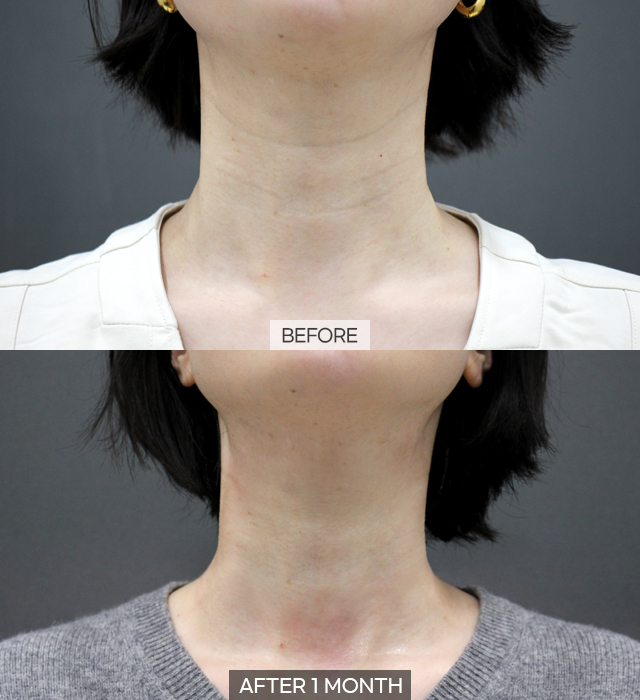
Comprehensive Guide to Neck Wrinkle Classification & Treatment in Korea
Not all neck wrinkles are the same. Learn how Korean dermatologists classify neck wrinkles into four distinct types and match each with the most effective treatment protocol for lasting, natural results.
Why Neck Wrinkle Classification Matters
Treating neck wrinkles without proper classification is one of the most common reasons patients see disappointing results. A treatment that works brilliantly for superficial fine lines can be completely ineffective for deep static wrinkles or platysma bands. Korean dermatologists and plastic surgeons have long recognized that accurate classification is the essential first step toward effective neck rejuvenation.
The Classification Principle
Korean aesthetic clinics follow a strict “Classify First, Treat Second” protocol. Each neck wrinkle type has a distinct underlying cause — from collagen loss and dehydration to muscular hyperactivity and gravitational laxity. Identifying the correct type ensures the right treatment targets the right tissue layer, maximizing efficacy while minimizing risk and cost.
Misclassification leads to wasted time and money. For example, injecting hyaluronic acid filler into platysma bands will not relax the overactive muscle; similarly, botulinum toxin cannot restore volume lost in deep dermal folds. This guide walks you through the full Korean classification system so you can understand your own neck wrinkles before consulting a specialist.
The Four Types of Neck Wrinkles
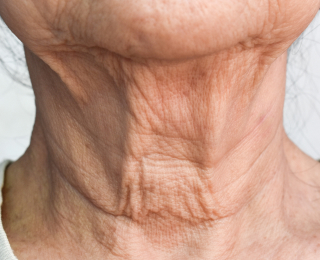
Superficial Fine Lines
Cause: Dehydration, early collagen decline, chronic sun exposure, repetitive skin folding (phone posture).
Appearance: Thin, crepey horizontal lines visible mainly in certain lighting or when the skin is stretched. Depth < 1 mm.
Age of onset: Mid-20s to early 30s.
Key treatments: RE2O / Rejuran, Skin Boosters, mild chemical peeling, Thermage (light setting).
Deep Static Wrinkles
Cause: Significant collagen and elastin degradation, chronic photoaging, loss of subcutaneous fat volume.
Appearance: Prominent horizontal creases that remain visible at rest with no muscle contraction. Depth ≥ 2 mm.
Age of onset: Late 30s to 50s.
Key treatments: Hyaluronic acid filler, HIFU (Ultraformer III / Doublo), COG thread lift, combination HA + HIFU.
Platysma Bands (Turkey Neck)
Cause: Hypertrophy or hypertonicity of the platysma muscle, age-related separation of medial platysma edges.
Appearance: Vertical cord-like bands running from the jawline to the clavicle, especially prominent when clenching or grimacing.
Age of onset: 40s–60s (can appear earlier in lean individuals).
Key treatments: Botulinum toxin injection, Nefertiti lift technique, thread repositioning, platysmaplasty (surgical).
Laxity-Type Neck Wrinkles
Cause: Gravitational descent, SMAS layer weakening, significant weight fluctuations, overall skin laxity.
Appearance: Sagging skin with loss of cervicomental angle definition, jowling that extends into the neck, “double chin” appearance even at normal weight.
Age of onset: 50s and older, or earlier after significant weight loss.
Key treatments: Thermage + HIFU combination, thread lift, chin/submental liposuction, neck lift surgery.
Comprehensive Comparison: 8 Dimensions Across All Four Types
| Dimension | Type 1: Superficial Fine Lines | Type 2: Deep Static Wrinkles | Type 3: Platysma Bands | Type 4: Laxity-Type |
|---|---|---|---|---|
| Primary Cause | Dehydration, mild collagen loss | Severe collagen/elastin breakdown | Platysma muscle hypertonicity | Gravitational descent, SMAS weakening |
| Wrinkle Depth | < 1 mm | ≥ 2 mm | Variable (muscular, not dermal) | Variable (skin redundancy) |
| Direction | Horizontal, fine | Horizontal, deep | Vertical bands | Oblique / diffuse sagging |
| Visibility at Rest | Faint or absent | Always visible | Visible during muscle tension | Always visible |
| Primary Tissue Layer | Epidermis / superficial dermis | Deep dermis / subcutaneous | Muscle (platysma) | SMAS / subcutaneous fat |
| 1st-Line Treatment | Skin Boosters / Rejuran | HA Filler + HIFU | Botulinum toxin (Nefertiti lift) | Thermage + HIFU combo |
| Typical Sessions | 3–5 sessions | 1–3 sessions | 1–2 sessions (repeat every 4–6 months) | 1–2 sessions (or surgical) |
| Result Duration | 6–12 months | 12–18 months | 4–6 months per session | 2–5 years (surgical: 7–10 years) |
Self-Diagnosis: A 4-Step Method to Identify Your Neck Wrinkle Type
Before traveling to Korea for treatment, you can perform a simple self-assessment at home. While this does not replace a professional diagnosis, it helps you prepare meaningful questions for your consultation.
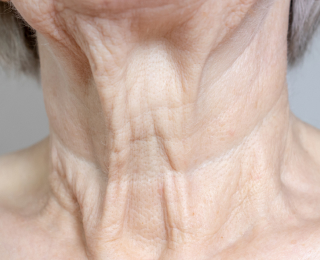
Step 1: The Mirror Test (Rest Position)
Stand in front of a well-lit mirror with your head in a neutral position. Observe your neck without moving. If you see prominent lines at rest, you likely have Type 2 (deep static) or Type 4 (laxity). If the neck appears relatively smooth, proceed to Step 2.
Step 2: The Stretch Test
Gently tilt your head back and stretch the neck skin. If wrinkles disappear when stretched, they are likely Type 1 (superficial fine lines). If they persist, the wrinkles are deeper — Type 2 or Type 4.
Step 3: The Grimace Test
Clench your jaw and grimace forcefully while looking in the mirror. If vertical cords appear prominently along the front of your neck, you have Type 3 (platysma bands). These bands are muscular in origin and require muscle-targeting treatments.
Step 4: The Pinch Test
Pinch the skin on the side of your neck and release. If the skin snaps back quickly, elasticity is preserved (Types 1–3). If it returns slowly or stays tented, significant laxity is present — suggesting Type 4, which may require energy-based or surgical intervention.
Important Note
Many patients present with mixed types — for example, Type 1 fine lines combined with early Type 3 platysma bands. Korean clinics routinely create combination treatment plans that address multiple wrinkle types simultaneously for the most natural-looking results.
Treatment Decision Tree: From Diagnosis to Action
Korean aesthetic clinics use a structured decision tree to match each patient with the optimal treatment protocol. The following flowchart illustrates the decision pathway from initial assessment to treatment recommendation.
↓
↓
↓
Skin Boosters / Rejuran
Mild Chemical Peel
Thermage (light)
↓
HA Filler Injection
HIFU (Ultraformer / Doublo)
COG Thread Lift
Combo: HA + HIFU
↓
Botulinum Toxin
Nefertiti Lift
Thread Repositioning
Platysmaplasty
↓
Thermage + HIFU
Thread Lift
Chin Liposuction
Neck Lift Surgery
↓
↓
How Korean Clinics Diagnose Neck Wrinkle Types
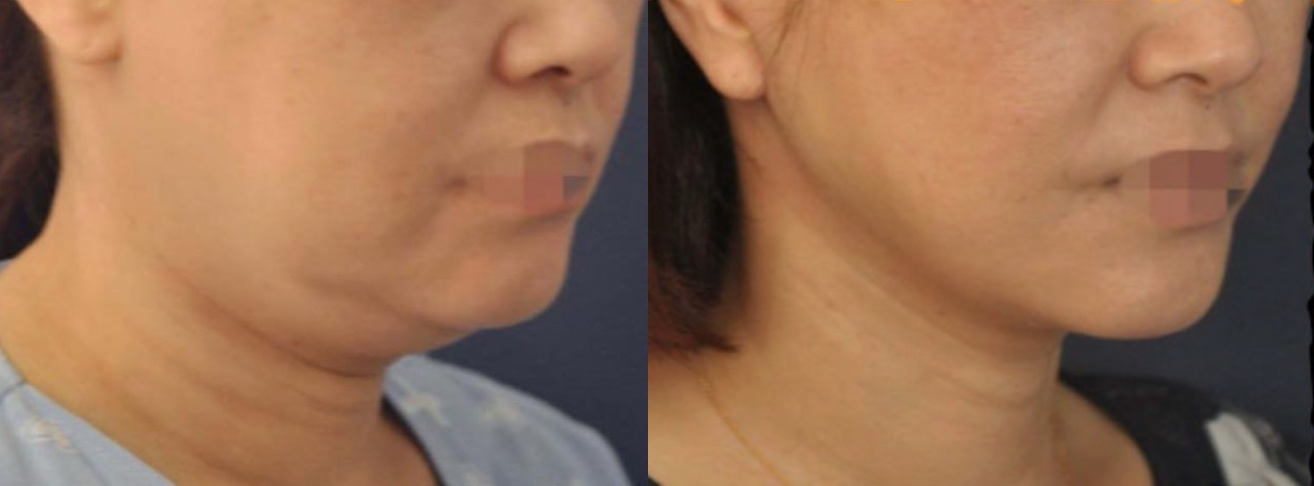
Korean aesthetic clinics employ a multi-layered diagnostic approach that goes far beyond visual inspection. This rigorous process ensures patients receive treatments precisely matched to their wrinkle types and severity levels.
1. High-Resolution Skin Imaging
Clinics use devices like the VISIA Complexion Analysis System or Mark-Vu to capture detailed images of the neck under various lighting conditions, including UV and polarized light. These reveal subsurface damage invisible to the naked eye.
2. Ultrasound Skin Thickness Measurement
High-frequency ultrasound (20–50 MHz) measures exact dermal thickness, collagen density, and subcutaneous fat distribution. This data is critical for determining whether wrinkles are dermal (Types 1–2) or involve deeper structural layers (Types 3–4).
3. Dynamic Muscle Assessment
The physician observes the platysma muscle during active contraction (speaking, swallowing, grimacing) to assess band severity, muscle tone, and asymmetry. EMG (electromyography) may be used in complex cases.
4. Elasticity & Laxity Scoring
Cutometer or DermaLab readings quantify skin elasticity with objective R-values. Combined with manual pinch-test grading, this establishes a laxity score that guides the decision between non-surgical and surgical interventions.
After completing the diagnostic workup, the physician assigns a wrinkle type (or combination of types) and severity grade. This classification directly determines the treatment plan, including the specific devices, injection protocols, and follow-up schedule.
Recovery Timeline & Precautions by Treatment
| Treatment | Target Type | Downtime | Common Side Effects | Key Precautions | Full Result Timeline |
|---|---|---|---|---|---|
| RE2O / Rejuran | Type 1 | 1–2 days | Mild redness, tiny bumps at injection sites | Avoid sun exposure 48 hrs; no makeup 12 hrs | 2–4 weeks (cumulative over sessions) |
| Skin Boosters | Type 1 | 1–3 days | Pinpoint bruising, mild swelling | No sauna/swimming 48 hrs; gentle skincare only | 2–3 weeks per session |
| Mild Chemical Peeling | Type 1 | 3–5 days | Peeling, redness, dryness | Strict sun protection (SPF 50+); no retinoids 1 week before | 1–2 weeks |
| Thermage (Light) | Type 1 | 0–1 day | Mild warmth, transient redness | Hydrate well; avoid hot environments 24 hrs | 3–6 months (collagen remodeling) |
| HA Filler | Type 2 | 2–5 days | Swelling, bruising, tenderness | No vigorous exercise 48 hrs; sleep elevated first night | Immediate (refines over 2 weeks) |
| HIFU | Type 2 | 0–2 days | Tingling, mild tenderness, temporary numbness | No extreme temperatures 1 week; gentle neck movements | 2–3 months (peak at 3–6 months) |
| COG Thread Lift | Type 2 | 5–7 days | Swelling, bruising, pulling sensation | No wide mouth opening 2 weeks; sleep on back; soft diet 3 days | Immediate lift; collagen at 2–3 months |
| Botulinum Toxin | Type 3 | 0–1 day | Pinpoint bruising, mild discomfort | Stay upright 4 hrs; no neck massage 24 hrs; no alcohol 24 hrs | 5–14 days |
| Nefertiti Lift | Type 3 | 1–2 days | Mild bruising along jawline | Avoid heavy lifting 48 hrs; no facial treatments 1 week | 7–14 days |
| Thread Repositioning | Type 3 | 5–7 days | Swelling, tenderness, dimpling | No strenuous activity 2 weeks; limited neck rotation | 2–4 weeks |
| Thermage + HIFU Combo | Type 4 | 1–3 days | Redness, swelling, tenderness | Intensive hydration; SPF 50+; avoid heat sources 1 week | 3–6 months (progressive tightening) |
| Thread Lift (Full) | Type 4 | 7–10 days | Swelling, bruising, tightness | Sleep on back 2 weeks; no gym 3 weeks; soft foods | Immediate + progressive over 3 months |
| Chin Liposuction | Type 4 | 7–14 days | Swelling, numbness, bruising | Compression garment 2–4 weeks; elevated sleeping; light walking encouraged | 3–6 months (as swelling resolves) |
| Neck Lift Surgery | Type 4 | 14–21 days | Significant swelling, bruising, numbness, tightness | Compression garment 4–6 weeks; no heavy activity 6 weeks; follow-up at 1, 2, 4 weeks | 6–12 months (final result) |
Clinical Case: Hyaluronic Acid Treatment for Neck Wrinkles
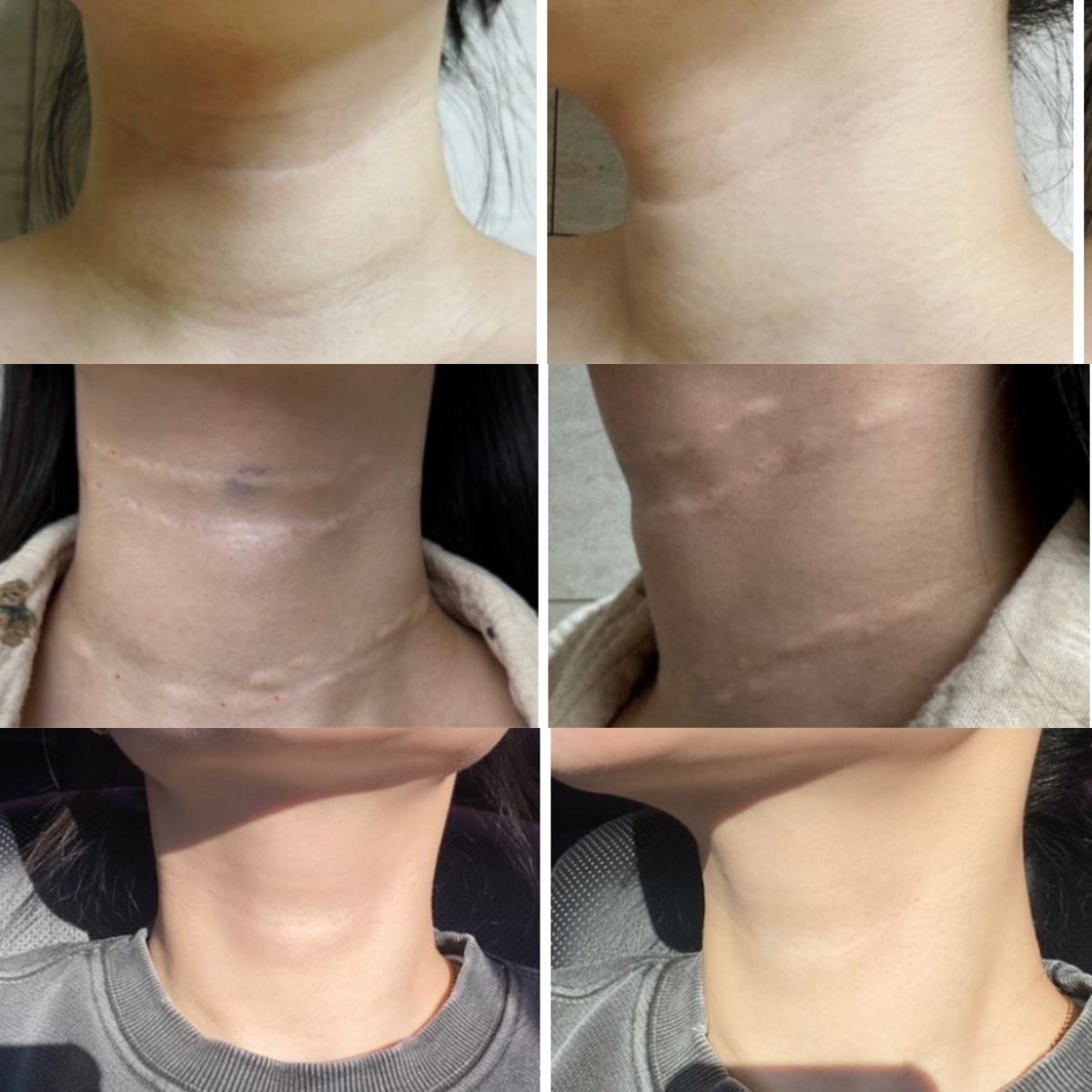
This clinical example demonstrates the effectiveness of targeted hyaluronic acid filler treatment for Type 2 deep static neck wrinkles. The cross-linked HA was precisely injected into the deep dermal plane along the horizontal crease lines, providing immediate volume restoration and long-term collagen stimulation.
5 Daily Habits to Prevent Neck Wrinkle Progression
- Apply SPF 50+ sunscreen to the neck daily. UV exposure is the single greatest accelerator of neck aging. Extend your facial sunscreen routine to the entire neck and décolletage, reapplying every 2 hours during outdoor exposure. Choose a broad-spectrum formula that protects against both UVA and UVB rays.
- Adopt ergonomic device posture. “Tech neck” from chronic downward screen gazing creates repetitive folding that etches fine lines into the skin. Raise your phone to eye level, position your laptop screen at the top third of your visual field, and take 5-minute posture breaks every 30 minutes.
- Use dedicated neck skincare products. The neck skin is thinner and has fewer sebaceous glands than facial skin. Apply retinol-based neck creams (start with 0.25% and increase gradually), peptide serums, and hyaluronic acid hydrators. Always apply products in upward strokes to counteract gravitational forces.
- Sleep on your back with a supportive pillow. Side and stomach sleeping compresses the neck skin for 6–8 hours nightly, accelerating wrinkle formation. A cervical support pillow or silk pillowcase reduces friction and compression. If back sleeping is difficult, start by training one night per week.
- Perform daily platysma exercises. Gentle neck stretches and platysma activation exercises maintain muscle tone and improve circulation. Try the “kiss the ceiling” exercise (tilt head back, pucker lips upward, hold 10 seconds, repeat 10 times) and lateral neck stretches. Consistency is more important than intensity.
Frequently Asked Questions
Q1: Can neck wrinkles be completely eliminated?
Results depend heavily on the wrinkle type and severity. Type 1 superficial fine lines can often be reduced by 80–90% with consistent skin booster and Rejuran treatments. Type 2 deep wrinkles can be significantly softened (60–80% improvement) with HA fillers and HIFU, though complete elimination of very deep creases may require multiple sessions. Type 3 platysma bands respond excellently to botulinum toxin (90%+ improvement), but results require maintenance every 4–6 months. Type 4 laxity achieves the most dramatic transformation with surgical neck lift (85–95% improvement), while non-surgical options provide moderate improvement (40–60%). Setting realistic expectations during your consultation is crucial for satisfaction.
Q2: Is hyaluronic acid filler safe for the neck area?
Yes, when performed by experienced practitioners. The neck is an area that requires specialized injection technique due to thinner skin and the proximity of important vascular structures. Korean aesthetic physicians use blunt-tip cannulas rather than sharp needles to minimize vascular risk, and they inject at the precise dermal depth (mid-to-deep dermis) to avoid superficial lumps or Tyndall effect. The HA products used for the neck are typically softer, lower-viscosity formulations (e.g., Juvéderm Volite, Restylane Skinboosters) specifically designed for thin-skinned areas. Serious complications are extremely rare in experienced hands. The key safety factor is choosing a practitioner with specific neck injection expertise.
Q3: What exactly does botulinum toxin do for neck wrinkles?
Botulinum toxin works by temporarily blocking the nerve signals that cause the platysma muscle to contract. In the context of neck rejuvenation, it serves two primary functions: (1) Band relaxation — direct injection into the vertical platysma bands relaxes the hyperactive muscle fibers, reducing the visible cords. (2) Nefertiti lift effect — strategic injection along the jawline and lower platysma counteracts the downward pull of the muscle, producing a subtle lifting and smoothing of the jawline and upper neck. Botulinum toxin does NOT fill wrinkles, plump skin, or tighten loose tissue. It specifically addresses muscle-driven wrinkles (Type 3). Results begin at 3–5 days, peak at 2 weeks, and last 4–6 months before gradual return of muscle activity.
Q4: Thermage vs. HIFU for neck tightening — which is better?
These technologies work at different tissue depths and are often complementary rather than competing. Thermage uses radiofrequency energy to heat the dermis (1.5–4 mm depth), stimulating collagen contraction and remodeling. It excels at treating skin texture, fine lines, and mild laxity. HIFU delivers focused ultrasound energy to the SMAS layer (3–4.5 mm depth), creating precise thermal coagulation points that trigger deep tissue lifting. It is more effective for moderate laxity and deeper structural tightening. For Type 4 laxity, Korean clinics frequently combine both technologies in a single session: Thermage addresses the superficial layers while HIFU lifts the deeper structural layers, achieving a synergistic result superior to either treatment alone.
Q5: Can I combine multiple treatments for different neck wrinkle types?
Absolutely — combination treatment is in fact the standard approach in Korean aesthetic practice. Most patients present with mixed wrinkle types, and combination protocols yield significantly better results than single treatments. Common combinations include: Skin Boosters + Botulinum Toxin (Types 1+3), HA Filler + HIFU (Types 2+4), and Thermage + Thread Lift + Botox (Types 1+3+4). Treatments are typically scheduled in a specific sequence: energy-based devices first, then injectables 2–4 weeks later, followed by threads if needed. Your Korean physician will design a customized multi-session protocol based on your specific combination of wrinkle types and their respective severity grades.
Q6: How much do neck wrinkle treatments cost in Korea compared to other countries?
Korea offers significant cost advantages for neck rejuvenation procedures. On average, patients save 40–60% compared to equivalent treatments in the US, Europe, or Australia. Approximate ranges in Korean clinics: Skin Boosters/Rejuran: $150–$300/session; HA Filler (neck): $300–$600/session; HIFU (neck): $400–$800; Thermage (neck): $500–$1,000; Botulinum Toxin (Nefertiti): $200–$400; Thread Lift (neck): $800–$2,000; Neck Lift Surgery: $3,000–$6,000. These savings, combined with Korea’s world-leading expertise in aesthetic procedures, make medical tourism for neck treatments highly cost-effective. BeautsGo can provide specific price quotes based on your assessment.
Q7: What should I prepare before traveling to Korea for neck treatment? Do I need a visa?
Preparation depends on your nationality and the treatment complexity. Visa: Citizens of most countries (US, EU, UK, Australia, Canada, and many Asian nations) can enter Korea visa-free for 30–90 days for medical tourism. Korea also offers a dedicated C-3-3 Medical Tourism Visa for those who need it. Pre-trip checklist: (1) Share clear photos of your neck from multiple angles with BeautsGo for preliminary assessment. (2) List current medications, especially blood thinners, which must be stopped 7–10 days before injection or surgical treatments. (3) Stop retinoid products 1 week before. (4) Arrange accommodation near the clinic (BeautsGo can assist). (5) Plan for adequate recovery time: 3–5 days for non-surgical treatments, 10–14 days for surgical procedures. (6) Bring comfortable, loose-necked clothing for post-treatment comfort.
Q8: At what age should I start treating neck wrinkles?
The ideal approach is prevention starting in the mid-20s and targeted treatment as specific wrinkle types emerge. Ages 25–30: Focus on prevention — SPF, proper posture, hydrating skincare. Consider annual skin booster sessions to maintain hydration and early collagen support. Ages 30–40: Type 1 fine lines typically appear. This is the ideal window for Rejuran, skin boosters, and light Thermage sessions that can significantly delay progression. Ages 40–50: Types 2 and 3 become common. HIFU, HA fillers, and Nefertiti lift Botox can maintain a youthful neck profile. Ages 50+: Type 4 laxity often requires energy-device combinations or surgical options. However, these are guidelines, not rules — genetics, sun exposure history, and lifestyle create wide individual variation. The best time to start is when the wrinkle first begins to bother you.
Ready to Discover Your Neck Wrinkle Type?
Connect with BeautsGo for a free preliminary assessment. Send us clear neck photos and our team will help identify your wrinkle type and recommend the optimal Korean treatment plan — before you even book your flight.


LINE

Mini Program
Why Choose BeautsGo?
- Expert Matching: We connect you with clinics specializing in your specific neck wrinkle type.
- Transparent Pricing: Receive detailed quotes with no hidden fees before your trip.
- Full-Service Support: From consultation scheduling to accommodation and aftercare coordination.
- Bilingual Assistance: Dedicated support in your language throughout the entire process.