
The Korean medical aesthetics market offers highly refined treatment options for neck wrinkles, ranging from basic Botox injections to long-lasting platysma plasty. Each method targets different types of neck wrinkles and suits different candidates. This article provides a comprehensive overview of 7 mainstream treatment options to help you prepare before traveling to Korea for treatment.

A professional consultation and assessment is essential before neck wrinkle treatment
Understanding Neck Wrinkles: Why Does the Neck Age First?
Neck wrinkles can be broadly classified into two types, each requiring a completely different treatment approach:
- Horizontal neck lines (static wrinkles): Caused by skin aging and collagen loss, these manifest as horizontal fine lines or deep creases across the neck that remain visible even at rest.
- Vertical platysmal bands (dynamic wrinkles): Formed by overactivity of the platysma muscle, these vertical cord-like bands become especially prominent when speaking or making facial expressions — a classic example of “dynamic wrinkles.”
Some individuals have both types simultaneously, requiring combination treatment. Identifying your wrinkle type is the first step toward choosing the right treatment plan.
7 Neck Wrinkle Treatment Options in Korea: A Complete Guide
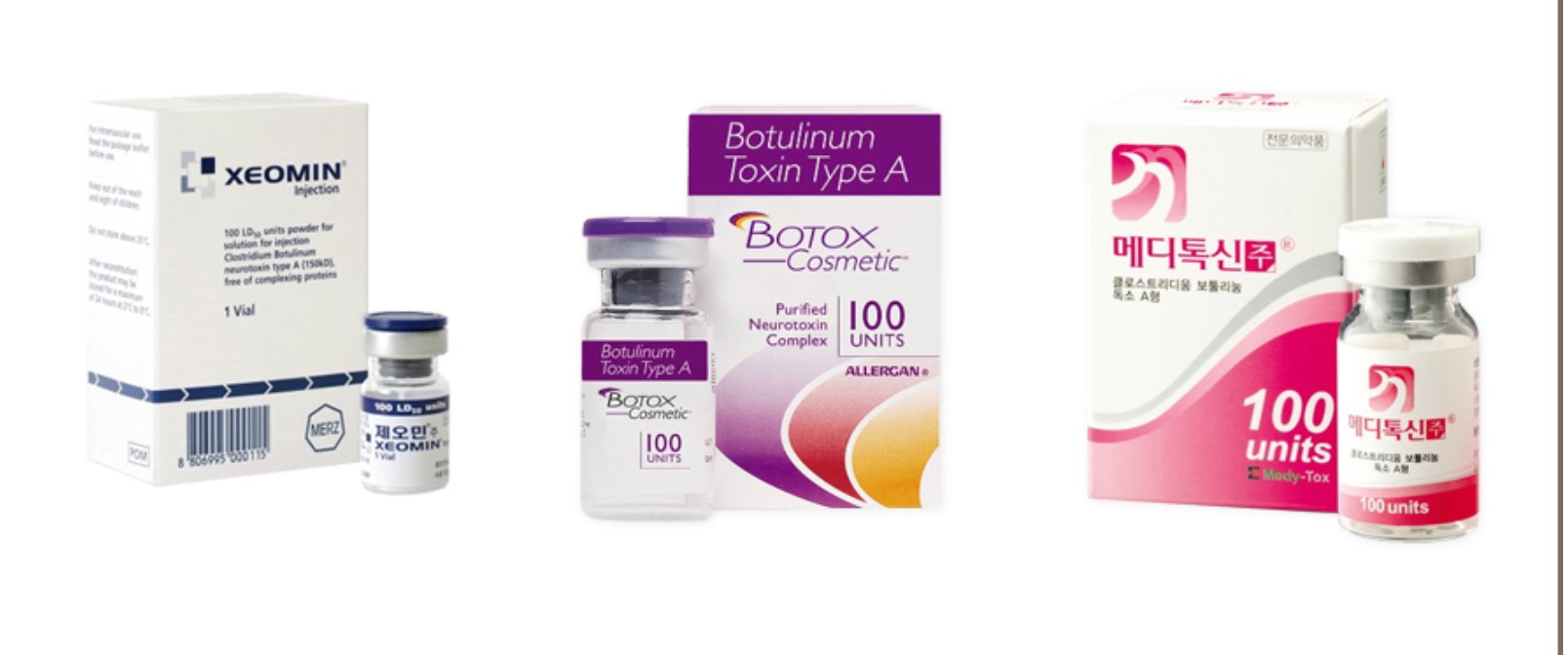
Popular botulinum toxin brands used in Korea: Xeomin, Botox, and Medytoxin
Treatment 1: Botox Injection (Botulinum Toxin Type A)
How it works: Botulinum toxin type A is injected to temporarily block nerve signals to the platysma muscle, causing it to relax. This weakens the muscle contractions that cause vertical banding and can also provide some smoothing effect on horizontal lines.
Best for: Vertical platysmal bands (dynamic wrinkles) respond best; mild horizontal neck lines can also be improved.
Pain level: Low
Treatment time: 15–30 min
Duration: 3–6 months
Korea price range: ~800–1,500 RMB (approx. $110–210 USD)
- Non-invasive with minimal downtime
- Quick results (visible in 7–14 days)
- Affordable pricing
- Can be combined with other treatments
- Temporary results; requires regular touch-ups
- Limited improvement for deep static horizontal lines
- Excessive dosage may affect swallowing or speech
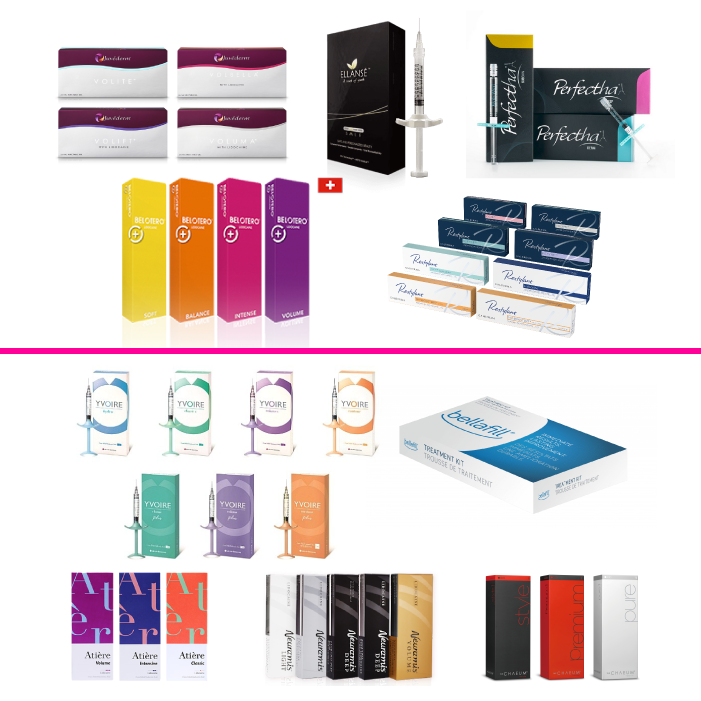
Popular hyaluronic acid filler brands in Korea: Juvederm, Restylane, Revolax, Perfectha, and more
Treatment 2: Hyaluronic Acid Filler (HA Filler)
How it works: Hyaluronic acid is injected into the depressed areas of the neck skin, physically filling wrinkle grooves to improve the depth and appearance of static horizontal lines.
Best for: Deep static horizontal neck lines (indentation-type wrinkles caused by skin laxity).
Pain level: Low to moderate
Treatment time: 30–45 min
Duration: 6–12 months
Korea price range: ~1,500–3,000 RMB per syringe (approx. $210–420 USD)
- Immediate visible results
- Reversible with hyaluronidase enzyme, ensuring high safety
- Additional hydrating and skin-improving benefits
- Neck skin is thin, requiring precise injection depth
- Overfilling may cause nodules or Tyndall effect (bluish discoloration)
- Requires a highly experienced practitioner
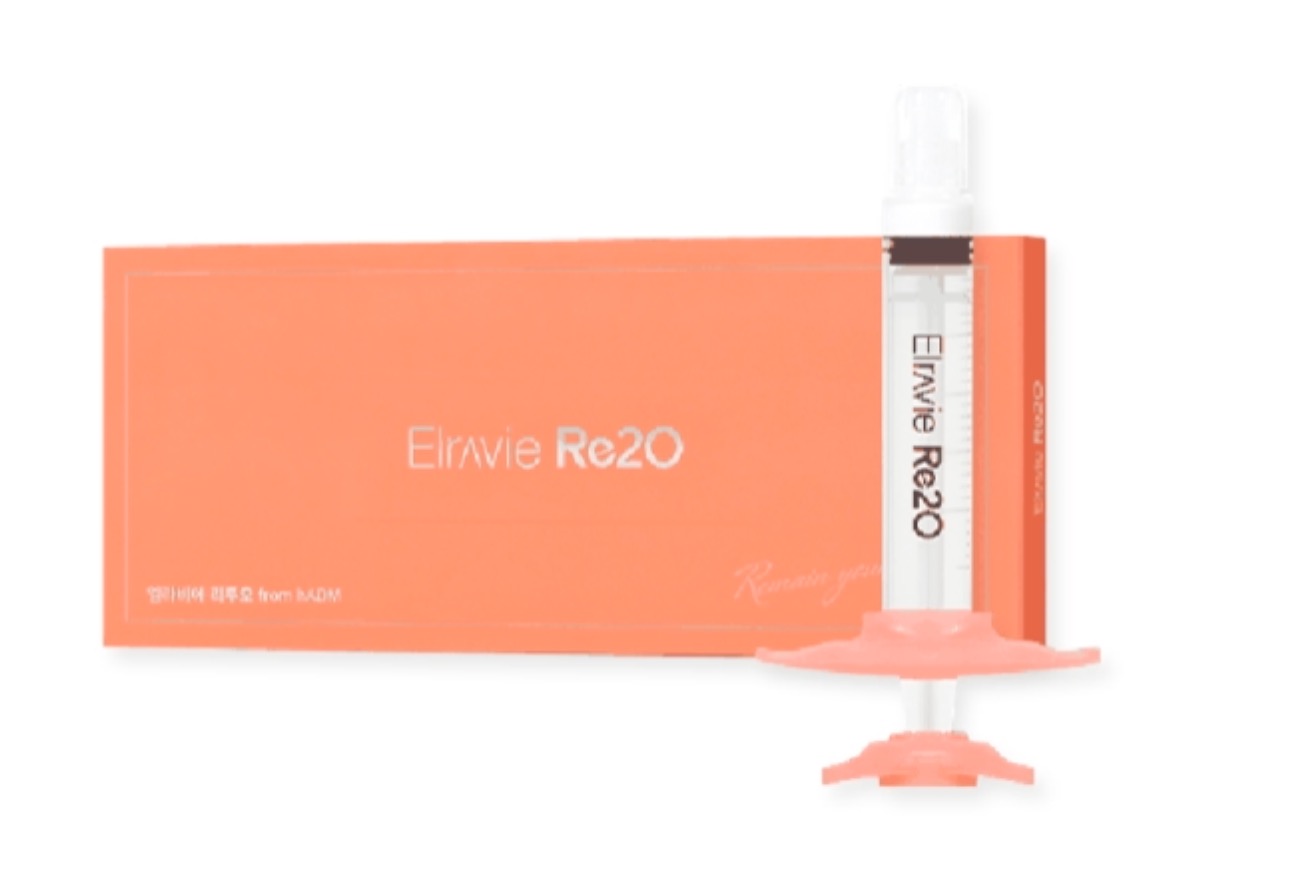
Elravie Re2O — A Korean injectable specifically designed for neck skin rejuvenation
Treatment 3: RE2O Skin Booster Injection
How it works: RE2O is a cross-linked hyaluronic acid-based intradermal injectable that is delivered evenly into the dermal layer of the neck using a meso-gun or manual injection technique. It improves skin hydration, increases skin thickness, and reduces the appearance of fine, shallow lines. Compared to traditional skin boosters, RE2O has a higher cross-linking degree, longer residence time, and more noticeable improvement in skin texture.
Best for: Superficial fine lines, dry and lax skin, mild neck wrinkles; ideal for preventive improvement and combination with other treatments.
Pain level: Low
Treatment time: 20–40 min
Duration: 3–6 months
Korea price range: ~1,200–2,500 RMB (approx. $170–350 USD)
- Non-invasive or minimally invasive with quick recovery
- Comprehensive skin texture improvement (radiance, smoothness)
- Ideal as a baseline maintenance treatment that stacks with other procedures
- Limited improvement for deeper wrinkles
- Relatively mild results; multiple sessions recommended
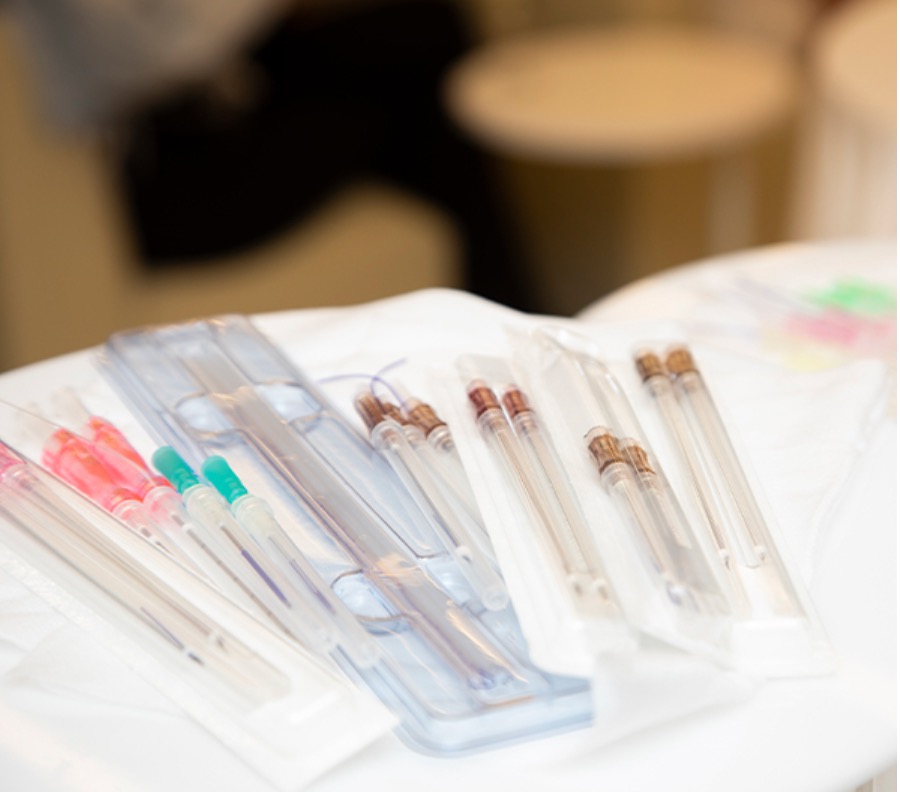
Common thread materials for neck thread lifts: PDO threads, COG threads, and various specifications
Treatment 4: Thread Lift
How it works: Absorbable PDO or PLLA threads are inserted beneath the neck skin to physically lift sagging tissue. The threads also stimulate local collagen regeneration, improving skin quality from within. Neck thread lifts typically use a mesh or cross-hatch pattern to achieve overall skin tightening.
Best for: Mild to moderate neck skin laxity; horizontal neck lines with skin sagging; those who also want to improve the jawline contour.
Pain level: Moderate
Treatment time: 45–60 min
Duration: 12–18 months
Korea price range: ~2,000–5,000 RMB (approx. $280–700 USD)
- Immediate lifting effect
- Ongoing collagen stimulation
- Threads are naturally absorbed by the body, minimizing risk
- Temporary foreign body sensation or slight unevenness after treatment
- Risk of thread extrusion due to thin neck skin
- Results vary significantly depending on thread type and practitioner skill
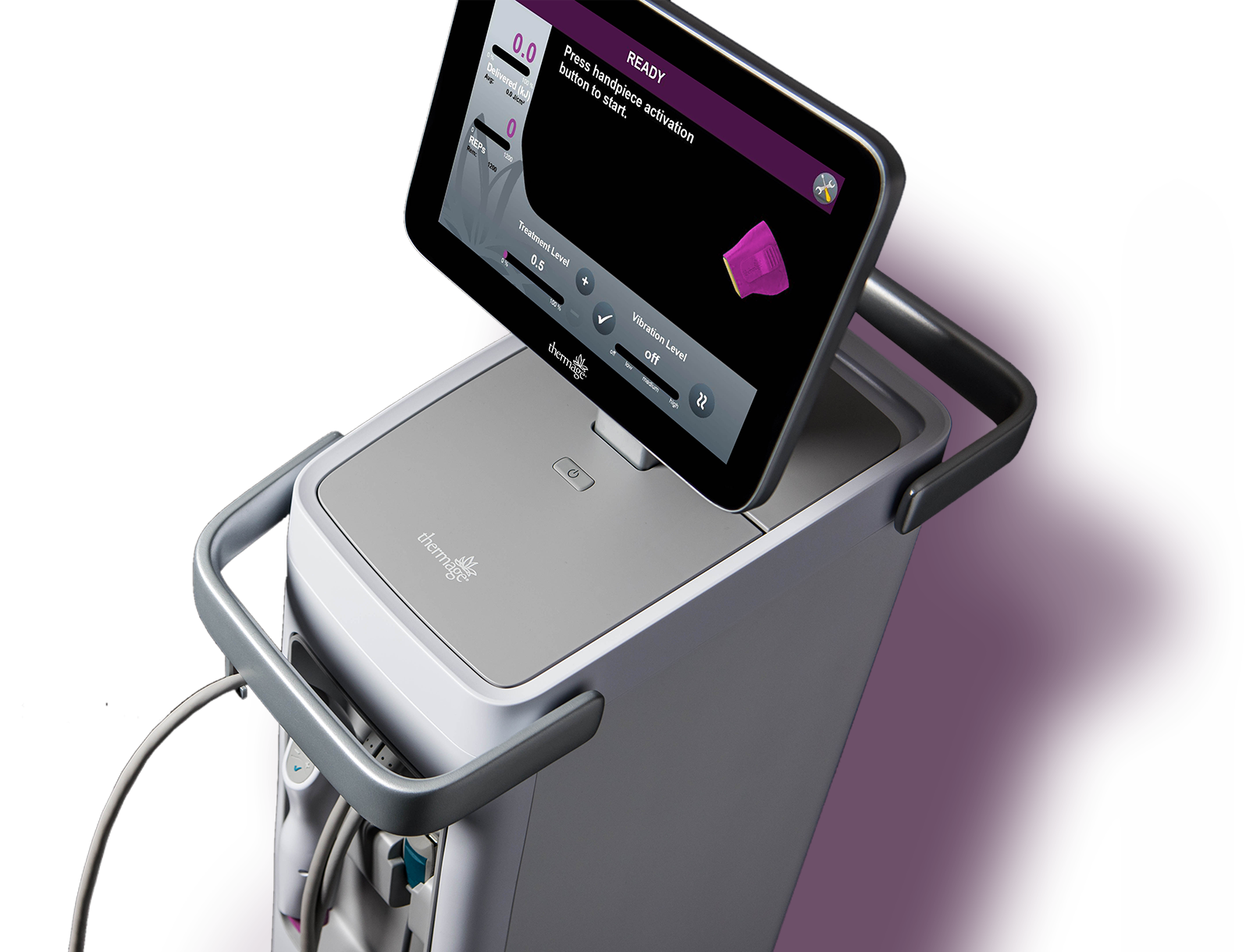
Procedures such as thread lifts and Thermage are performed by specialized physicians and require thorough pre-treatment consultation
Treatment 5: Thermage FLX
How it works: Thermage uses monopolar radiofrequency (RF) energy that penetrates deep into the collagen layer beneath the skin. By precisely heating the tissue to 65–75°C, it causes immediate collagen contraction and stimulates ongoing collagen renewal, resulting in skin tightening and wrinkle improvement. For neck treatments, Thermage typically uses a specialized smaller tip (Face Tip or Eye Tip) for precise treatment of the neck wrinkle area.
Best for: Horizontal neck lines caused by skin laxity; mild to moderate neck aging; those who prefer a single treatment with long-lasting results.
Pain level: Moderate to high
Treatment time: 30–60 min
Duration: 1–2 years
Korea price range: ~3,000–8,000 RMB (approx. $420–1,120 USD)
- Non-invasive with no downtime
- Long-lasting results from a single session
- Simultaneously improves skin elasticity and texture
- Noticeable heat sensation and discomfort during treatment
- Relatively high cost
- Peak results not visible until 3–6 months post-treatment
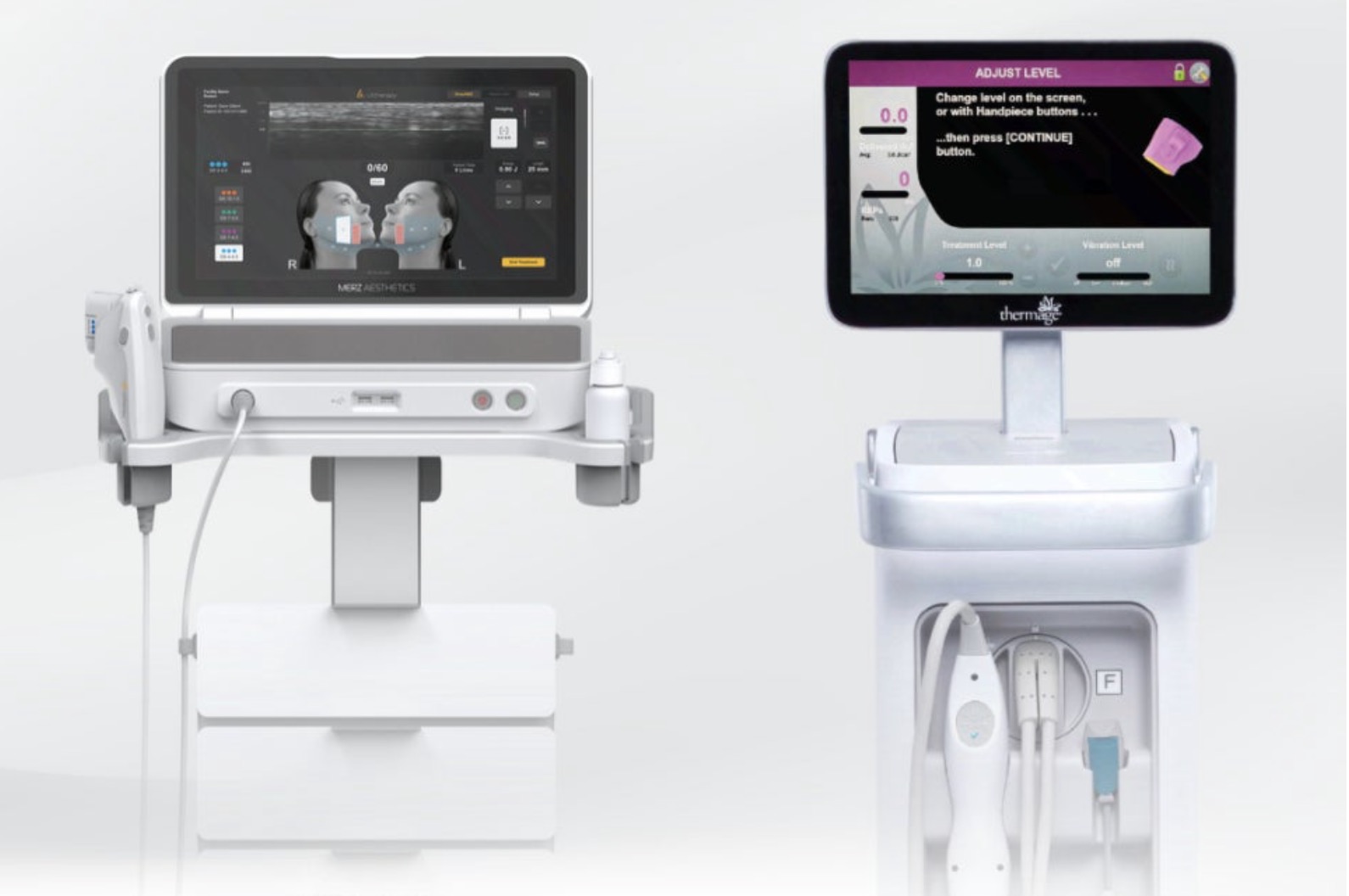
Ulthera (HIFU) and Thermage — The two leading non-invasive skin tightening devices
Treatment 6: HIFU / Ulthera (High-Intensity Focused Ultrasound)
How it works: HIFU concentrates ultrasound energy at specific depths beneath the skin (1.5mm, 3.0mm, 4.5mm), creating localized high-temperature thermal coagulation points that precisely target the superficial musculoaponeurotic system (SMAS layer) to achieve deep-level tightening and lifting. Ultherapy (the Ulthera brand) features real-time ultrasound imaging, allowing the practitioner to visually confirm the precise energy delivery depth.
Best for: Moderate to severe neck laxity; significant SMAS layer sagging; those seeking deep-level lifting results through non-surgical means.
Pain level: Moderate to high
Treatment time: 30–60 min
Duration: 1–2 years
Korea price range: ~4,000–10,000 RMB (approx. $560–1,400 USD)
- The only non-invasive technology that reaches the SMAS layer
- Real-time imaging (Ultherapy) ensures precision
- Non-invasive with short recovery time
- Significant discomfort during treatment
- Results appear gradually over 2–3 months
- Fewer treatment lines for the neck area; often combined with other procedures
- Higher price point
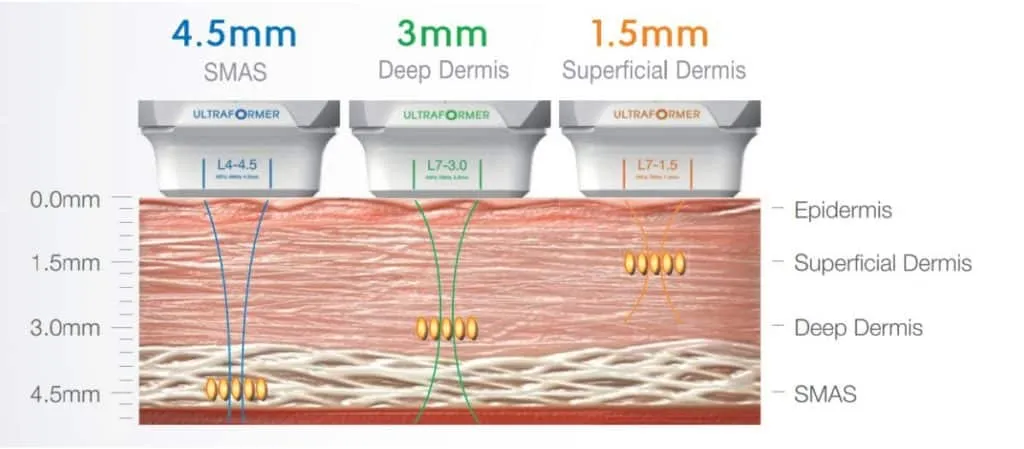
HIFU energy targets multiple depths beneath the skin, making it suitable for moderate to severe laxity
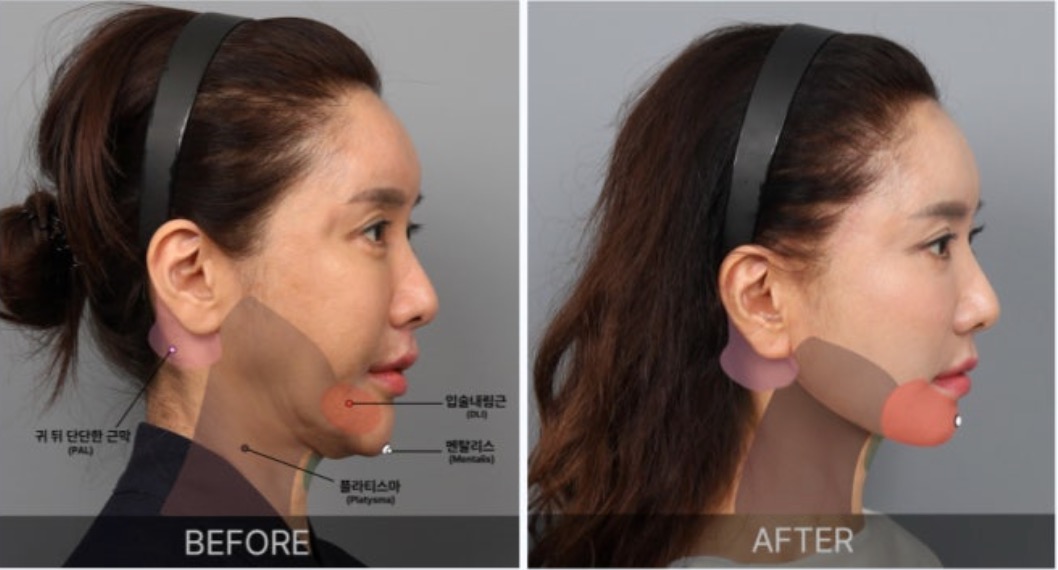
Platysma plasty before and after — showing the platysma, mentalis, and depressor labii inferioris (DLI) muscle areas
Treatment 7: Platysma Plasty (Neck Lift Surgery)
How it works: Platysma plasty is a well-established neck surgical procedure in which the surgeon makes small incisions (typically placed in concealed locations behind the ears or beneath the chin) to directly tighten and suture the lax platysma muscle (muscle plication). When necessary, excess muscle tissue is partially excised to tighten the platysma, eliminate vertical banding, and improve the neck contour.
This is a direct surgical intervention targeting the muscle structure, offering long-lasting results that far exceed the periodic maintenance required with Botox injections. The incisions are small and placed in concealed areas, with a recovery period of approximately 1–2 weeks.
Best for: Severe vertical platysmal bands (both static and dynamic); individuals who find Botox results short-lived or unsatisfactory after multiple injections; those seeking a definitive solution for neck wrinkles.
Pain level: Low to moderate (performed under local anesthesia)
Treatment time: 60–120 min
Duration: Semi-permanent (several years or longer)
Korea price range: ~15,000–35,000 RMB (approx. $2,100–4,900 USD)
- Long-lasting, semi-permanent results
- Addresses platysmal bands at the root cause
- Eliminates the need for repeated Botox injections
- Concealed incisions with minimal scarring
- Surgical procedure with inherent risks (infection, nerve damage, etc.)
- 1–2 week recovery period with possible swelling
- Higher cost
- Requires a highly skilled specialist
- Irreversible procedure; thorough pre-operative assessment is essential
Side-by-Side Comparison of All 7 Treatment Options
| Treatment | Best for | Pain Level | Downtime | Duration | Korea Price Range (RMB) | Invasiveness |
|---|---|---|---|---|---|---|
| Botox | Vertical platysmal bands | Low | None | 3–6 months | 800–1,500 RMB | Minimally invasive |
| HA Filler | Deep horizontal static lines | Low–Mod | 1–3 days | 6–12 months | 1,500–3,000 RMB/syringe | Minimally invasive |
| RE2O | Fine lines, poor skin texture | Low | 1–2 days | 3–6 months | 1,200–2,500 RMB | Minimally invasive |
| Thread Lift | Laxity + sagging | Moderate | 3–7 days | 12–18 months | 2,000–5,000 RMB | Minimally invasive |
| Thermage | Skin laxity, horizontal lines | Mod–High | None–1 day | 1–2 years | 3,000–8,000 RMB | Non-invasive |
| HIFU/Ulthera | Moderate–severe laxity | Mod–High | 1–3 days | 1–2 years | 4,000–10,000 RMB | Non-invasive |
| Platysma Plasty | Severe vertical bands | Low–Mod (local) | 7–14 days | Semi-permanent | 15,000–35,000 RMB | Surgical |
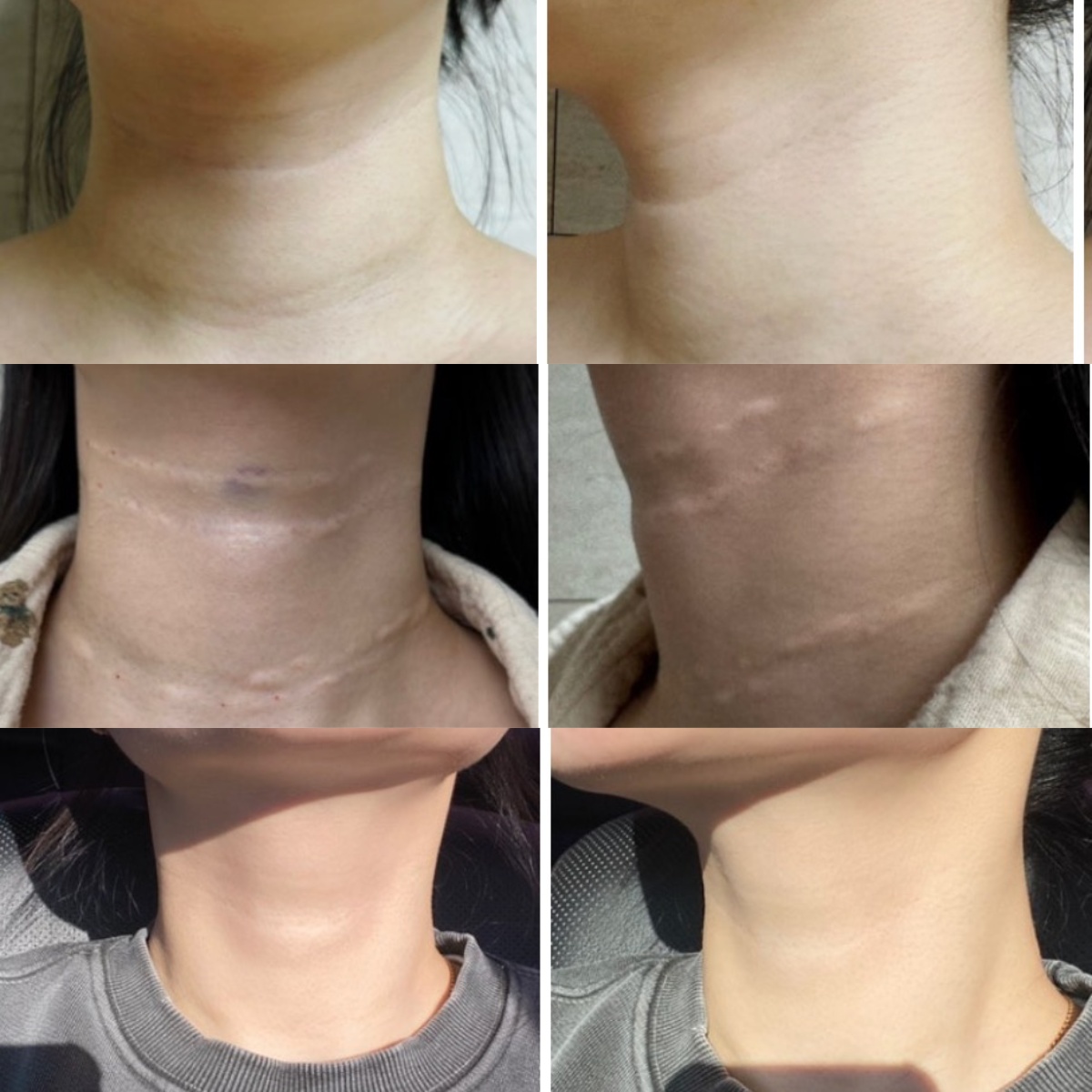
Different types of neck wrinkles call for different treatment approaches — combination plans often yield the best results
How to Choose the Right Treatment for You
Choose Based on Your Wrinkle Type
- Primarily vertical platysmal bands (vertical cords that appear when speaking) → Botox is the first choice; platysma plasty for severe cases
- Primarily horizontal static neck lines (visible creases at rest) → Hyaluronic acid filler or RE2O for skin texture improvement
- Significant skin laxity and sagging → Thermage, HIFU/Ulthera, or thread lift
- Mild to moderate overall aging → Combination treatment (e.g., Botox + Thermage/HIFU)
Choose Based on Your Comfort Level
- Prefer to avoid surgery entirely → Non-invasive/minimally invasive options (Botox, HA filler, Thermage, HIFU, RE2O)
- Open to minimally invasive procedures with longer-lasting results → Thread lift or combination treatments
- Seeking a definitive, long-term solution → Platysma plasty, with thorough risk assessment
Combination Treatments Often Deliver the Best Results
In clinical practice, many physicians recommend a multi-layered “combination approach” for neck wrinkles. For example: HIFU (deep lifting) + Botox (platysmal band relaxation) + RE2O (skin texture improvement) — these three work synergistically at different tissue depths for more comprehensive results. The specific combination plan should be tailored to your individual needs by your physician.
Important Considerations for Neck Wrinkle Treatment in Korea
- Pre-treatment preparation: Avoid taking aspirin, fish oil, vitamin E, and other anticoagulant medications for at least 1 week prior; refrain from alcohol consumption for 2 weeks before Botox or filler injections.
- Allergy testing: Some filler products require a review of your allergy history. Be sure to inform your Korean physician of all medications and allergies during your consultation.
- Language communication: Not all Korean aesthetic clinics have Chinese or English-speaking staff. If you cannot communicate independently, arrange translation services in advance.
- Visa requirements: Medical aesthetics tourism to Korea typically requires a C-3-3 Medical Tourism Visa, which is specifically designated for medical purposes.
- Recovery planning: If you choose thread lifts, platysma plasty, or other procedures requiring downtime, plan to stay in Korea long enough (at least 3–5 days or more) to monitor your recovery.
Frequently Asked Questions (FAQ)
Want to Learn More About Swan Neck Treatments?
Scan to connect with a BeautsGo consultant for a free personalized treatment recommendation


LINE

Mini Program
BeautsGo – Your One-Stop Korean Medical Aesthetics Platform