
A double chin is more than just an extra layer of fat — it makes the neck look shorter, blurs the jawline, and completely undermines the possibility of a swan neck appearance. In Korea, more and more surgeons recommend a combined approach of double chin liposuction + platysma muscle binding: first, liposuction precisely removes excess submental fat, then the loose, separated platysma muscles are sutured and tightened. By addressing both fat reduction and muscle tightening simultaneously, this approach creates a firmer, longer-lasting V-line jawline. This article provides a detailed breakdown of the principles, procedure, recovery timeline, and cost reference for this combined surgery.
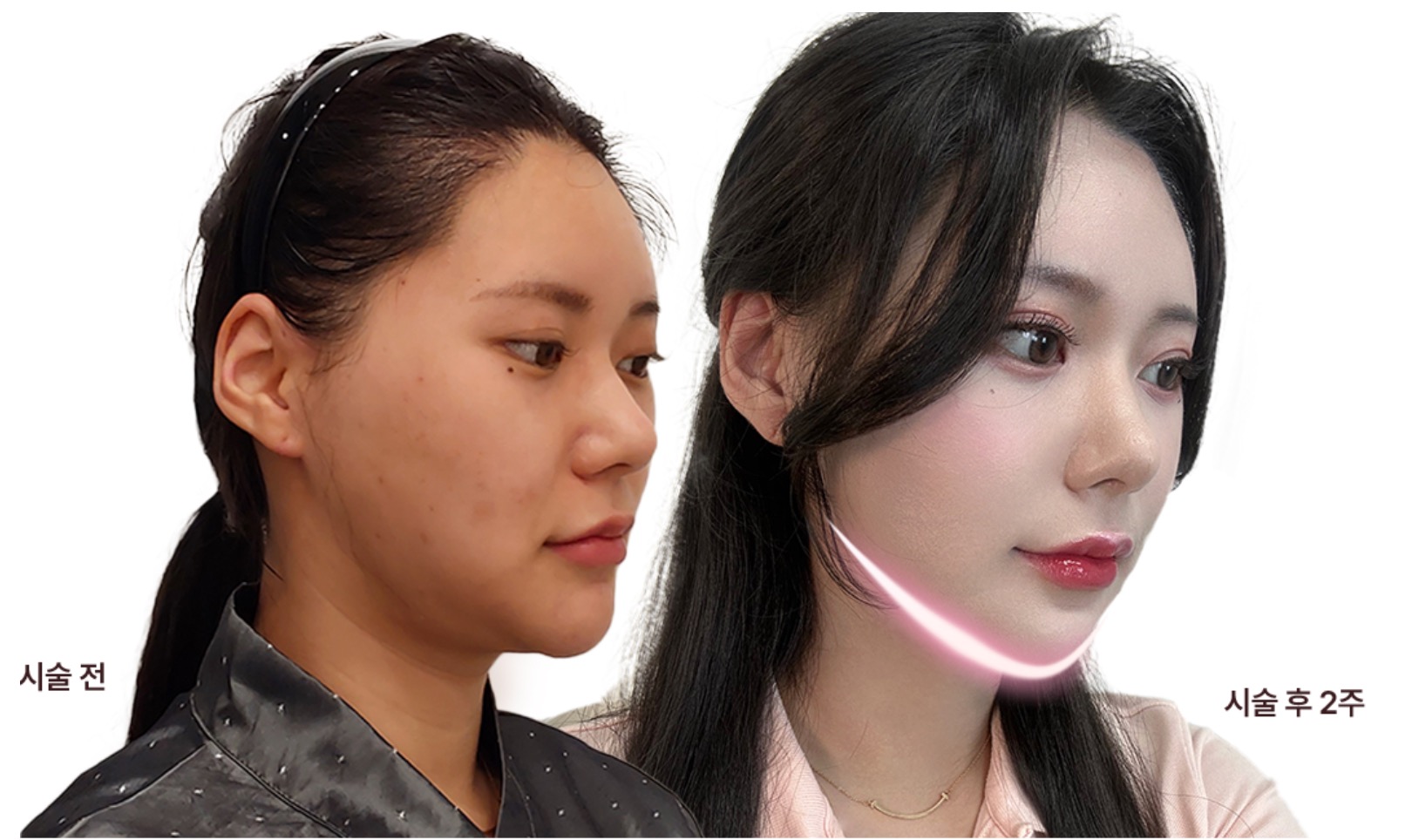
Double chin liposuction + muscle binding creates a defined V-line jawline
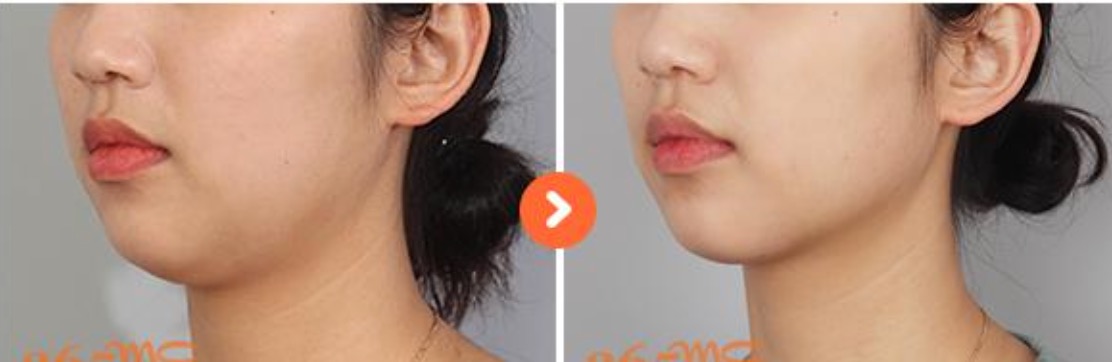
A double chin blurs the jawline and makes the neck appear short and thick — liposuction restores the V-line contour
1. Why Does a Double Chin Make Your Neck Look Short and Thick?
The hallmarks of a swan neck are: a sharp, well-defined jaw angle, a long and slender neck, and a cervicomental angle (the angle between the chin and neck) close to 90 degrees or sharper. A double chin disrupts both of these dimensions:
- Blurs the chin-to-neck boundary: Fat accumulation between the chin and neck makes it unclear where the chin ends and the neck begins, visually dragging the entire face downward.
- Compresses neck proportions: Excess fat below the jawline eliminates the V-shaped facial contour from the front; from the side, the neck silhouette becomes an obtuse angle, making the entire head appear to sit heavily on the shoulders.
- Accelerates facial aging: Even with good bone structure, loose submental skin and fat can add 5-8 years to your appearance, and regular weight loss rarely targets this area effectively.
2. Where Does a Double Chin Come From? Five Common Causes
| Cause | Mechanism | Improvement Potential |
|---|---|---|
| Genetics | Hereditary submental fat distribution with naturally high fat cell density in this area | Excellent (liposuction is highly effective) |
| Obesity / Overweight | Overall body fat accumulation; the submental area is a common deposit site | Very Good (weight loss recommended before surgery) |
| Aging & Skin Laxity | Platysma muscle relaxation and decreased skin elasticity worsen fat sagging | Moderate (skin tightening treatment may be needed) |
| Forward Head Posture | Prolonged looking down causes repeated folding of submental skin, accelerating laxity | Fair (posture correction needed post-surgery) |
| Jaw Structure | A short chin or recessed chin makes a double chin appear more prominent | Moderate (can be combined with filler or implant) |
3. Why Add Muscle Binding? Liposuction Alone vs. Liposuction + Muscle Binding
The structure of a double chin from outside to inside consists of three layers: skin, subcutaneous fat, and platysma muscle. Liposuction alone only addresses the middle layer (fat). In many patients, the platysma muscle itself has already become loose and separated, creating a curtain-like sagging effect. Muscle binding surgery sutures the separated platysma muscles together along the midline, essentially creating a natural “internal corset” for the jaw.
| Comparison | Liposuction Only | Liposuction + Muscle Binding |
|---|---|---|
| Layers Addressed | Removes subcutaneous fat only | Removes fat + tightens platysma muscle |
| Ideal Candidates | Younger patients with excess fat but firm muscles | Patients with both fat accumulation and muscle laxity, or older patients with decreased skin elasticity |
| Jawline Definition | Noticeable improvement | More significant improvement; sharper V-line |
| Cervicomental Angle Improvement | Some improvement | Greater improvement; more elongated neck contour |
| Risk of Relapse | Fat does not return, but skin may sag | Muscle tightening provides internal support, reducing sagging risk |
| Surgery Duration | Approx. 30-60 minutes | Approx. 60-90 minutes |
| Recovery Time | 1-2 weeks | 2-3 weeks |
| Estimated Cost (KRW) | 1.5-3 million KRW | 2.5-4.5 million KRW |
Note: The prices above are market reference ranges. Actual costs vary depending on the clinic, individual circumstances, and any additional procedures.
—
4. Liposuction + Muscle Binding: Complete Procedure Breakdown
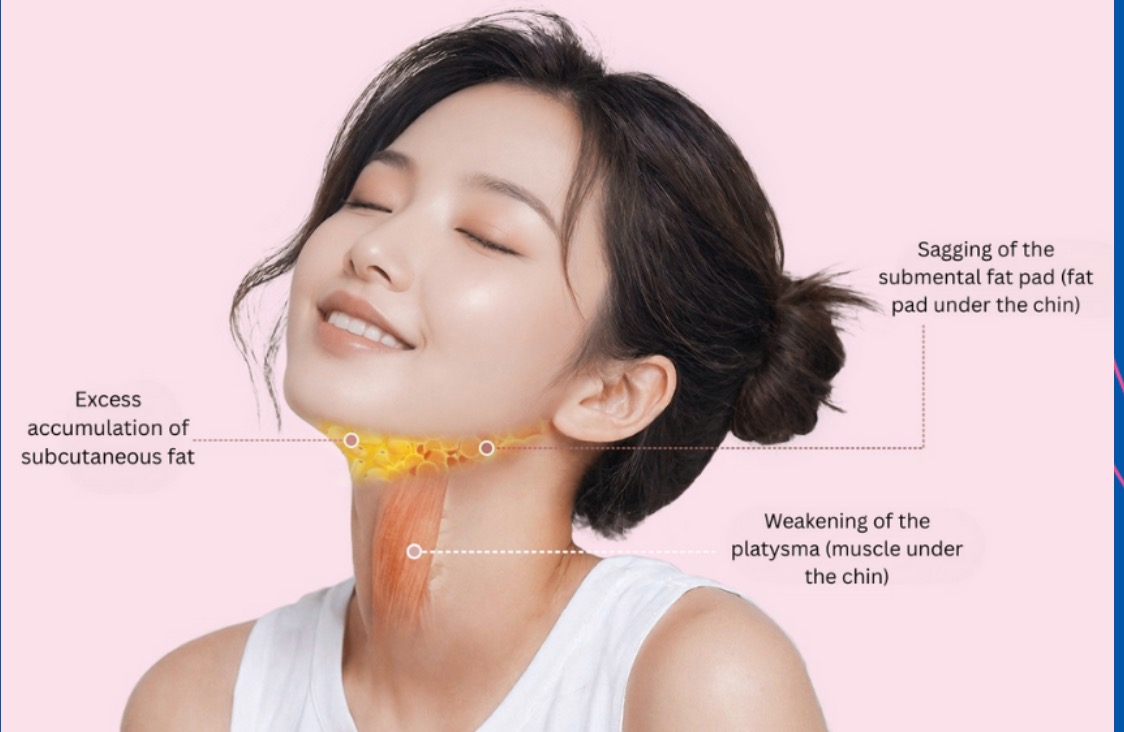
Pre-operative marking of the liposuction area and muscle binding plan
The surgeon evaluates submental fat thickness, skin elasticity (pinch test), cervicomental angle, and checks for submental lymph node enlargement through visual and tactile examination. The most suitable plan is then determined — liposuction only, liposuction + skin tightening, or a combination with other facial contouring procedures.
The liposuction area and incision sites are marked on the skin (typically placed in the natural submental skin crease, making them virtually invisible after healing). The design takes into account overall facial proportions to ensure a smooth, natural jawline after liposuction.
Most double chin liposuction procedures use local anesthesia with light sedation (conscious sedation), eliminating the need for general anesthesia and allowing for faster recovery. The anesthetic is injected and given time to take full effect (usually 10-15 minutes).
A tumescent solution containing saline, epinephrine, and local anesthetic is injected through 2-3mm micro-incisions. The solution causes the fat to swell, reduces bleeding, and further enhances the local anesthesia, making the procedure safer and more precise.
A thin cannula is inserted through the same micro-incision, and excess submental and jawline fat is precisely extracted under negative pressure. An experienced surgeon will retain an appropriate amount of subcutaneous fat to ensure a natural transition between the skin and deeper tissues, avoiding depressions or unevenness. This process takes approximately 30-60 minutes.
After liposuction is complete, the surgeon exposes the platysma muscle layer through the same incision. The separated, loose platysma muscles on both sides are folded together and sutured along the midline using absorbable sutures, essentially creating an “internal corset” for the jaw area. This step lifts and tightens the jawline contour from the muscle layer, producing a sharper, longer-lasting V-line effect. The binding process takes approximately 15-30 minutes.
The incisions are extremely small, typically requiring only 1-2 sutures or adhesive strips for closure. Sutures are removed after approximately 7-10 days (or dissolve on their own).
Immediately after surgery, a specialized compression chin strap is applied to provide even pressure to the submental area, helping reduce swelling, stabilize the muscle suture position, and promote skin adherence. The strap should be worn 24/7 for the first 3 days, then gradually transitioned to nighttime wear only for approximately 3-4 weeks.
—
5. Post-Operative Recovery Timeline
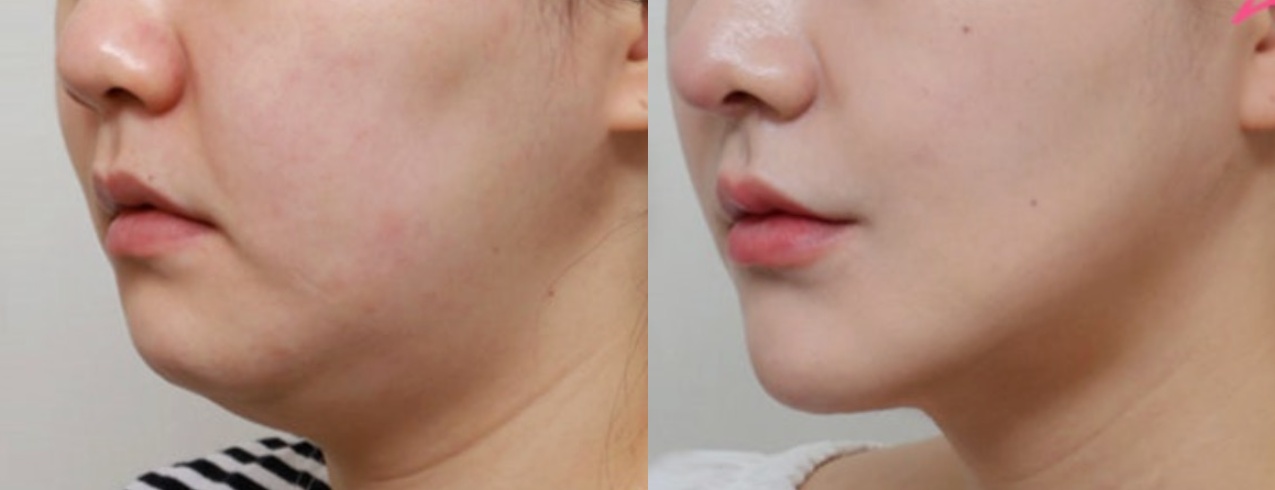
Before and after comparison following liposuction + muscle binding
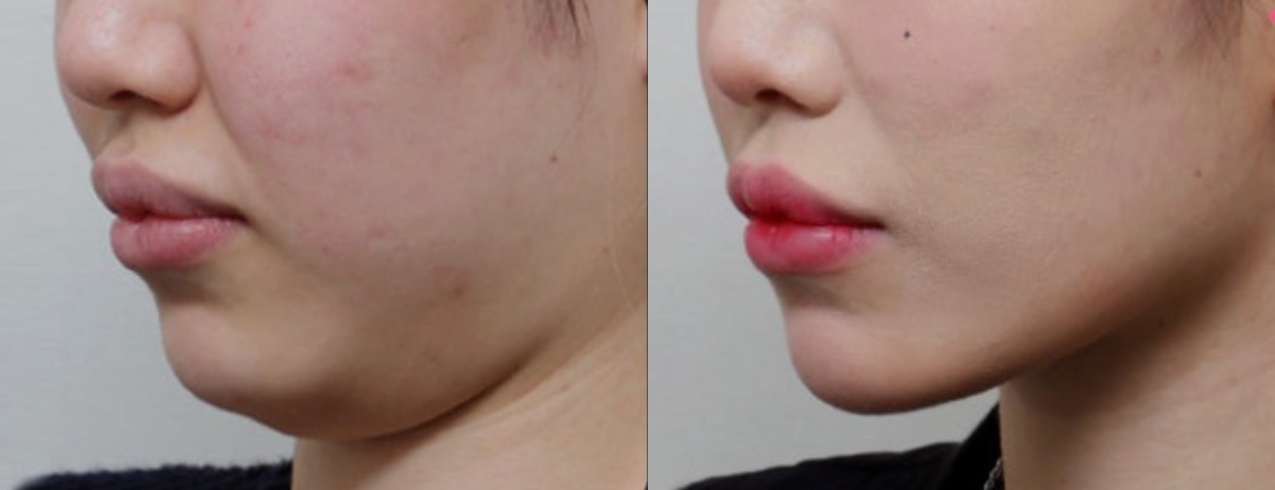
Significantly improved jawline contour after surgery with a sharper V-line
Submental swelling and mild bruising are normal. Because muscle suturing was also performed, the feeling of tightness will be more noticeable than with liposuction alone. Rest as much as possible, keep your head elevated (use extra pillows), apply cold compresses (not direct ice) to help reduce swelling, and wear the compression strap 24/7. Avoid wide mouth opening or looking down.
Most swelling noticeably improves by days 5-7. Sutures are removed (or adhesive strips fall off naturally). You can return to work normally, and any remaining bruising can be easily covered with concealer.
The compression strap is generally no longer needed during the day when going out; continue wearing it at night. Initial results become visible, though some residual swelling remains.
The majority of swelling has subsided, and jawline definition is noticeably improved. This is the “wow” stage when friends start noticing the change.
The skin has fully tightened and conformed, the cervicomental angle is well-defined, and the V-line contour is settled. The fat cells permanently removed through liposuction will not regenerate, the absorbable sutures from muscle binding have been absorbed by the body, and the muscles are fixed in their new position — results remain stable long-term.
—
6. LANS Micro-Liposuction — A Minimally Invasive Option for Mild Double Chins
For those with only mild submental fat accumulation who prefer to avoid traditional surgical incisions, Korean clinics widely offer LANS as a less invasive alternative:
- How it works: A fine micro-cannula is inserted through a tiny needle-point incision to extract fat into a syringe. The procedure is precise and minimally traumatic. Additionally, the gentle movement of the micro-cannula beneath the skin stimulates collagen production, providing a certain degree of skin tightening.
- Procedure time: Approximately 30 minutes under local anesthesia; patients can leave the clinic the same day.
- Post-procedure care: A compression chin strap is recommended, but typically only for 3-5 days.
- Ideal candidates: Patients aged 20-40 with moderate submental fat and good skin elasticity.
- Limitations: The amount of fat removed is less than with traditional liposuction; results may be limited for those with larger fat deposits.
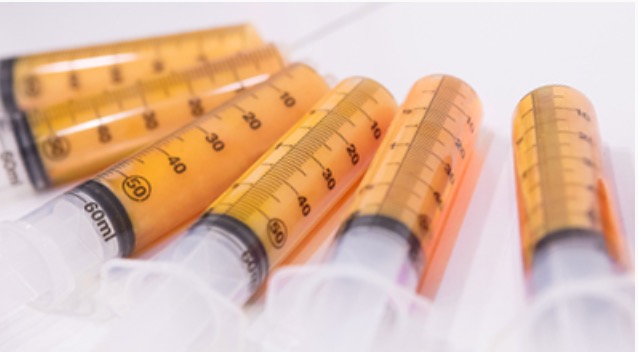
LANS micro-liposuction extracts fat into a syringe using a micro-cannula
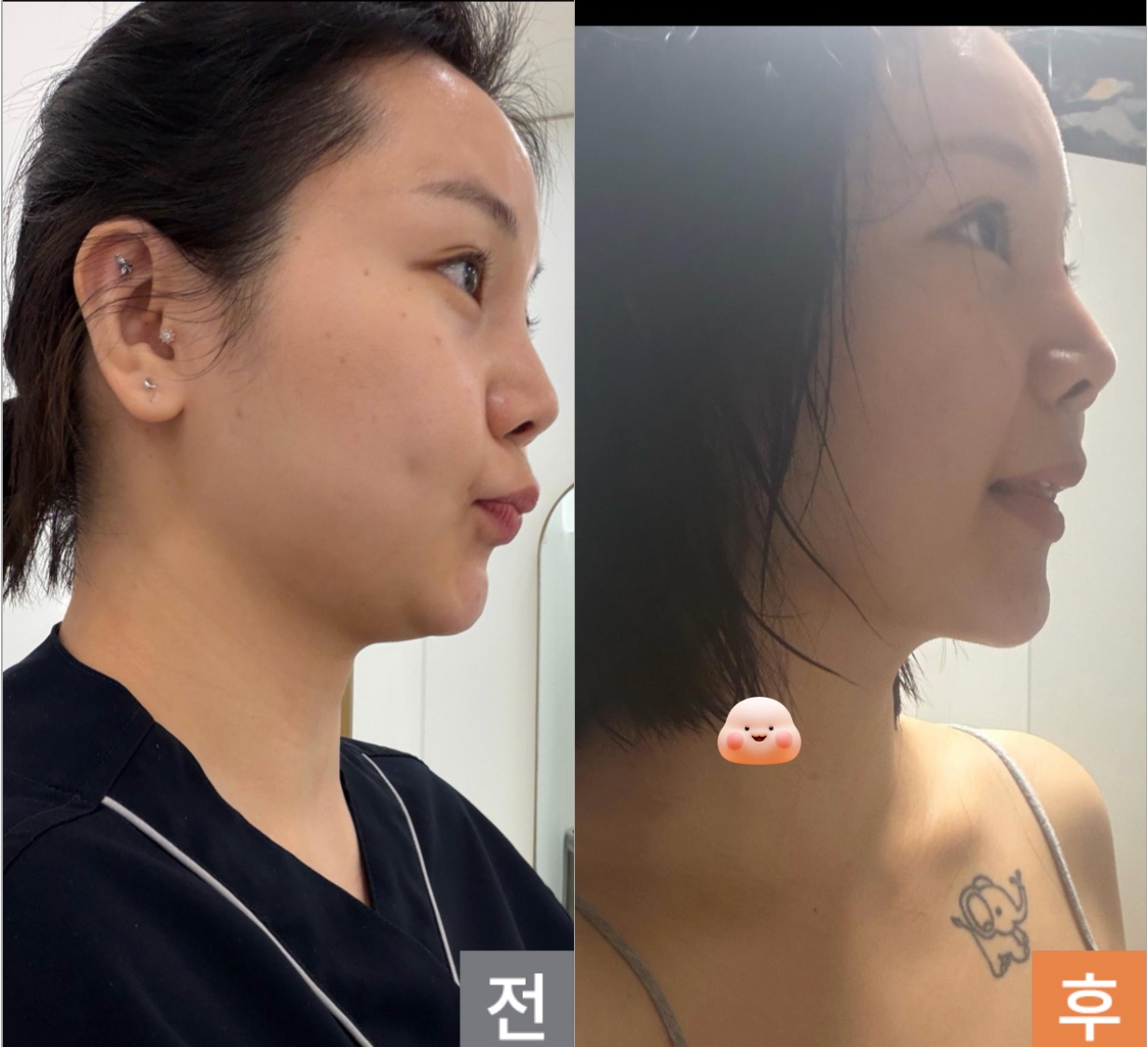
Before and after LANS micro-liposuction
—
7. Common Misconceptions & Expert Advice
| Misconception | The Truth |
|---|---|
| “Losing weight will get rid of my double chin” | Genetically determined submental fat is highly resistant to weight loss — even with significant weight reduction, this stubborn fat often remains |
| “Liposuction alone is enough — no need to address the muscles” | If the platysma muscles have already become loose and separated, the muscle layer will still sag after liposuction alone, leaving the jawline insufficiently defined. Adding muscle binding addresses the root cause |
| “The more fat removed, the better” | Retaining an appropriate amount of subcutaneous fat is essential to avoid excessive hollowing. An experienced surgeon will calculate the optimal amount to preserve |
| “I don’t need to wear the compression strap” | Skipping post-operative compression significantly increases the risk of skin sagging and compromises final jawline definition |
| “I should see a V-line within one week” | Swelling is still present at one week; full results take 3+ months to appear. Do not judge surgical outcomes based on one-week results |
—
8. Frequently Asked Questions (FAQ)
—
9. Who Should Avoid This Procedure?
- Those who are pregnant or breastfeeding
- Those with active infection or skin conditions in the submental area
- Those with severe blood clotting disorders or currently taking anticoagulant medications (must stop at least 1 week prior)
- Those with a very high BMI (it is recommended to lose weight to near your target weight before surgery)
- Those with excessively high expectations or unrealistic expectations about the surgery
- Those with severe skin laxity who refuse any complementary lifting procedures
—
Want to Learn More About Swan Neck Treatments?
Scan the QR code to connect with a BeautsGo consultant for a free personalized treatment recommendation



BeautsGo – Your One-Stop Korean Aesthetic Service Platform