
Why Neck Wrinkles Are Harder to Treat Than Facial Lines
The skin on your neck is fundamentally different from facial skin, making neck wrinkles one of the most stubborn aesthetic concerns. Here is why:
- Thinner skin: Neck skin is roughly two-thirds the thickness of facial skin, with a thinner dermis and less structural support from collagen fibers.
- Fewer sebaceous glands: The neck produces far less sebum than the face, resulting in weaker natural moisture retention and accelerated dryness-related aging.
- “Phone lines” (tech neck): Years of looking down at smartphones create persistent horizontal creases that deepen over time, forming what dermatologists now call “tech neck wrinkles.”
- Gravity-induced sagging: As collagen depletes and subcutaneous fat diminishes with age, the neck skin loses its scaffolding, leading to vertical laxity and the characteristic “turkey neck” appearance.
Neck wrinkles generally fall into two categories:
- Horizontal neck lines (necklace lines): Primarily caused by natural skin folds and prolonged forward-head posture; these are mostly superficial fine lines.
- Vertical sagging (turkey neck): Driven by collagen loss, subcutaneous fat atrophy, and weakening of deeper structural layers, resulting in drooping skin and blurred jawline-to-neck contour.
Because these two types of neck wrinkles involve different tissue layers, choosing the right treatment requires understanding your primary concern — surface-level fine lines or deeper structural laxity.
Thermage FLX for Neck Rejuvenation: Uniform Tightening Through Radiofrequency Energy
How Thermage FLX Works
Thermage FLX is the fourth-generation monopolar radiofrequency (RF) platform. It delivers RF energy uniformly into the dermal layer, raising local tissue temperature to 65–75°C — the critical threshold for collagen contraction. This high heat causes existing collagen fibers to contract immediately while simultaneously activating fibroblasts, triggering a long-term collagen remodeling and regeneration process.
Treatment Depth and Coverage
Thermage FLX primarily targets the dermal layer at a depth of approximately 1–4 mm, providing broad, even coverage across the entire neck surface. Its “volumetric heating” approach ensures uniform thermal delivery to address superficial-to-mid-depth fine lines, skin laxity, and elasticity loss without leaving untreated gaps.
Pain Level and Comfort
The Thermage FLX system features the proprietary AccuREP™ vibrating tip, which applies mechanical vibration simultaneously with heat delivery. This significantly reduces pain perception compared to earlier-generation devices. Most patients describe the sensation as “a manageable warm feeling.” No topical anesthesia is typically required, and patients remain fully awake and comfortable throughout the procedure.
Procedure Duration and Recovery
A single neck Thermage FLX session takes approximately 30–45 minutes. Patients can resume normal activities immediately afterward. Mild redness may occur but typically resolves within a few hours. There is zero downtime.
Results Timeline
- Immediate effects: A subtle tightening sensation and improved skin texture are noticeable right after treatment.
- Progressive improvement: As new collagen forms, results continue to develop over 3–6 months, with visible improvements in skin texture, fine lines, and neck contour.
- Duration of results: Effects typically last 1–2 years, depending on individual skin quality and lifestyle factors.
Best Candidates for Thermage FLX
- Those with mild to moderate neck skin laxity and declining elasticity
- Individuals with superficial horizontal neck lines (early-stage tech neck)
- People seeking preventive anti-aging maintenance and early intervention
- Those with low pain tolerance who prefer to avoid anesthesia
HIFU for Neck Rejuvenation: Deep Structural Lifting Through Focused Ultrasound
How HIFU Works
HIFU (High-Intensity Focused Ultrasound) is a non-invasive skin tightening and lifting device. Its core mechanism focuses high-intensity ultrasound energy precisely at specific depths within the skin, creating thermal coagulation points (TCPs) at the target layer. By bypassing the epidermis entirely, HIFU avoids surface damage while inducing collagen contraction and neogenesis at the treatment depth.
A key advantage of HIFU is its real-time ultrasound imaging guidance — the physician can visualize the skin’s layered structure during the procedure, pinpointing exactly where energy is delivered. This dramatically enhances both precision and safety.
Treatment Depths and Probe Specifications
- 1.5 mm probe: Targets the superficial dermis for fine line improvement.
- 3.0 mm probe: Targets the deep dermis to enhance skin elasticity.
- 4.5 mm probe: Reaches the SMAS layer (Superficial Musculoaponeurotic System) for deep structural lifting.
Neck treatments typically focus on the 1.5 mm and 3.0 mm probes. The 4.5 mm SMAS probe is used selectively based on the physician’s assessment of neck anatomy and tissue thickness.
Pain Level and Comfort
HIFU generally involves a higher pain level than Thermage FLX, particularly during energy point delivery. Some patients describe it as a sharp stinging or burning sensation. Because neck skin is thinner, it tends to be more sensitive. Many facilities offer oral analgesics or topical numbing gel to improve comfort. It is recommended to discuss your pain management preferences with your physician before treatment.
Procedure Duration and Recovery
A single neck HIFU session takes approximately 20–30 minutes. Mild redness, swelling, or warmth may occur locally, typically resolving within 1–2 days. Some patients experience minor bruising that clears within about a week. Overall recovery time is short with minimal impact on daily life.
Results Timeline
- Early response: Some patients notice mild tightening within the first few weeks.
- Peak results: As collagen remodels, results peak at 2–3 months post-treatment, with more pronounced lifting and contour improvement.
- Duration of results: Approximately 1–1.5 years, varying by individual.
Best Candidates for HIFU
- Those with moderate neck laxity who need noticeable lifting
- Individuals with an unclear jaw-to-neck transition (cervicomental angle)
- People with deeper horizontal neck lines or early-stage turkey neck
- Those with higher pain tolerance who are willing to accept short-term discomfort for stronger lifting results
Thermage FLX vs HIFU: Complete 7-Dimension Comparison
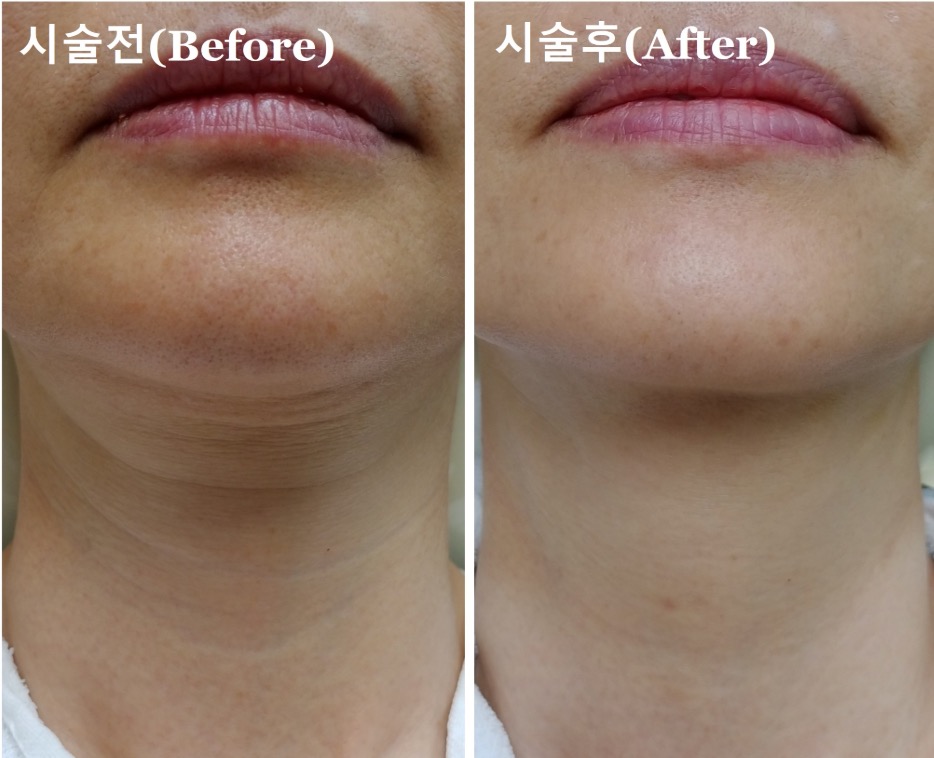
| Comparison Dimension | Thermage FLX | HIFU (High-Intensity Focused Ultrasound) |
|---|---|---|
| Core Technology | Monopolar Radiofrequency (RF) | High-Intensity Focused Ultrasound |
| Treatment Depth | Dermis 1–4 mm (volumetric heating) | 1.5 / 3.0 / 4.5 mm (focal point heating) |
| Primary Target Tissue | Dermal collagen layer, superficial subcutaneous tissue | Deep dermis + SMAS fascia layer |
| Neck Pain Level | Mild to moderate (vibrating tip reduces pain) | Moderate to significant (pain management available) |
| Procedure Duration | 30–45 minutes | 20–30 minutes |
| Recovery Period | Virtually zero downtime (redness for a few hours) | 1–3 days (mild redness/slight bruising) |
| Results Timeline | Immediate tightening + gradual improvement over 3–6 months | Peak results at 2–3 months |
| Primary Effects | Fine line reduction, skin texture improvement, mild-to-moderate tightening | Deep lifting, jaw-neck contour improvement, moderate laxity correction |
| Duration of Results | Approximately 1–2 years | Approximately 1–1.5 years |
| Price Range in Korea (USD) | $1,100–$2,100 | $700–$1,700 |
| Best Suited For | Mild-to-moderate laxity, superficial lines, preventive anti-aging | Moderate laxity, deeper wrinkles, structural lifting needed |
| Real-Time Imaging | Not available | Yes (ultrasound visualization) |
Combined Dual-Track Treatment: Thermage FLX + HIFU
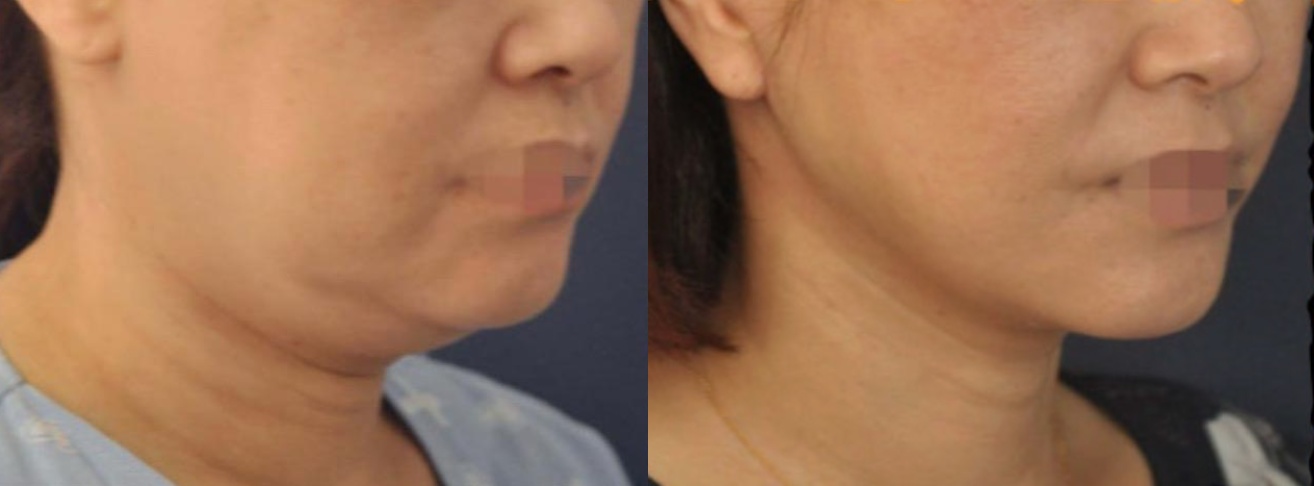
For patients with complex neck concerns — superficial horizontal fine lines combined with mid-layer skin laxity, and perhaps a blurred jawline-to-neck transition — a single treatment modality may not address all layers effectively. This is why Korean aesthetic medicine has popularized a “dual-track” combination protocol:
HIFU — targets the deep SMAS fascia for structural vertical lifting
Thermage FLX — targets the superficial-to-mid dermis for uniform tightening, fine line improvement, and skin texture enhancement
Together, they create a comprehensive “inside-out, deep-to-shallow” multi-layer neck rejuvenation effect.
The advantage of the combined approach is clear: HIFU provides the structural “scaffolding” lift while Thermage FLX handles the surface “skin envelope” tightening. The combined result typically exceeds what either treatment achieves alone. Many international patients traveling to Korea for aesthetic treatments choose this combination to achieve comprehensive improvement in a single trip.
Important Considerations for Combined Treatment
- Whether both procedures are performed on the same day and in which order should be determined by the physician based on individual skin condition and tolerance.
- The combined session typically takes about 1–1.5 hours. Skin reactions may be slightly more pronounced than with either treatment alone, with a recovery period of approximately 3–5 days.
- Combined treatment packages often come with bundled pricing advantages. Specific costs depend on the treatment plan.
- Self-prescribing a combination without professional assessment is not recommended, as overlapping energy delivery could cause unnecessary skin irritation.
Decision Guide: Which Treatment Is Right for You?
| If You Are… | Recommended Option | Rationale |
|---|---|---|
| Ages 30–38 with shallow neck lines, focused on prevention | Thermage FLX | Superficial collagen maintenance with high comfort |
| Ages 38–48, neck starting to sag with blurring contour | HIFU | Deep fascial lifting for contour restoration |
| Deeper neck wrinkles with both laxity and fine lines | HIFU + Thermage FLX combined | Dual-track approach for comprehensive coverage |
| Highly pain-sensitive, prefer no anesthesia | Thermage FLX | Vibrating tip significantly reduces discomfort |
| Prioritize results, can tolerate brief discomfort | HIFU | More pronounced lifting effect |
| On a limited budget | HIFU | Lower starting price point |
Important note: Neck skin is thin and lies close to critical neurovascular structures, making neck treatments more technically demanding than facial procedures. It is essential to choose a reputable medical facility with physicians experienced in neck treatments. A thorough pre-treatment skin assessment and honest disclosure of your health history are vital.
Getting Neck Thermage FLX or HIFU in Korea: The 6-Step Treatment Process
- Pre-Arrival Consultation: Before traveling, submit neck photos for a remote skin assessment to confirm your suitability for treatment and receive a preliminary treatment plan.
- Arrival Day Preparation: If needed, basic blood work or preliminary checks can be arranged the day before your treatment appointment.
- In-Clinic Assessment: Upon arrival at the facility, the physician conducts a detailed neck skin analysis using ultrasound equipment or skin diagnostic devices to evaluate subcutaneous tissue thickness and layer structure, then creates a personalized treatment protocol.
- Treatment Session: Surface cleansing → application of coupling gel or RF conductive medium → procedure → post-treatment cold compress to soothe the skin.
- Post-Treatment Care Instructions: The physician provides skincare guidance, typically including sun protection, intensive moisturizing, and avoiding heat exposure or pressure on the neck area.
- Post-Return Follow-Up: Results continue to develop over 2–6 months. Taking comparison photos is recommended to support remote follow-up consultations.
Frequently Asked Questions (FAQ)
Q1: Which is more effective for neck wrinkles — Thermage FLX or HIFU?
Each excels in different areas. Thermage FLX is better at improving superficial neck fine lines and mild skin laxity by uniformly heating the dermal layer with radiofrequency energy, producing immediate tightening — ideal for those with shallower wrinkles or seeking preventive care. HIFU targets the SMAS fascial layer with focused ultrasound for more pronounced lifting, making it better suited for deeper neck wrinkles or moderate skin laxity. For comprehensive results, combining both treatments is the most popular advanced approach.
Q2: Which neck treatment is more painful — Thermage FLX or HIFU?
HIFU generally causes more discomfort than Thermage FLX. When ultrasound energy concentrates on the deep fascia, patients may experience noticeable stinging or burning sensations. Some facilities offer topical anesthesia or oral pain relief. Thermage FLX’s latest-generation device features a vibrating handpiece that effectively disperses pain sensation, and most patients tolerate it well without any anesthesia. Since neck skin is thin and nerve-rich, both procedures should be performed by experienced physicians at qualified medical facilities.
Q3: How much do Thermage FLX and HIFU cost for the neck in Korea?
In Korea, neck Thermage FLX typically ranges from $1,100 to $2,100 USD, while neck HIFU ranges from $700 to $1,700 USD. Actual costs vary based on facility tier, number of treatment shots, physician qualifications, and whether additional procedures are included. Contact us via WeChat, LINE, or our mini program to compare treatment options and pricing.
Q4: How long do Thermage FLX and HIFU sessions take, and how long do results last?
A single neck Thermage FLX session takes approximately 30–45 minutes, with full results gradually emerging over 3–6 months and lasting about 1–2 years. A single neck HIFU session takes approximately 20–30 minutes, with peak results at 2–3 months and a duration of about 1–1.5 years. Both are single-session treatments that do not require frequent repeat visits.
Q5: Can Thermage FLX and HIFU be done together?
Yes. The “HIFU + Thermage FLX” combination is a popular advanced protocol. HIFU targets the deep SMAS fascia for vertical structural lifting, while Thermage FLX handles uniform tightening and fine line improvement at the superficial dermal level — creating a synergistic “dual-track” effect. The specific sequence and energy settings should be determined by your physician based on your individual skin condition.
Q6: Do I need to take time off after a neck Thermage FLX or HIFU session?
Both are non-invasive procedures with essentially no required downtime. After Thermage FLX, mild redness or swelling may appear but typically resolves within a few hours to one day. After HIFU, mild redness, swelling, or slight bruising may occur, usually resolving within 2–3 days. For the first week after treatment, avoid exposing your neck to high temperatures and maintain diligent sun protection and moisturizing.
Q7: What support services are available for international patients getting these treatments in Korea?
Comprehensive support is available for international patients seeking aesthetic treatments in Korea, including: medical visa assistance (C-3-3 visa), full interpretation and treatment accompaniment services, airport transfers, and accommodation coordination — all as part of an integrated service package. Contact us through WeChat, LINE, or our mini program to receive a personalized treatment plan.
Q8: Who should NOT get neck Thermage FLX or HIFU?
The following conditions are contraindications for these treatments: neck area with implanted metal devices (such as surgical pins) or cardiac pacemakers (contraindicated for Thermage FLX); active infection, open wounds, or acute inflammation on the neck; pregnancy or breastfeeding; neurological conditions with hypersensitivity to acoustic energy. A professional pre-treatment assessment is essential, and patients should disclose their complete health history to the physician.
Summary: Make an Informed Choice for a Younger-Looking Neck
Thermage FLX and HIFU are not competing alternatives — they are complementary tools that address different layers and concerns of the neck. For those primarily seeking fine line improvement and skin texture enhancement, Thermage FLX is a gentle yet effective choice. For those who need more pronounced structural lifting and contour definition, HIFU offers a stronger advantage. And for patients who want comprehensive rejuvenation, the “dual-track” combination protocol deserves serious consideration.
Regardless of which option you choose, the fundamental prerequisite for neck treatment success is this: having the procedure performed at a qualified, reputable medical facility by an experienced physician who creates a personalized treatment plan and follows proper clinical protocols. This matters more than any device brand name.
Ready to learn more about neck rejuvenation options in Korea? Contact our consultants through WeChat, LINE, or our mini program for a free personalized treatment recommendation.