
A wide jaw angle is a very common facial contour issue among East Asians. A square or boxy face not only affects facial softness but makes the entire appearance look rough and less refined. As the world’s most mature country for facial contouring surgery, Korea has developed multiple unique techniques for jaw angle reduction, particularly leading the industry with the philosophy of “preserving the sub-ear angle and prioritizing frontal effect.” This article provides an in-depth analysis of Korean jaw angle surgery techniques, methods, and post-operative care.
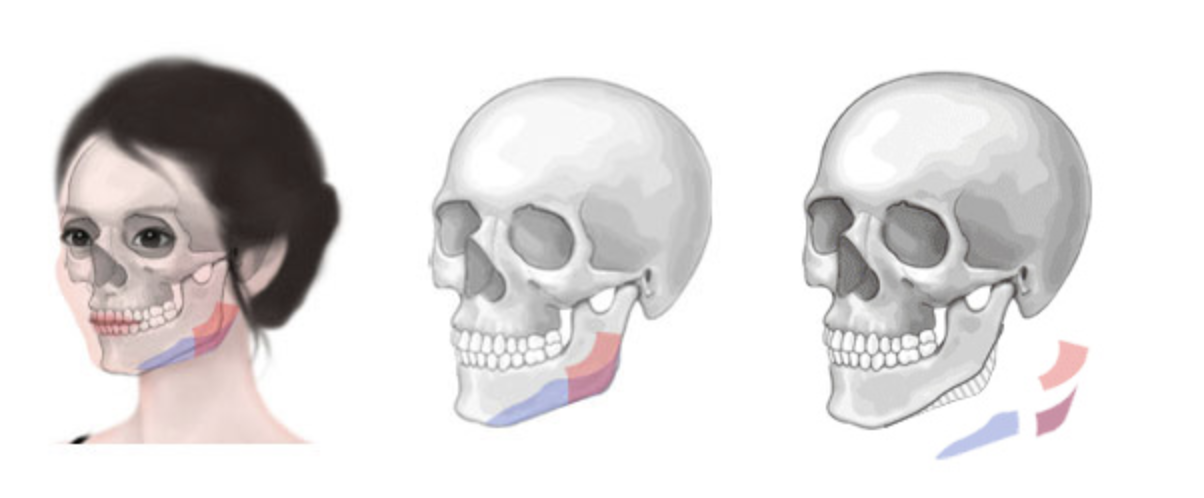
1. Causes of Jaw Angle Hypertrophy
Jaw angle hypertrophy is usually caused by the following:
Bony Hypertrophy: The mandibular angle bone itself is overdeveloped, with obvious outward flaring visible from front or side. This is the most common cause.
Muscular Hypertrophy: Overdeveloped masseter (chewing) muscles make the jaw area appear wide and full. Habitual chewing of hard foods or teeth grinding worsens this.
Combined Hypertrophy: Both bone and muscle are enlarged — the most common situation requiring a comprehensive treatment plan.
Subcutaneous Fat Accumulation: Excess fat in the jaw area can also make the lower face appear wide, though this is not a bony issue.
2. Core Philosophy of Korean Jaw Angle Surgery
The most important philosophy of Korean jaw angle surgery is “frontal effect first” — not simply shaving off the protruding angle from the side, but making the face look smaller from the front.
Traditional jaw angle surgery only focused on removing the lateral protrusion, resulting in obvious side profile changes but almost no reduction in frontal face width. Korean frontal-effect jaw reduction, through long-curve osteotomy and other techniques, reshapes the entire curve from jaw angle to chin while preserving the natural sub-ear angle, achieving significant frontal width reduction.
3. Mainstream Surgical Methods in Detail
1. Long Curve Osteotomy
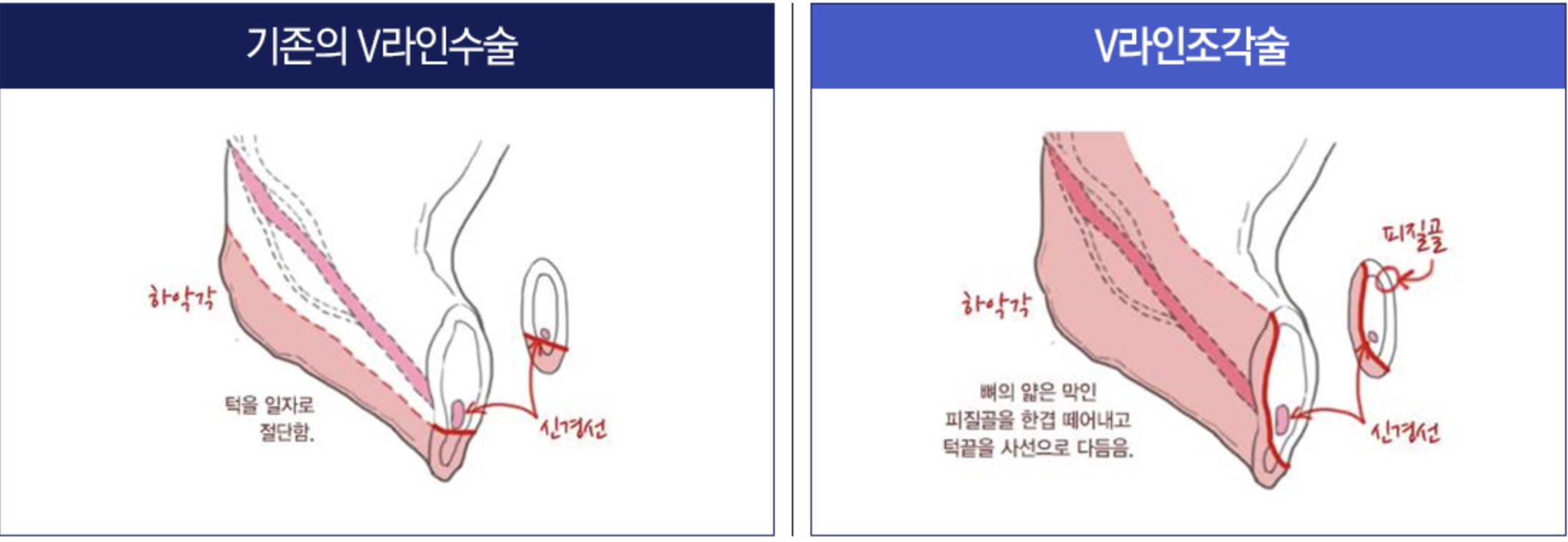
This is the most classic and effective Korean jaw angle technique. The osteotomy line extends from behind the jaw angle all the way to the chin area, forming an elegant long curve.
Technical Features:
• Long osteotomy line coverage, from below the ear to the front of the chin
• Reshapes the entire jawline in one procedure
• Significant frontal reduction effect
• Preserves the sub-ear angle, avoiding an unnatural “cut-off” appearance
• Jaw contour transforms from square to smooth oval or V-shape
2. V-line Sculpting Surgery
For patients needing both jaw angle and chin improvement, V-line sculpting combines jaw angle osteotomy with chin osteotomy reshaping.
Suitable Cases:
• Wide jaw angle with a short or wide chin
• Desire for a pointed V-shaped chin
• Overall large lower face
3. T-Osteotomy
A T-shaped osteotomy at the center of the chin, removing a middle section and bringing both sides together, combined with jaw angle osteotomy for comprehensive lower face narrowing.
Suitable Cases:
• A wide chin
• Need to reduce both chin width and jaw angle
• Pursuit of an ultra-small face effect
4. Mandible Body Reduction (Slim Fit Mandible Reduction)
For patients with a thick mandible body (the area between jaw angle and chin), removing the outer cortical bone plate makes the overall face thinner.
Technical Features:
• Targets frontal mandible body width
• Outer cortical bone removal creates a slimmer face
• Often combined with jaw angle osteotomy
4. Surgical Process and Recovery Timeline
Pre-operative Preparation:
• 3D-CT and X-ray comprehensive evaluation of mandibular structure
• 3D facial data measurement and surgical plan simulation
• Complete health checkup and anesthesia evaluation
• Stop smoking and drinking 2 weeks before; stop medications affecting blood clotting
Surgical Procedure (approx. 1.5-3 hours):
• General anesthesia
• Intraoral mucosal incision (no external facial scars)
• Precise bone cutting along designed lines using specialized bone saw
• Removal of excess bone and fine contouring
• Masseter reduction if hypertrophied
• Titanium mini-plate fixation
Recovery Timeline:
• 24 hours post-op: Compression face mask
• Days 3-5: Peak swelling, liquid or soft diet
• Day 7: Intraoral suture removal
• 2 weeks: Most swelling subsides
• 1 month: Can resume normal social activities
• 3-6 months: Final shape settled
5. Ideal Candidates
• Square or boxy face shape from the front
• Excessively flared jaw angle
• Jawline lacking smoothness or V-shape
• Masseter hypertrophy causing facial width
• Thick mandible body desiring a slimmer face
• Those seeking a refined small V-line face
6. Post-operative Care Tips
Diet: Liquid and soft foods for 1-2 weeks post-surgery; avoid hard foods. No excessive mouth opening or chewing hard items for one month.
Oral Hygiene: Use antiseptic mouthwash after every meal. Intraoral incisions typically use absorbable sutures.
Facial Care: Wear an elastic face mask to aid swelling reduction and shaping for 2-4 weeks.
Activity Restrictions: Avoid vigorous exercise and bending down for 2 weeks. Avoid saunas and hot springs for 1 month.
7. Frequently Asked Questions (FAQ)
Q1: How much smaller can the face look from the front after jaw angle surgery?
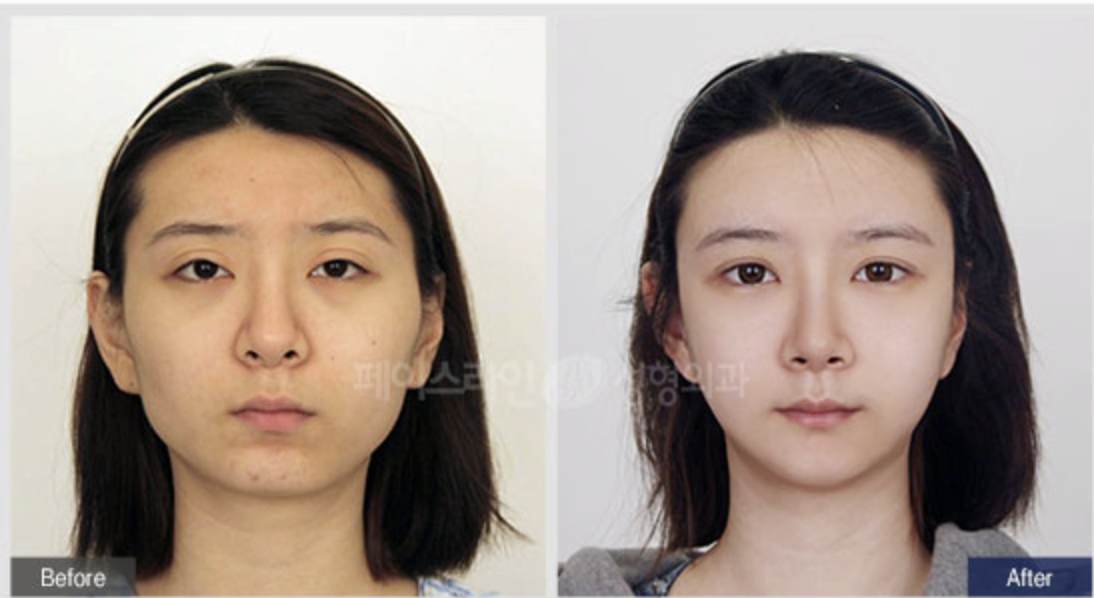
A: Depending on individual bone structure, frontal visual reduction is generally 5-15mm. Long curve osteotomy combined with mandible body reduction achieves the best frontal results.
Q2: Will jaw angle surgery affect chewing function?
A: The surgery does not involve the TMJ or core chewing muscle function areas. After recovery, chewing is unaffected. Initial limited mouth opening due to swelling will gradually resolve.
Q3: Where are the scars from jaw angle surgery?
A: Incisions are inside the oral mucosa — no external facial scars whatsoever. Absorbable sutures are used and the incision is virtually invisible after healing.
Q4: Can jaw angle surgery be done with cheekbone surgery?
A: Yes, and this is a common combination in Korean facial contouring. Reducing both cheekbones and jaw angle together creates a more harmonious overall facial contour.
Q5: How long should I stay in Korea?
A: At least 10-14 days is recommended. Sutures are removed around day 7, basic swelling subsides around day 10 for travel, but scheduled follow-ups are needed.
Q6: Will the bone grow back after surgery?
A: Adult mandibular bone does not regenerate. The removed bone will not grow back, and surgical results are permanent.
If you are considering jaw angle reduction surgery, please contact our professional consulting team through the following methods for a free facial assessment and personalized surgical plan.
Contact Us for a Free Consultation
Connect with our professional consultants for a personalized surgical plan and cost estimate


LINE

Mini Program