 BeautsGo
A hollow area does not necessarily need more fat removal, and a bulge is not always fat. Uneven contours after liposuction can reflect swelling that has not settled, residual fat, tissue adhesions or loose skin. Correction may involve targeted liposuction, fat grafting, release of adhesions or removal of excess skin. A single photograph cannot determine the right operation.
1. Hollows, bulges and loose skin need different approaches
| Main concern | Options to discuss | Important distinction |
|---|---|---|
| A localized area remains thick or prominent | Once residual subcutaneous fat is confirmed, consider limited additional liposuction and a smooth transition to surrounding areas. | Swelling, fluid collections and visceral fat are not treated like residual subcutaneous fat. |
| A localized hollow or groove | Consider fat grafting, with treatment of adjacent bulges or adhesions where appropriate. | Further thinning can deepen a hollow. Fat grafting does not guarantee a smooth result after one session. |
| A pulling sensation or skin that dents with movement | Assess whether scar tissue is tethered to deeper structures and whether release is appropriate. | Firmness alone does not establish fibrosis. Forceful massage is not a substitute for an examination. |
| Noticeable excess skin or sagging | Consider whether abdominoplasty or another skin-removal procedure is needed. | Additional liposuction does not remove excess skin. Longer incisions and scars are a separate trade-off. |
Uneven fat distribution and loose skin can coexist in the same abdomen. Ask the surgeon to mark, while you are standing, where tissue should be reduced, added or preserved—not simply quote a total volume to remove. Imaging or other tests may be needed to check for fluid collections or abdominal-wall problems.
Why is revision different from first-time liposuction?
Previous surgery alters tissue planes. Scars, adhesions and remaining fat may be unevenly distributed. Revision is not simply repeating the first operation or removing as much fat as possible. It requires preserving enough tissue and the skin’s blood supply, and distinguishing contour changes that may improve from texture changes that may remain.
Fat grafting transfers your own fat from another area into a hollow, so both the donor and recipient sites matter. Discuss resorption, lumps, recurrent irregularities and the possibility of staged procedures. The volume injected is not the same as the volume that ultimately survives. Significant excess skin may need a different surgical plan; adding fat does not resolve it.
2. Three clinics: approaches and patient examples
Lydian Clinic | Revision liposuction and fat sculpting
Lydian offers revision liposuction as well as its signature 5D fat sculpting , which focuses on transitions between the waist, abdomen, abdominal definition and adjacent areas. Consultation with director Dr An Kyung-chun should begin with previous surgery and current skin and fat conditions before considering further definition.
For an already uneven contour, first establish whether restoring a smoother surface is the priority. Thin tissue, marked adhesions or loose skin may limit how much definition can safely be pursued. “5D” is the clinic’s procedure name, not a standardized grade of revision, and it does not mean every revision patient needs abdominal etching.
Useful questions include: “Where is there residual fat, where is there a hollow or adhesion, and which areas will you preserve? If smoothness comes first, how much abdominal definition is realistic?” Asking the surgeon to mark these areas is more useful than simply asking whether everything can be fixed.
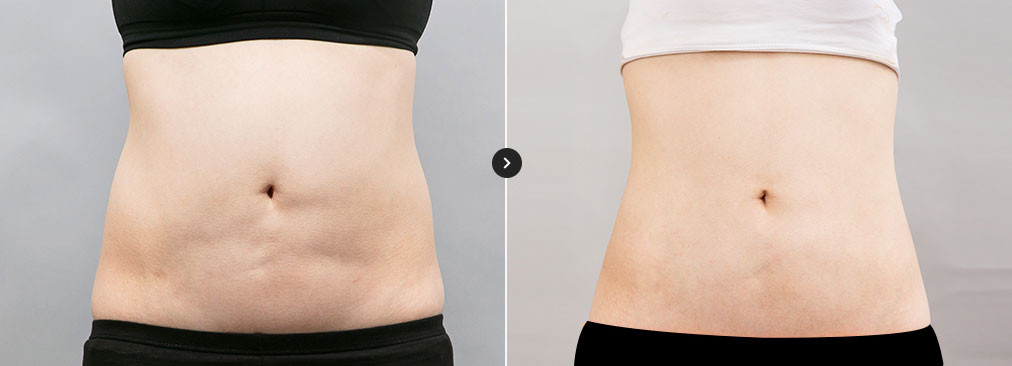
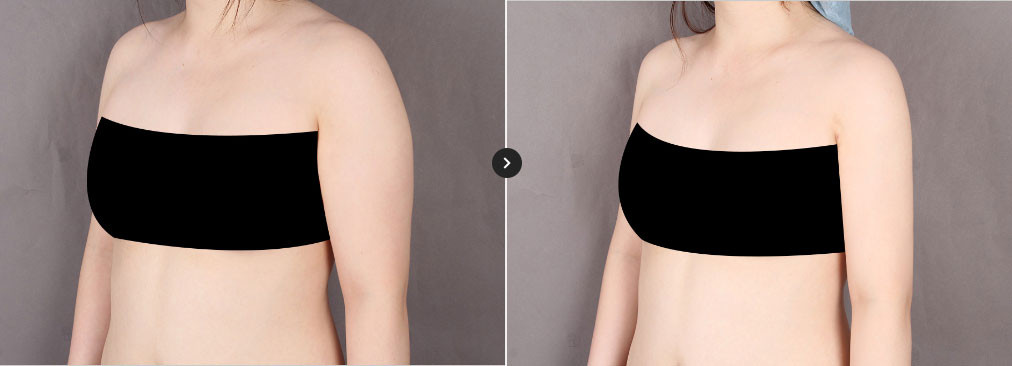
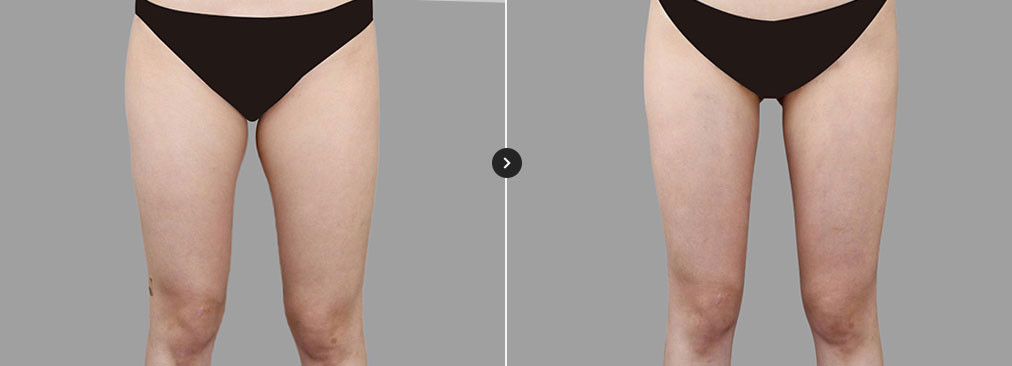
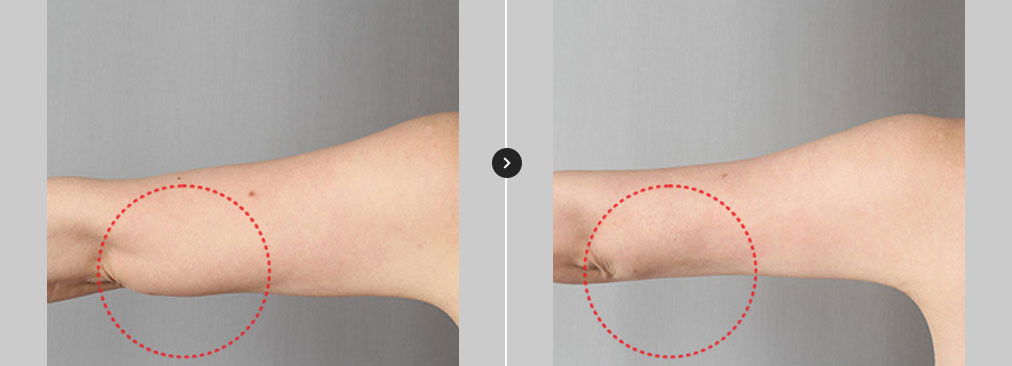
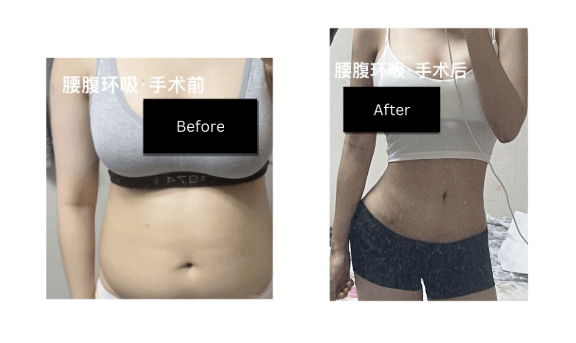
In these four Lydian comparisons, the left image is before revision and the right is after revision. The interval and full combination of procedures are not specified. The photographs cannot establish recovery speed or show whether fat grafting or skin removal was performed in every case. Lighting, posture and weight changes also affect appearance; individual results vary.
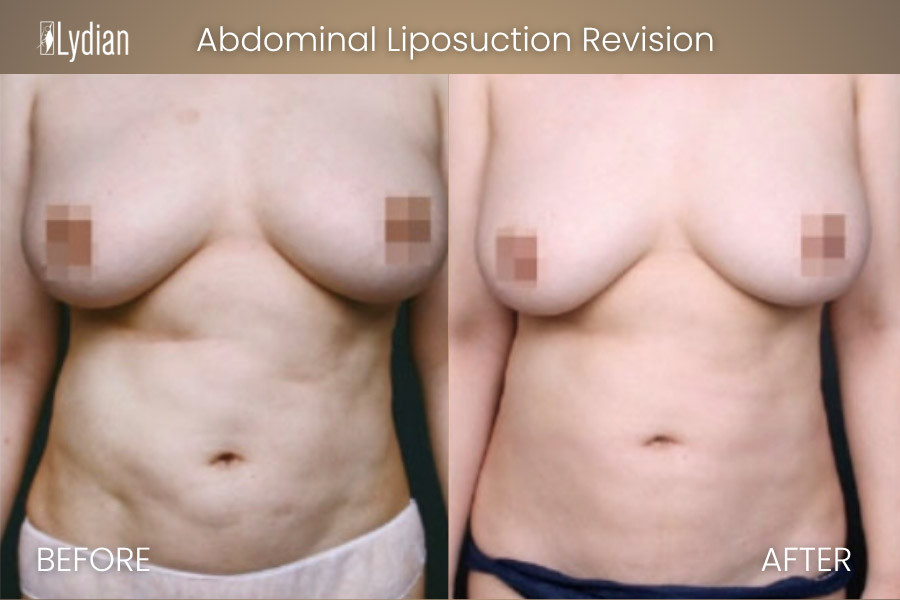
Look at how uneven areas blend into the surrounding abdomen, rather than waist size alone. The chest appearing in a photograph does not establish whether any breast procedure was performed.
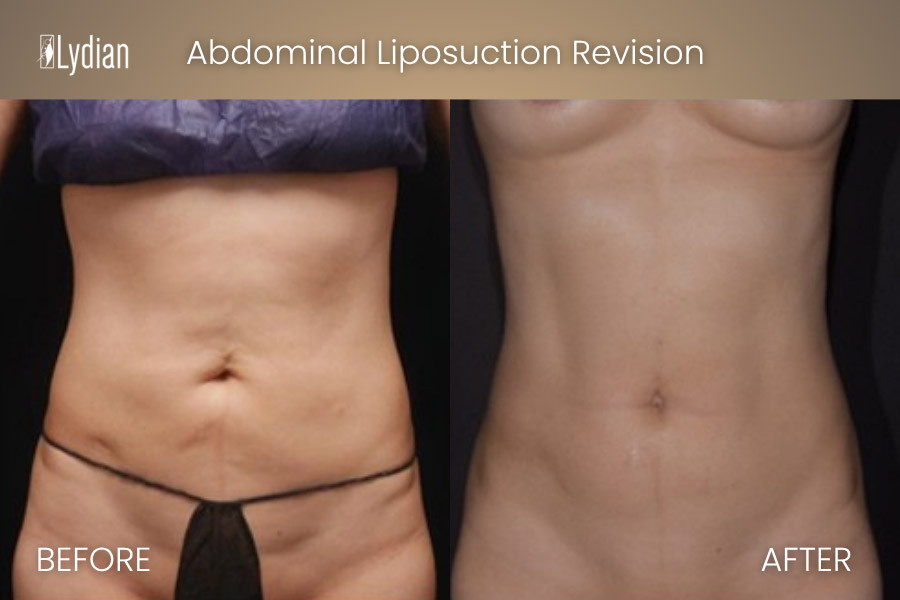
Improvement in a groove or crease around the navel does not reveal the device, graft volume or release technique used. At consultation, ask how your starting condition compares with the example and which differences may limit a similar result.
For men, examine the lower back as well as abdominal definition
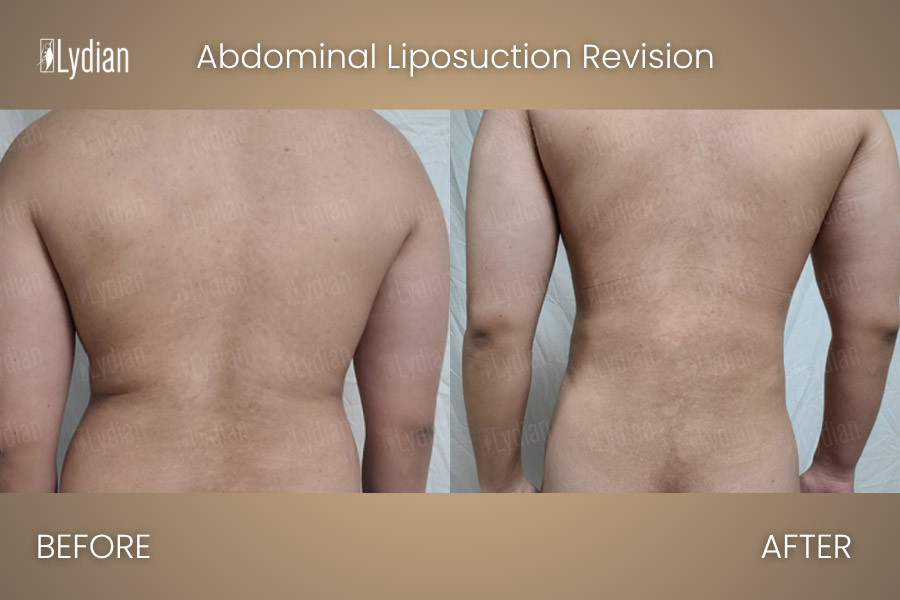
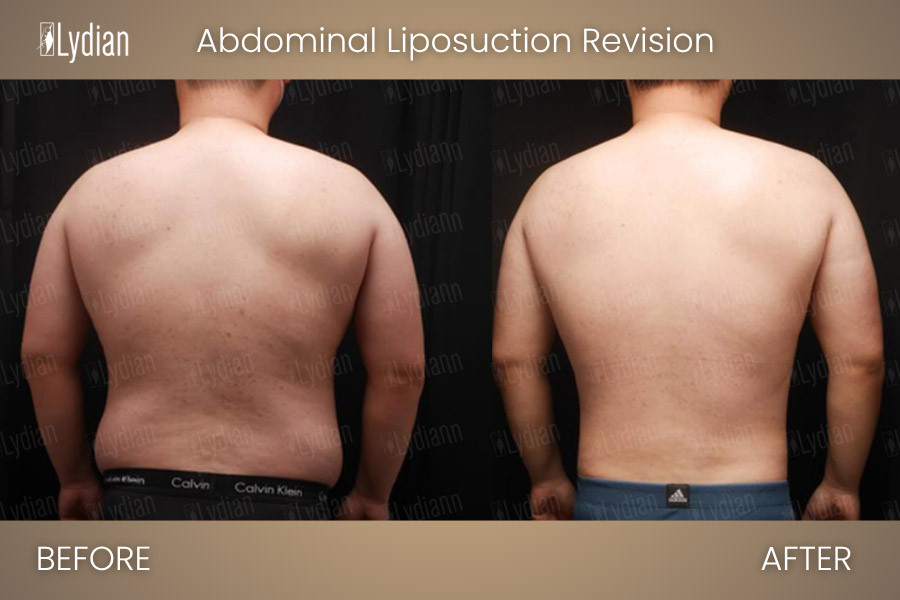
Back views show areas that a front view misses. Assess balance and smooth transitions across both sides, not simply whether an abdominal line looks deeper.
365mc | A dedicated revision-liposuction service
365mc offers individualized assessment for patients dissatisfied with their contour or experiencing problems after previous liposuction. Its revision information distinguishes residual fat, asymmetry, unevenness and hollows caused by excessive removal; these are not all treated by removing more fat.
Persistent localized fullness may call for additional liposuction, whereas a hollow may require fat grafting and sometimes adjustment of adjacent contours. Around the lower buttock fold, pre-existing fat deposits must be distinguished from tissue problems following previous surgery. Similar-looking areas do not necessarily need the same correction.
Confirm the treating branch and revision surgeon when booking. 365mc lists revision services in Seoul, Daejeon, Incheon, Busan and Daegu. Not every branch or LAMS service is equivalent to this revision service. Bring the original operation records and ask which concerns may improve and which may remain.
Qline Clinic | Liposuction without compression garments and individualized revision planning
Qline highlights liposuction without compression garments and also offers revision assessment for uneven contours, limited change or excessive fat removal after earlier surgery. Its approach considers the treatment area in relation to the overall body shape, rather than simply making one area thinner.
Avoiding compression garments may matter for clothing and daily routines, but it does not remove the need for follow-up or establish that revision is simpler. If the plan includes fat grafting, adhesion release or another combined procedure, confirm whether the no-garment approach still applies to your operation, along with wound care and activity restrictions.
If the main concern is a hollow, first ask whether volume needs replacing. If residual fat creates a bulge, discuss where further removal is appropriate. Explain the areas you want improved, acceptable scars and your previous recovery experience; do not choose surgery on the no-garment claim alone.
3. Costs: a first-time liposuction package does not establish a revision price
Even for the same area, additional liposuction alone differs from adhesion release with fat grafting or skin removal. Ask Lydian, 365mc or Qline for an itemized quote based on your own revision plan. A starting price for ordinary waist or abdominal liposuction is not the total cost of revision.
Do not compare procedures only by milliliters removed. Aspirate is not pure fat, and removing more does not make revision better value. Confirm whether the quote covers one operation or additional care; never assume a further operation will be free if you are dissatisfied.
4. Waiting for revision and recovering afterward are separate timelines
Observation after the original operation
Early swelling and changes in firmness can affect appearance. Comparable photographs—with consistent lighting, distance and posture—plus scheduled follow-up are more useful than daily selfies from changing angles. You can seek an assessment now even if further surgery is not yet appropriate, to rule out problems and plan reassessment.
The first two weeks after revision
Priorities include wound care, pain, swelling and possible fluid collections. Limited liposuction and surgery combined with skin removal have different care needs. Drains, compression and dressing changes depend on the operation performed. Do not copy another patient’s recovery timetable or tighten compression until it causes numbness or pain.
The following weeks and months
Returning to work, resuming exercise and reaching a settled contour are different milestones. Increase activity according to your surgeon’s follow-up advice. Graft retention, scars and residual unevenness may need longer observation. Revision cannot guarantee removal of old scars, stretch marks or skin-texture changes.
Prepare three sets of information before traveling to Korea
- Previous operation records: Dates, areas treated, liposuction and any combined techniques, anesthesia, complications and treatment received. Be clear if the records are incomplete.
- Current health: Recent weight changes, smoking, medicines and supplements, clotting history and chronic conditions. Do not stop prescribed medication on your own to have surgery sooner.
- Travel plans: Confirm follow-up, stitch removal or drain care and arrangements after returning home before booking departure. Being able to walk does not mean you are ready for a long flight. Timing depends on the extent of surgery and assessment of clotting risk.
5. Four common questions before consultation
Does unevenness at one month mean the operation failed?
Not necessarily. Swelling and tissue changes may still be present, but a significant abnormality should not automatically be dismissed as healing. Have it assessed to establish whether observation or treatment is needed before judging the final appearance.
Are current photos enough for a revision consultation?
No. Bring the original operation date, areas treated, records and preoperative photos, along with current front, side and back views taken at consistent angles. Mention fluid collections, infections or further procedures. These details help assess residual fat, tissue loss and adhesions. Photos support initial discussion, but palpation and necessary examinations still require an in-person visit.
Can replacing fat restore the original appearance after too much was removed?
There is no guarantee. Fat grafting needs suitable donor and recipient tissue; resorption or lumps can occur. Adhesions and excess skin may require separate treatment.
Can revision also create sharply defined abdominal muscles?
You can discuss that goal, but it should not be an automatic add-on. First assess tissue quality and whether a smoother contour is achievable, then discuss definition. A more conservative design or staged treatment may be appropriate.
Explore your next questions
For first-time liposuction, see our guide to liposuction and body contouring in Korea . To compare a natural waist contour with abdominal definition, read male abdominal liposuction versus abdominal etching . These first-time contouring guides do not replace assessment after previous surgery.
You can also explore Lydian Clinic’s procedures and patient examples . With significant excess skin, discuss how skin removal differs from liposuction alone. To explore other clinics, use our Korean clinic directory to check the relevant services.
This article helps you prepare for consultation; it does not replace diagnosis or informed consent. Revision carries risks including bleeding, infection, fluid collections, altered sensation, skin injury, blood clots and persistent contour dissatisfaction. The surgical team must assess the plan and recovery arrangements individually.