 BeautsGo
 · Plastic surgery / Choosing a jaw-contouring approach · November 23, 2026
Enlarged masseter muscles and a wide lower jawbone are different problems. Jaw-slimming injections usually involve botulinum toxin in the masseter muscles, reducing muscle activity and, gradually, muscle volume. Mandibular angle surgery changes the bony outline. If facial width mainly reflects fat, loose skin or jaw position, neither may be the right first step.
1. Four causes of a wide lower face require different approaches
Similar-looking width in a front-view photograph can have different causes: prominent jaw angles below the ears, muscles that bulge when clenching, or soft tissue along the jawline. Several factors may coexist. A doctor assesses the face at rest and while clenching, front and profile proportions, and imaging when needed. Wide-angle selfies, edited photos and hairstyles cannot determine how much bone to remove.
On a phone, swipe sideways to see the full table.
| Main factor | What to assess at consultation | Options and limitations |
|---|---|---|
| Enlarged masseter muscles | Thickness at rest and during contraction; teeth grinding or chewing discomfort | Botulinum toxin may be considered, but it cannot narrow the jawbone itself |
| Prominent mandibular angles or adjacent bony contours | Front and profile shape, bone thickness, the mandibular canal and asymmetry | Discuss mandibular angle osteotomy or bone contouring; removing more is not necessarily better |
| Excess fat or noticeable soft-tissue laxity | The relative contribution of volume, sagging and skin elasticity | Assess soft-tissue options separately; reducing muscle or bone does not necessarily tighten skin |
| Bite problems, jaw position or marked asymmetry | Dental occlusion, the relationship between the jaws and functional problems | Start with orthodontic/maxillofacial assessment; jaw-angle reduction is not a substitute for orthognathic treatment |
Sudden one-sided swelling, pain, a firm lump or limited mouth opening should not be treated as a cosmetic masseter problem without investigation. Establish the cause first. Bring records of previous injections or contouring surgery, including dates, products, doses and operative details.
2. Masseter injections change muscle, not bone
Botulinum toxin temporarily reduces nerve signals to muscles. As masseter activity decreases, changes in muscle volume emerge gradually. Allow time before assessing photographs rather than judging facial slimming on treatment day. Recovery of muscle activity and changes in visible volume do not necessarily follow the same timeline.
A randomized controlled study in people with prominent masseter muscles found improvements in lower-face width and muscle prominence after treatment. However, eligibility criteria, the product and doses were specific to that study. Its findings do not mean every wide face is suitable, or that you will achieve the same millimeter reduction. People with smaller masseters, existing cheek hollowing or jawline laxity should discuss whether further volume reduction could make those concerns more noticeable.
Risks include injection-site pain, bruising, chewing weakness and changes in the smile. Treatment is not free of recovery-related effects, and repeated doses should not be added indefinitely to maintain a smaller face. Units are not interchangeable between botulinum toxin brands. A doctor should decide the product, suitability and timing of any further treatment; do not copy doses found online.
My face is still wide after injections. Is surgery the next step?
Review the original goal and timing first. Was muscle bulk the main issue, and was enough observation time allowed? Does the remaining width come from bone, fat or sagging? Once muscle volume has decreased, additional toxin cannot remove a bony angle. Conversely, if the main issue is soft tissue rather than prominent bone, one disappointing result is not a reason to proceed directly to osteotomy.
3. Jaw-angle surgery: agree on the contour before discussing bone removal
Mandibular angle reduction commonly uses incisions inside the mouth to access and reshape the angle and adjacent jaw contour. The angle seen in profile below the ear, frontal width and the transition toward the chin are distinct treatment goals. Instead of asking only for a “V-shaped face,” ask the surgeon to identify the bone segments they plan to change and the features they intend to preserve.
Preoperative imaging helps assess bone shape, thickness and safety margins near the mandibular canal. Outer cortical bone contouring, chin osteotomy and soft-tissue procedures each need their own indication. More procedures do not make a package inherently better. If chin length and position are not concerns, a package price alone is not a reason to add chin surgery.
Risks include bleeding, infection, altered sensation, asymmetry, contour irregularities and anesthesia-related complications. The way soft tissue may adapt to a smaller bony framework also needs assessment. Bone surgery does not eliminate every form of laxity or guarantee an unchanging contour. Previous osteotomy requires individualized revision planning rather than simply repeating a first-operation plan.
4. Clinics and real cases: understand the procedures before comparing results
Respect Plastic Surgery | Assess bone and masseter muscle separately
Respect offers mandibular angle surgery and botulinum toxin treatment. Ask the doctor to explain the source of facial width and the separate goals of bone and muscle treatment. If chin or cheekbone surgery is proposed alongside jaw-angle reduction, each procedure should have a clear rationale. A photograph of an overall smaller face is not a substitute for an individual surgical plan.
Consider the combination of procedures and recovery interval when viewing before-and-after photographs. Results of combined surgery cannot be attributed to jaw-angle reduction alone or directly compared with masseter injections. Lighting, posture and makeup affect appearance, and individual results vary.
Case 1: Mandibular angle reduction
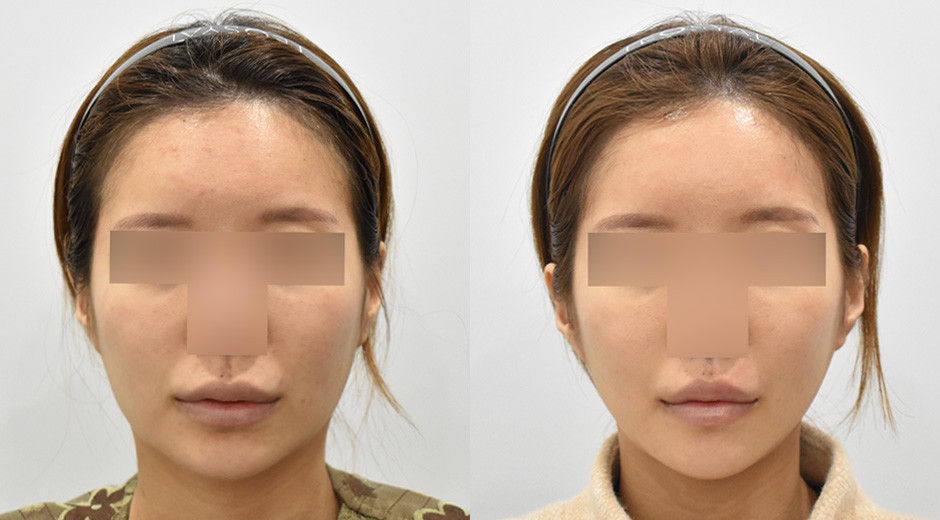
This case is identified as mandibular angle reduction. The frontal view helps show the transition from below the ears toward the chin. Photographs alone cannot establish the amount of bone removed, any unlisted procedures or whether nerve function is normal.
Case 2: Cheekbone reduction and mandibular angle reduction
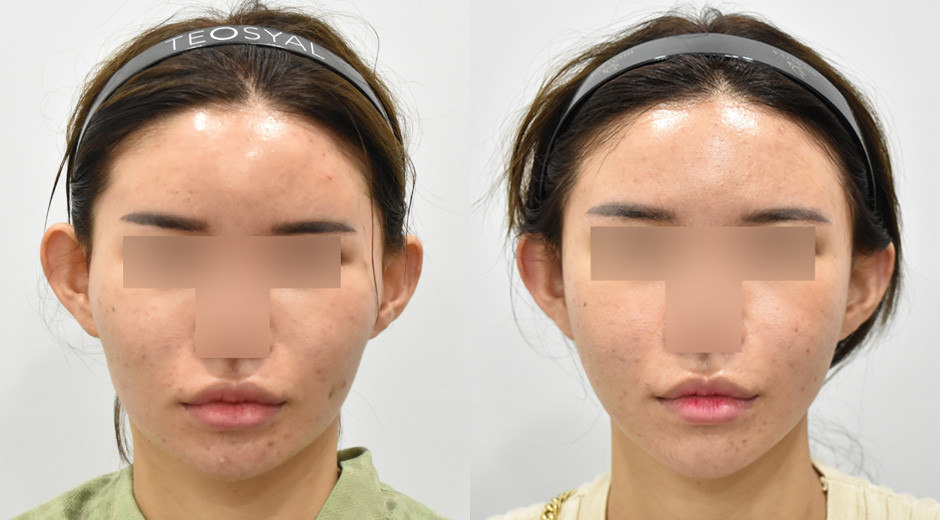
Changes in both the midface and lower face must be understood in the context of combined surgery. The whole-face result is not an isolated jaw-angle result, and a wide lower face does not automatically require cheekbone surgery.
Case 3: Cheekbone reduction, mandibular angle reduction and chin osteotomy
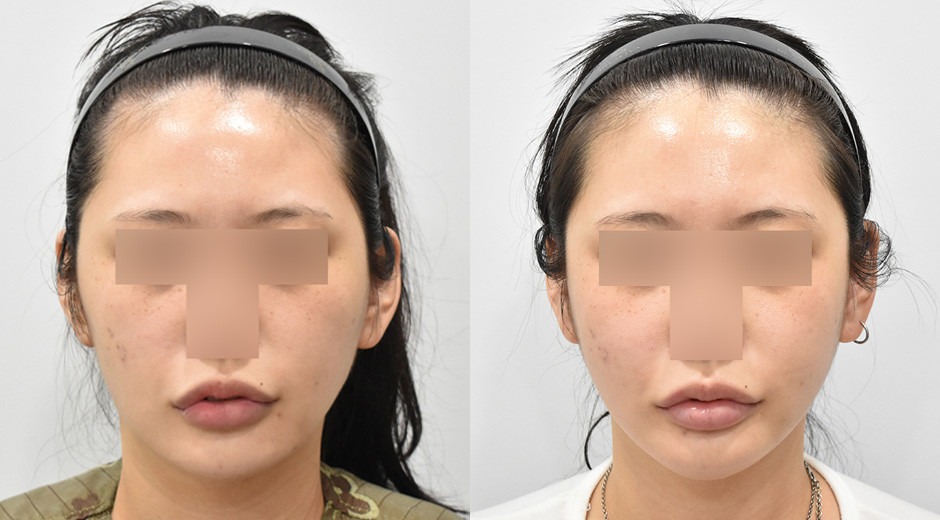
This case involves the midface, jaw angles and chin. Discuss the goal for each area separately. If your chin does not need correction, this combination is not a reason to add chin surgery.
1% Plastic Surgery | Separate the goals for the jaw angles, chin and soft tissue
1% offers mandibular angle reduction and V-line contouring. The jaw angle and the width and length of the chin are different concerns. Ask the surgeon to explain the planned treatment area on your imaging and whether cheekbone or soft-tissue procedures are indicated.
Case 1: Cheekbone reduction, V-line contouring and liposuction — 3 months after surgery
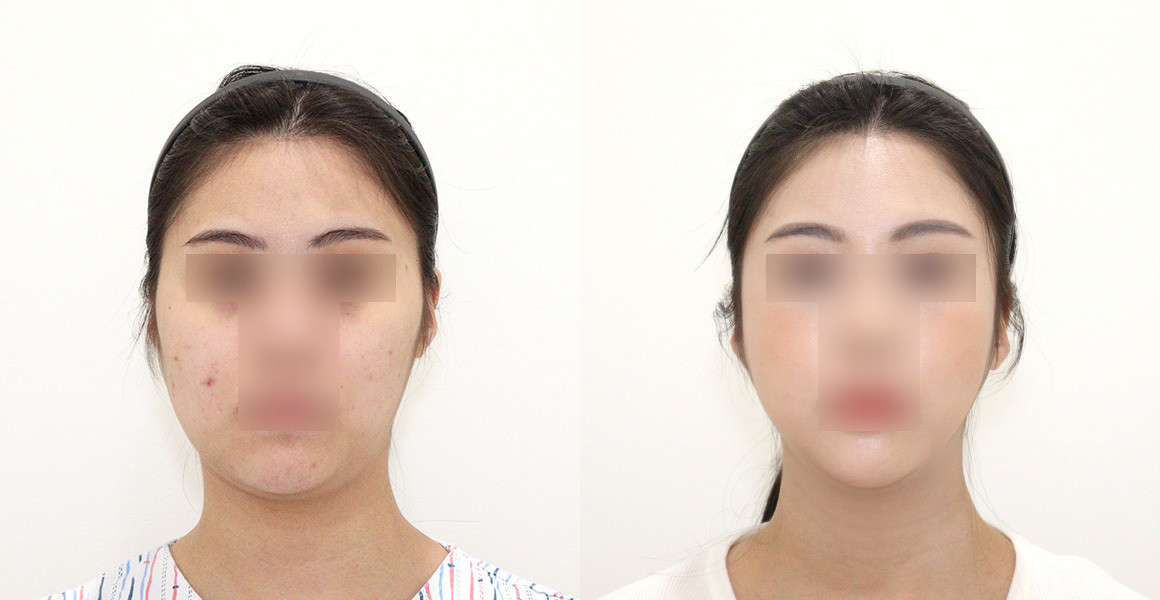
Liposuction was also included in this case, so the lower-face changes cannot all be attributed to bone surgery. If you want to retain a defined jaw angle, make that preference clear. A pointed chin does not have to be your goal.
Case 2: Cheekbone reduction and V-line contouring — 12 months after surgery
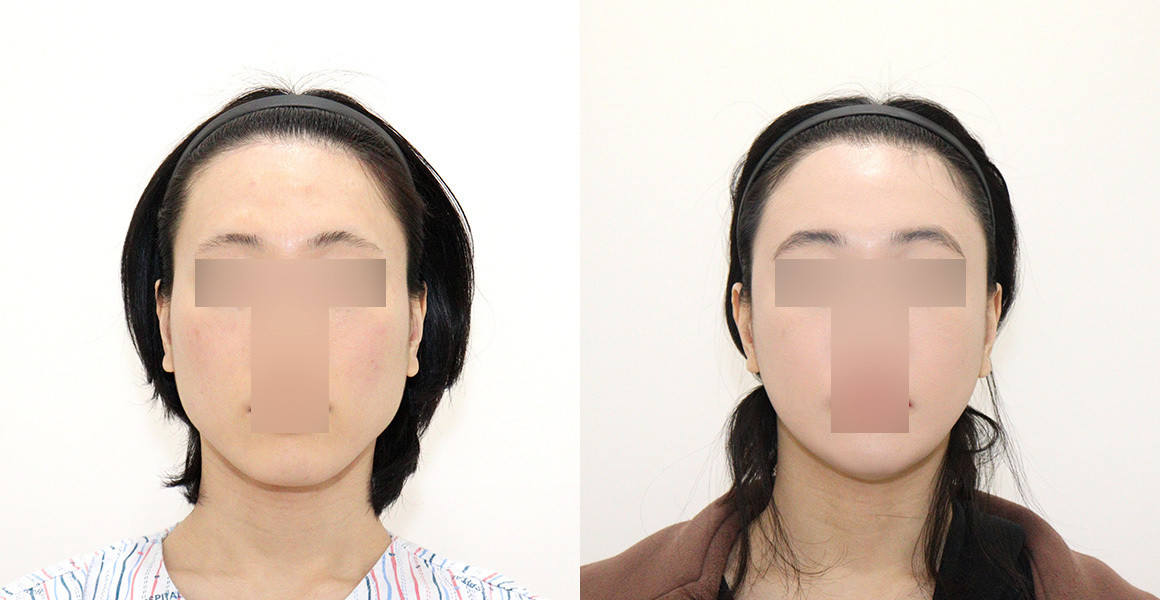
The frontal comparison shows the relationship between the midface and lower face. This is a combined cheekbone and V-line result, not a prediction of what jaw-angle surgery alone would achieve.
Case 3: Cheekbone reduction and V-line contouring — 9 months after surgery
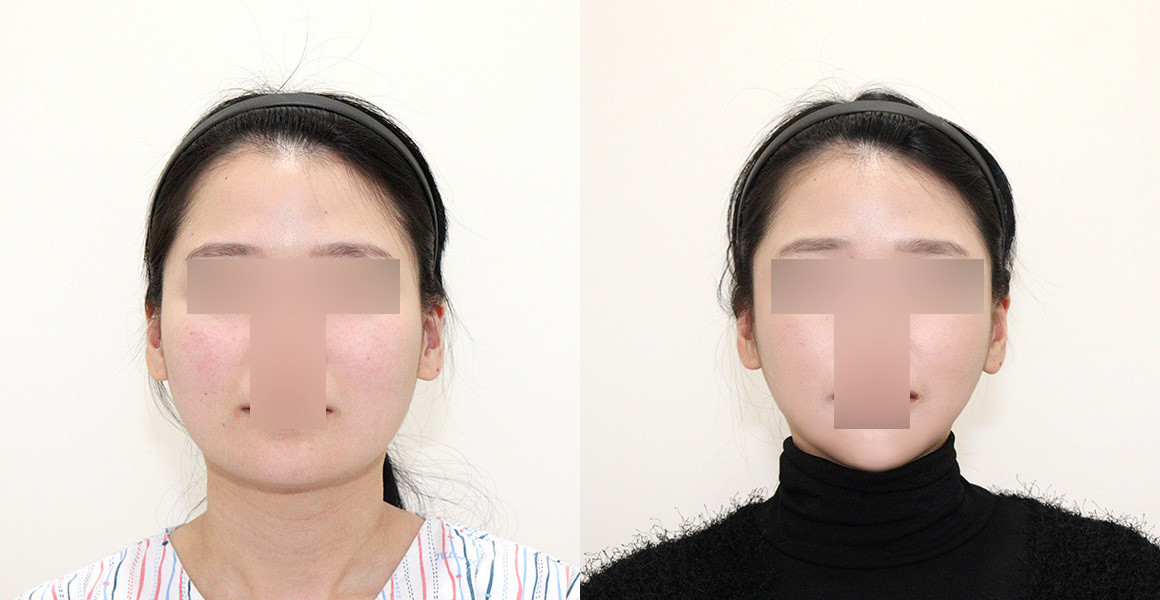
Similar procedure names may involve different extents of osteotomy. Rather than aiming to reproduce another person’s face, ask how your own bone, muscle and soft tissue affect the options.
Faceline Plastic Surgery | Consider both frontal width and the jawline transition
Faceline offers mandibular angle reduction, mandibular body reduction and chin-contouring procedures. A prominent angle in profile and a wide lower face from the front may require different approaches. Use imaging during consultation to discuss the contours you want to change and the features you want to preserve.
Case 1: Jaw-angle reduction, long-curve mandibular osteotomy and T-shaped chin osteotomy
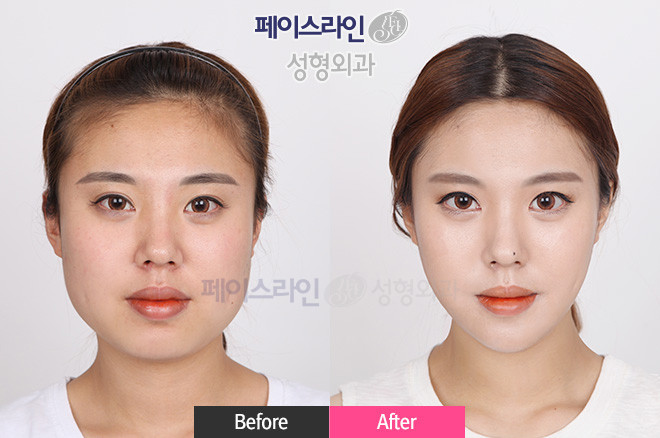
This female case includes T-shaped chin osteotomy. Consider the transition from the jaw angles to the chin, not just the widest part of the face. Whether chin surgery is appropriate depends on individual proportions.
Case 2: Jaw-angle and chin procedures with long-curve mandibular osteotomy
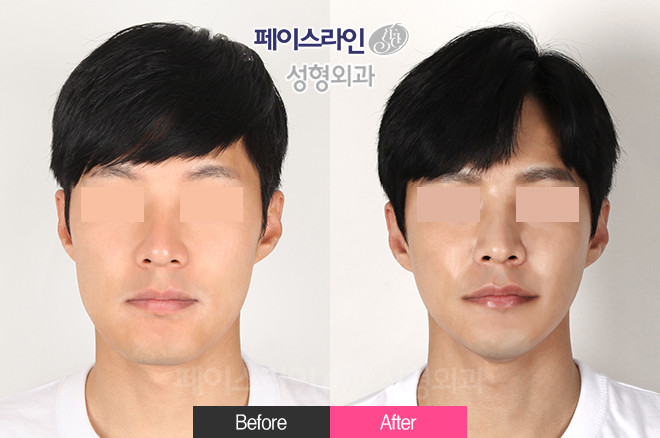
This male case involves both the jaw angles and chin. There is no single template for a masculine facial contour. Explain how much angular definition you want to preserve and which features you do not want to change.
Case 3: Cheekbone and jaw-angle procedures with long-curve mandibular osteotomy
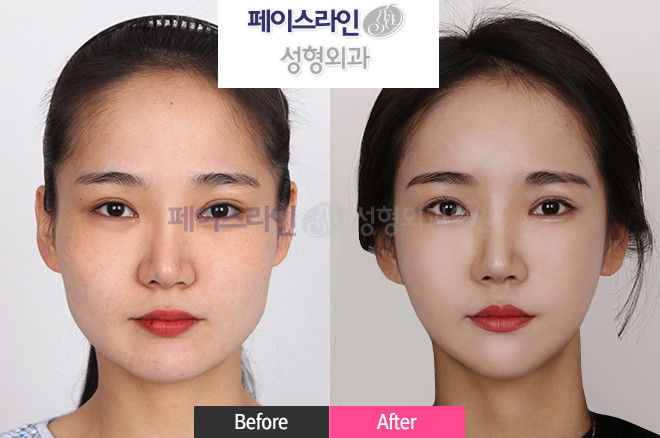
This female case involves both the cheekbones and jaw angles. Hairstyle, makeup and photographic conditions also differ between the images. Interpret the changes alongside the listed procedures; photographs cannot predict an individual’s outcome.
5. Comparing costs: separate a treatment session, an operation and the longer-term budget
Request a written quote in Korean won with the treatment specifications and taxes, rather than simply asking the price of facial slimming. Injections and bone surgery have different aims and risks; price alone cannot determine which is more worthwhile. Compare the following details when requesting quotes.
On a phone, swipe sideways to see the full table.
| Approach | Specifications to include | Other costs and conditions to confirm |
|---|---|---|
| Masseter botulinum toxin injections | Exact product name; whether the dose is the combined total for both sides or per side; masseters only or additional areas | Consultation, taxes and follow-up; conditions and charges for supplementary treatment; units from different brands cannot be directly compared |
| Mandibular angle surgery alone | Extent on both sides; separate charges for osteotomy and outer cortical bone contouring; primary or revision surgery | CT, preoperative tests, anesthesia, observation or admission, medication, suture removal and follow-up |
| Combined facial-contouring surgery | Itemized jaw-angle, chin and cheekbone procedures; inclusion of soft-tissue work and fixation materials | Itemized and total costs, taxes, reasons for additional procedures, and care arrangements and charges if recovery is complicated |
Injections may require later reassessment, but do not feel obliged to buy a fixed course in advance. Surgical budgeting should also allow for accommodation, support, follow-up travel, a potentially longer stay and time off work. Confirm deposits, cancellation policies and refunds if the treatment plan changes before paying.
6. Recovery: being able to go out does not mean the result has settled
On a phone, swipe sideways to see the full table.
| Stage | Masseter botulinum toxin injections | Mandibular angle surgery |
|---|---|---|
| Treatment day and the first few days | Watch for local discomfort and bruising; follow aftercare instructions rather than judging volume changes from same-day photographs | Follow the team’s instructions for monitoring bleeding, swelling, swallowing and pain; arrange support and an appropriate diet |
| Weeks 1–2 | Monitor chewing and smile changes; seek review for problems rather than arranging additional injections yourself | Attend intraoral wound checks and confirm suture management; returning to hard foods and exercise requires separate advice |
| The following weeks to around 3 months | Assess gradual appearance changes using consistent photography and clinical examination | Monitor swelling, sensation and movement; one case cannot determine your return-to-work date or final result |
| Later | Decide on further treatment according to response and goals, not an automatic calendar | Attend planned follow-up for contour settling and persistent symptoms; recovery can extend over several months |
This timeline helps plan a trip; it is not individual clearance for activities. Jobs that involve extensive speaking, such as teaching or customer service, differ from desk work. Plan travel and return to work around actual recovery. Reduced sensation around the mouth increases the need to avoid burns and accidental bites. Follow the surgical team’s instructions on oral hygiene, food texture and mouth-opening exercises.
7. Leave the consultation with a clearly explained plan
- Ask the doctor to explain the contribution of bone, masseter muscles and soft tissue, and whether further investigation is needed.
- Write down what treatment is expected to change, what it cannot change, and the option of no treatment.
- For combined procedures, ask about the indication, additional risks and cost of each. Another patient’s combination is not your mandatory treatment list.
- Confirm follow-up, access to care for complications and travel requirements. Keep the product details or operative records.
Can I try injections before deciding on surgery?
A staged approach may be discussed when muscle bulk is clearly relevant and the doctor considers injections appropriate. Not everyone needs injections as a trial. Significant laxity, functional problems or predominantly bony concerns should be assessed first.
Does a smaller jaw angle always look better?
No. Facial balance also depends on the chin, cheekbones, soft tissue and the features you want to retain. Safety margins and overall proportions matter more than the amount of bone removed or a standardized face shape.
Related reading and consultation preparation
If combined contouring surgery is recommended, read what cheekbone, jaw-angle and chin procedures each change . For clinic and procedure information, see Respect’s clinic profile or the clinic directory . When making an inquiry, explain previous injection or surgery dates, your main concerns and your planned stay to help arrange an appropriate consultation.
This article supports consultation preparation and does not replace an individual medical assessment. Treatment choices, risks and recovery vary between individuals.
Contact & booking




Tap to enlarge the QR code; press and hold to scan or save
WeChat: beautsgoeng
beautsgoeng