
The debate around Korea's RE2O skin booster often jumps between two extremes: 'raw donor skin is injected into the face' and 'processing makes it completely safe.' Neither describes the evidence well. The useful questions are what the starting tissue is, what the finished material contains, and how far the human data actually go.
Sources checked on 17 September 2026. This article discusses the standard RE2O product in public documents; it does not certify an individual lot or treatment plan.
What is RE2O? Donor dermis is the source, not the finished injectable
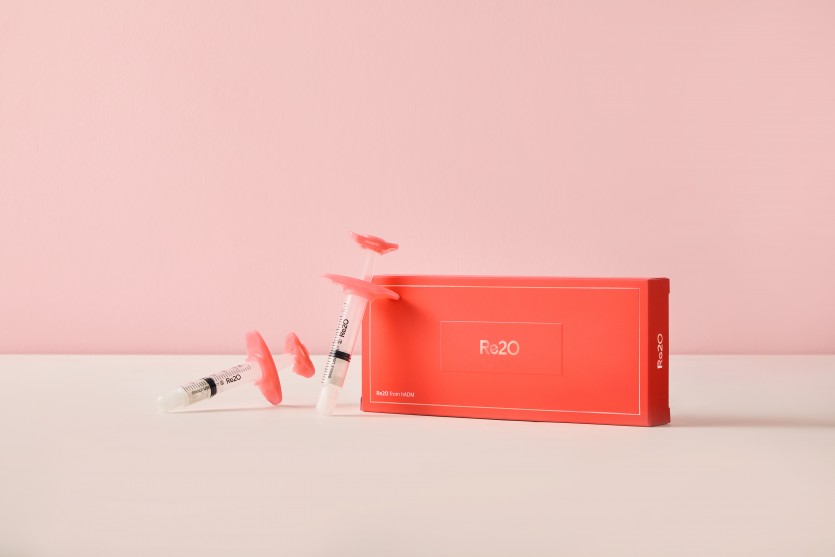
The human origin is real. The published study describes RE2O as particulated human acellular dermal matrix (phADM), made from donated dermis; the manufacturer's public response also addresses the use of deceased donors. Processing removes cells and turns the remaining extracellular matrix into particles. It retains components including collagen and elastin. RE2O is therefore neither an unprocessed piece of skin nor a single-ingredient, purified collagen injection.
Sources: Original clinical study · Manufacturer response
Residual DNA does not mean a donor's inherited condition is passed on
Decellularisation does not necessarily produce a literal zero-DNA result. The study reports less than 50 ng of residual DNA per mg in the material it examined. That figure is not an independent test certificate for every commercial lot. Fragments of DNA are not living donor cells, and their detection does not show that a recipient's genome has changed or that a donor's inherited disease has been transmitted. Lot quality and individual reactions still deserve separate assessment.
Sources: Original clinical study
Infection control matters—but origin alone does not prove viral contamination
Human-tissue products call for donor screening, infectious-disease testing, controlled processing, sterility measures and traceability. The study and the manufacturer's filing describe these safeguards. A theoretical risk that a donor might carry HIV or hepatitis B is not evidence that a finished, released product contains those viruses. Equally, safeguards do not make the risk zero. Ask the clinic to identify the package, lot and traceability information before treatment.
Sources: Original clinical study · Korea Exchange filing
There is a human study, but it has important limits
A randomised split-face study published in 2026 enrolled 20 people and followed them for 20 weeks. One side received RE2O mixed with non-crosslinked hyaluronic acid; the other received hyaluronic acid. No serious adverse events were reported during that study. This refutes the claim that RE2O has never been studied in people, but it does not establish the long-term safety of RE2O used alone or rule out uncommon events. The paper also discloses that the manufacturer supplied test products and that one author had advised on product development.
Sources: Original clinical study
Does the absence of a standard drug or device approval number make it illegal?
In a filing to the Korea Exchange, L&C BIO states that RE2O is regulated in Korea as human tissue and is produced and sold through a licensed tissue bank. That is the company's public filing, not an independent ruling that every cosmetic injection setting is compliant. A missing drug or medical-device number alone does not settle legality; the applicable tissue rules, intended use and the particular clinic must be checked.
Sources: Korea Exchange filing
Human-derived does not mean inevitable rejection—or no reaction at all
Decellularisation is intended to reduce donor cells and related immune components while retaining the tissue matrix. It does not follow that every recipient will 'reject' the material. Nor does it guarantee an absence of swelling, inflammation or other responses. Residual DNA is only one quality measure. If symptoms develop, a clinician should evaluate the timing, examination findings and treatment record rather than label every problem 'rejection'.
Sources: Original clinical study
Consent has two sides: the donor and the person receiving treatment
The study states that the donor dermis it used was obtained with consent for cosmetic use. L&C BIO likewise says it uses consented donor tissue. Neither public statement independently verifies the documents for a particular lot. Separately, patients need a clear explanation of the human origin, product version, mixing plan and material risks before they consent. Donor consent cannot replace the patient's informed consent.
Sources: Original clinical study · Korea Exchange filing
Safety controls and personal comfort are different questions. Public documents describe donor screening, processing, sterility and traceability, but no process can promise zero risk for every person or lot. Some people are comfortable with material sourced from deceased donors; others are not. Once you understand the facts, either choice is reasonable. Popularity is not a reason to override your own preferences.
Four things to ask the clinic before booking
- Which RE2O version will be used, and can I see the original packaging, lot and traceability details?
- Where and how much will be injected, and what—if anything—will be mixed with it?
- Has the clinic explained the human-tissue origin and risks relevant to my medical history?
- Who will perform the injections, and what is the plan if a problem develops after I return home?
Correcting exaggerated claims is not a recommendation to have the procedure. It is a way to make a decision with the relevant facts in view.
Want to review the RE2O plan you were offered?
Send BeautsGo the product name, packaging photo and written plan from your clinic. We can help you prepare questions for the provider; a qualified clinician must assess whether the treatment is appropriate for you.
Contact & booking



Sources and further reading
- Original clinical study
- Korea Exchange filing
- Manufacturer response
- L&C BIO product page
- Korean human-tissue safety system
This article summarises public information and is not a diagnosis, guarantee of results or personalised medical advice.