
Creases that look too wide, too deep or uneven after double eyelid surgery do not automatically call for another operation. Bulky folds, fading creases, multiple folds, asymmetry and difficulty lifting the eyelids may look similar but require different assessments. A revision consultation should examine previous attachments, scarring, available skin and eyelid function—not simply draw a new crease.
Different concerns call for different revision plans
| What you notice | What the surgeon needs to assess | Options that may be discussed |
|---|---|---|
| Bulky folds or an excessively high crease | A high crease, strong previous adhesions, tissue thickness, reduced eyelid elevation or ongoing swelling | Lowering the crease, releasing old adhesions and refixation; scar treatment depends on the tissues |
| Uneven-looking eyes | Pre-existing differences in brow height, bones or eye position, or differences in fixation, swelling and eyelid elevation | Planning each side individually and assessing eyelid function when necessary, rather than matching a fixed measurement |
| A fading or disappearing crease | Loosened fixation, thick eyelids, greater fat volume or inadequate non-incisional fixation | Reassessing suture-based, natural-adhesion or incisional methods after identifying why the crease has not held |
| Multiple creases | Residual crease attachments, upper-eyelid hollowing, tissue shortage or complex adhesions | Releasing unwanted adhesions and, where appropriate, restoring tissue or redistributing fat before establishing the main crease |
| Visible scars with the eyes closed | Incisional scarring, repeated operations, wound tension or individual scar formation | Assessing scar revision and crease reconstruction after healing; another early incision may further stress the tissues |
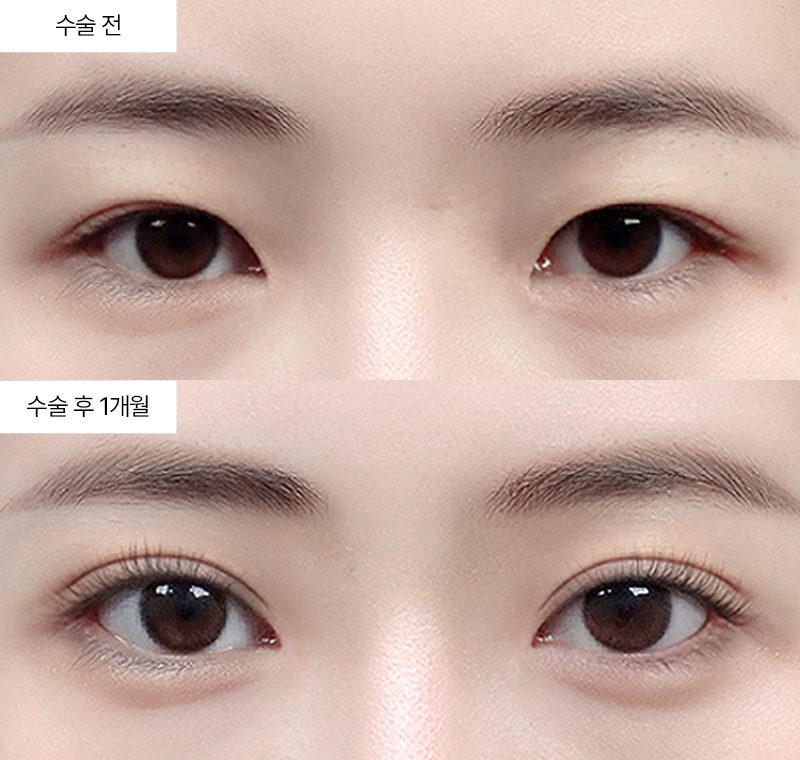
Bulky folds, asymmetry and fading creases: what is the difference?
“The fold still looks thick,” “one eye opens more easily” or “my upper eyelids look more hollow” tells a surgeon more than simply saying the surgery failed. The real cases below distinguish the appearance before revision from postoperative recovery. Early swelling is not labelled a failure, and these examples do not mean everyone needs surgery.
Bulky folds: thickness does not always mean more fat should be removed
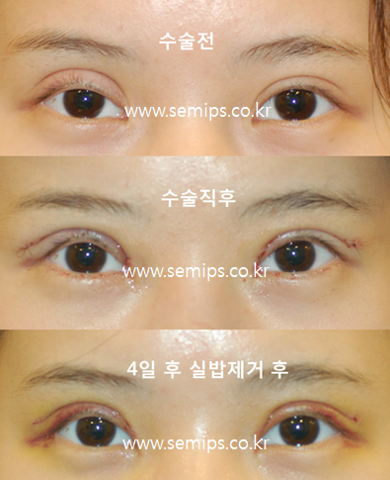
A bulky or “sausage-like” fold usually means a puffy ridge below a deep, rigid-looking crease. First distinguish ongoing swelling from a settled shape. A fold that is becoming less bulky in comparable photographs calls for a different discussion from one that has barely changed for a long time.
When revision is appropriate, the surgeon assesses crease height, fixation depth, scar tethering and eyelid elevation. Fullness caused by a high crease is not necessarily excess fat. Old fixation or adhesions may need release, crease lowering and reconstruction. Removing more fat from an already depleted eyelid may worsen hollowing.
Asymmetry: unequal crease width is different from unequal eyelid opening
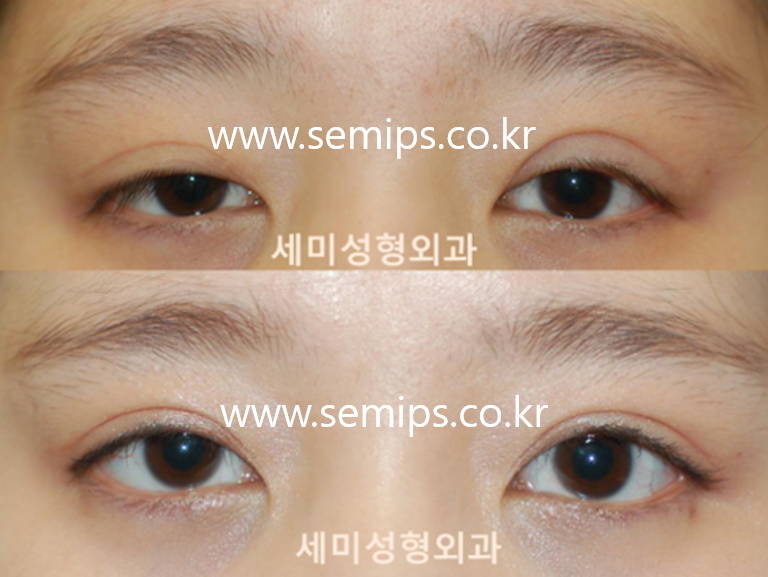
During consultation, distinguish “one crease is wider” from “one upper lid covers more of the iris.” The first may relate to crease design and fixation; the second also needs an assessment of eyelid position and function. Compensatory brow lifting can change the apparent width.
The surgeon should observe the eyes open with relaxed brows, looking down and gently closed—not rely on a front-facing photograph alone. Compare pre-existing differences with earlier photographs. The aim is balance, not identical millimetre measurements. Uneven-looking eyes alone do not establish a need for levator surgery.
A fading crease: complete loss, partial fading and skin covering the fold are different
A crease that “has come undone” does not necessarily mean a suture broke. Complete disappearance, fading at the inner corner and a fold hidden by loose skin can require different plans. Tell the surgeon whether you previously had a suture-based or incisional procedure, when the change began, whether it recurred and whether you feel a lump or irritation.
Simply adding fixation without explaining why the previous crease was unstable makes it difficult to judge a proposal. Ask whether old sutures need treatment or removal, how extensive that would be and why an incision is being recommended. “Natural adhesion” is a technique name, not a guarantee that the crease can never fade.
Multiple creases, hollowing and incomplete closure: why changing one line may not be enough
Multiple creases: old and new attachments may pull in different directions
Some eyelids show one crease when open but two or three when looking down or when tired. Assessment needs to include old adhesions, skin laxity and tissue volume—not just the extra line. Creating another crease without releasing an unwanted attachment may leave the other folds intact. A plan should explain the intended main crease, management of old adhesions and any tissue shortage.
Upper-eyelid hollowing: not every case is simply a lack of fat
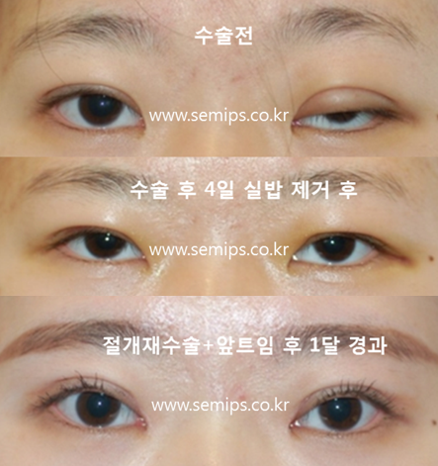
Hollowing may involve the amount or position of fat and can coexist with reduced eyelid elevation. An eyelid that looks hollow is not automatically solved by filling it. A high crease, tethering or levator issues need assessment too. Adding volume alone may look prominent when the eye is closed or fail to address a tired appearance.
Skin shortage and incomplete closure: protect the eye before redesigning the crease
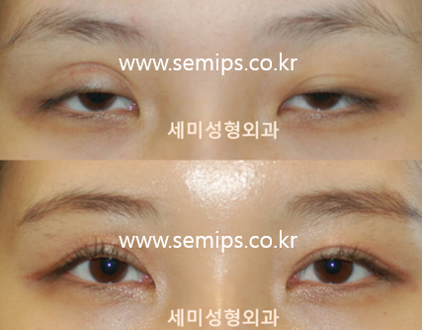
Extensive previous skin removal, repeated incisions and scar tethering may restrict revision options. The surgeon needs to examine remaining skin, whether gentle closure covers the eye, and symptoms such as dryness or a gritty sensation. If skin is scarce, removing more tissue simply to excise an old scar may not be appropriate.
Difficulty closing the eyes or persistent irritation warrants prompt assessment by a plastic surgeon or ophthalmologist. Before planning surgery, discuss whether function and appearance can be addressed together, whether stages are needed and how much the scar might improve. “Scarless revision” is not an adequate explanation.
When is revision appropriate? More than a calendar decision
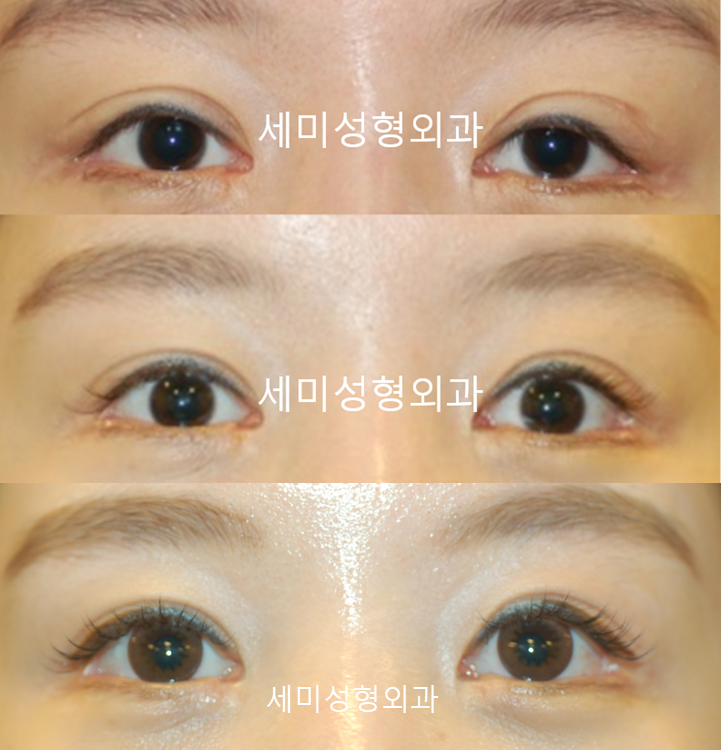
For asymmetry that may still be affected by swelling, medical literature describes observation for around six to nine months before considering revision. This is neither automatic clearance at six months nor a rule that every problem must remain untreated until then. Elective changes depend on stable swelling, softer scars and available tissue; functional problems need timely assessment.
- While swelling is settling: depth, swelling and recovery speed can differ between sides. Keep scheduled follow-ups and photographs taken from the same angle.
- As appearance stabilises: a consultation can clarify causes without committing to surgery that day. Ask why further observation is advised and when to return.
- For elective revision: choose timing based on recovery trends, scars and closure—not a month count or one selfie alone.
- After several revisions or with limited tissue: assessment needs particular care. Do not shorten observation merely to fit a holiday.
Worsening pain, redness with warmth or swelling, discharge, wound problems, difficulty closing the eye or visual changes need prompt medical attention. These are complications to assess now, not cosmetic concerns to leave for six months.
Natural-adhesion, suture-based or incisional revision? There is no single answer
When a non-incisional approach may still be considered
With limited scarring or adhesions, elastic skin and no major tissue excess or shortage, a loose crease or small design change may be suitable for a suture-based or natural-adhesion technique. Fewer incisions can mean a shorter recovery, but thick lids or repeatedly loosened fixation may not remain stable after another suture-only procedure.
When an incision is more likely to be needed
A high, firmly tethered crease, significant scarring, multiple folds, tissue redistribution or repeated loss of the crease may require direct access to previous adhesions and internal structures. An incision is not inherently better; it offers greater access when the surgeon needs to see and reorganise the tissues.
Comparing revision costs in Korea: match the scope first
“Double eyelid revision” might mean refixation on one side or bilateral adhesion release, crease lowering and functional correction. Two prices are not comparable until the surgical scope is clear. A promotion for first-time eyelid surgery is not a revision quote.
| Type of plan | Scope to specify in the quote | Costs often overlooked |
|---|---|---|
| Non-incisional / suture-based revision | One or both sides; treatment of old sutures; refixation alone or additional work | Old-suture removal, anaesthesia, medicines and tax |
| Incisional revision | Whether crease lowering, adhesion release and scar revision are included | Separate charges for functional eyelid correction; follow-up and stitch removal |
| Multiple revisions / tissue shortage | Structures to restore; tissue replacement or staged surgery | Whether each stage is charged separately or included |
| Additional canthal or levator surgery | The purpose of each procedure and whether they need to be combined | Additional procedures, anaesthesia and aftercare |
Request a written quote listing the operating surgeon, surgical scope, anaesthesia, stitch removal and follow-ups, medicines, tax and additional procedures. Check how long the quote remains valid and how an earlier-than-planned review would be arranged. Photo assessment can help with budgeting, but a final plan requires an in-person examination.
Four things to prepare before travelling to Korea
- All previous operation records: dates, clinics, surgeons, suture-based or incisional techniques, functional eyelid correction and canthal procedures.
- Recovery photographs: before surgery, one week, one month, three months and now; use comparable angles with open eyes and relaxed brows.
- Specific concerns: describe crease width and depth, asymmetry, scars, closure or difficulty lifting the lid instead of simply saying it looks strange.
- Reference photographs: use them to explain preferences, not demand a copy. Ask whether your tissues can support that result.
How to compare revision plans from different surgeons
Four clinics to consider for an eyelid revision consultation
SEMI, I Contact, Hambaknun and LUHO list eyelid revision among their services. Their published offerings have different emphases. Choose consultations around your particular concern—bulky folds, asymmetry, hollowing or repeated surgery. The order below is not a ranking.
SEMI Plastic Surgery
Sinsa-dong, Gangnam-gu, Seoul
Its revision categories cover bulky folds, uneven creases, hollowing, skin shortage and scarring. Its assessment approach may be relevant if you have had several operations or want to discuss both the crease and the condition of the tissues.
I Contact Plastic Surgery
Gangnam Station area, Seocho-gu, Seoul
Its practice focuses on eyelid surgery, with published services including revision, functional eyelid correction, middle-age eyelid surgery and canthal procedures. Alongside a loose, wide or uneven crease, you can discuss concerns following previous corner-of-eye surgery.
Hambaknun Plastic Surgery
Apgujeong area, Gangnam-gu, Seoul
Its published services distinguish first-time eyelid surgery, types of revision and revision of functional eyelid correction, alongside under-eye fat and upper- and lower-lid procedures. If an unnatural crease coexists with difficulty opening the eyes, ask how those concerns will be assessed separately.
LUHO Plastic Surgery
Sinsa Station area, Gangnam-gu, Seoul
Published eyelid services include revision, natural-adhesion and incisional techniques, ptosis correction, canthal surgery and upper- and lower-lid surgery, with revision cases shown. Ask why its proposal uses a particular fixation method, how old attachments are managed and whether combined procedures are necessary.
Use the same question list at every consultation
Bring the same photographs and records to each consultation and record the answers side by side. This is often more useful than judging how dramatic a before-and-after image looks.
- Cause: is the main issue the crease, adhesions, skin, volume or eyelid function? Does the explanation match your symptoms?
- Scope: what should change and what should be preserved? Why would a smaller procedure be insufficient?
- Goal: what can improve with the eyes open, and how much can closed-eye scars improve? Which pre-existing differences may remain?
- Sequence: one operation or stages? If levator or canthal surgery is suggested, why is each procedure needed?
- Follow-up: who reviews you, how do you contact the team after returning home, and which symptoms need prompt local medical care?
Compare cases with similar starting conditions. A first revision differs from repeated revision, and a fading crease differs from skin shortage. Photographs from the first postoperative days cannot substitute for settled results. Consider the camera angle, brow position, whether the eyes are open or closed, and the recovery interval.
Planning a trip to Korea: allow time beyond the operation
Confirm the consultation date before scheduling surgery and reviews. Allow time for assessment, surgery, wound checks and stitch removal requested by the surgeon. Stitch removal does not mean swelling has resolved or that everyone can immediately resume makeup, exercise or contact lenses. Timing depends on the procedure and your recovery.
Before returning home, obtain your procedure record, medication and aftercare instructions, review schedule and contact details for unexpected problems. Keep the revision records for future care. Do not independently stop prescribed medication, rub or massage the eyelids, or try unverified scar remedies. Discuss existing medicines with your clinician before any changes.
Frequently asked questions
Can I have revision immediately if I dislike my double eyelids?
Elective revision usually waits for swelling and tissues to settle. Literature describes around six to nine months of observation for swelling-related asymmetry, but this is not a universal deadline. Infection, difficulty closing the eyes or visual changes need prompt care—not a wait for cosmetic revision.
Does revision always require another incision?
No. Previous technique, remaining skin, adhesions and scarring determine whether a non-incisional approach is possible. Scar removal, lowering a high crease or reconstructing structures is more likely to require an incision.
Will identical crease widths make the eyes symmetrical?
Not necessarily. Brow bones, eye position, eyelid elevation and skin can already differ between sides. The aim is visual balance, not mechanically identical measurements.
How much does double eyelid revision cost in Korea?
Request quotes for the actual scope: one or both sides, incisional or non-incisional surgery, old-suture and adhesion management, and functional correction. Compare anaesthesia, medicines, tax, stitch removal and follow-ups too. First-time surgery promotions are not revision prices.
This guide helps you prepare for consultation; photographs alone cannot determine whether you need revision. Seek prompt medical care for visual changes, significant pain or difficulty closing the eyes.
More help preparing for consultation in Korea
Use the medical consultation interpreter checklist to organise questions and avoid losing details about surgical scope, cost and follow-up in translation.