
The concern after facial contouring is often not swelling, but whether reducing the bone will make the face sag. Zygoma reduction, jaw-angle surgery and genioplasty affect different areas, so skin elasticity, tissue thickness and the amount of bone movement all matter.
View Faceline clinic information
Why does Faceline emphasize its bone-preserving lifting zygoma technique?
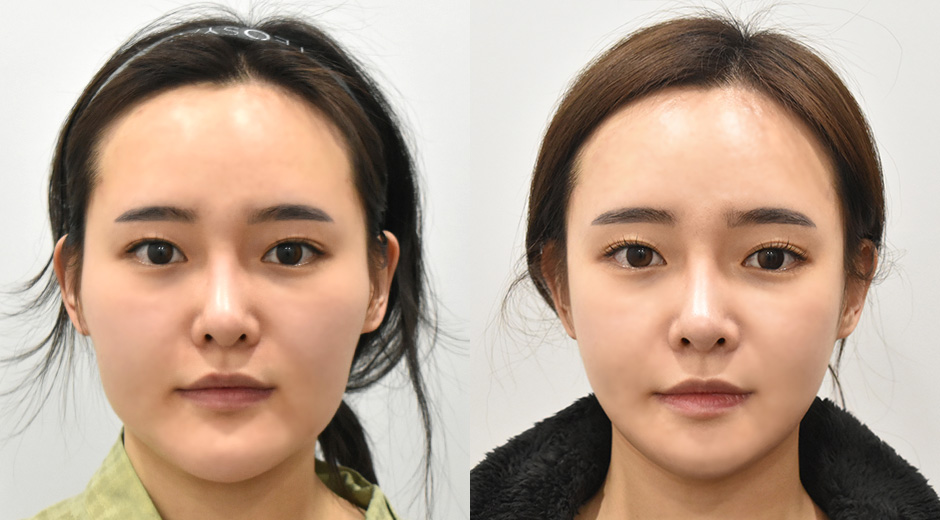
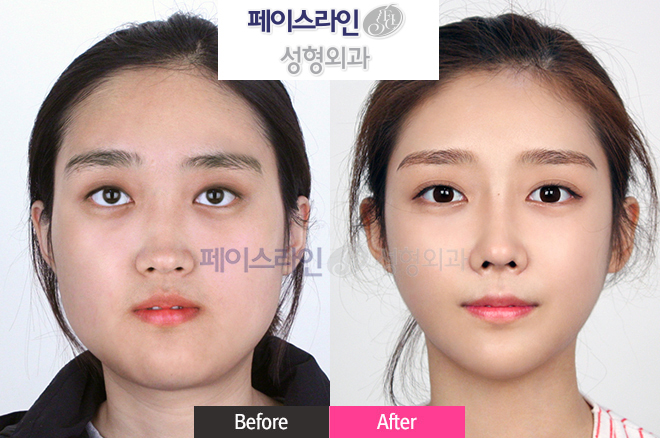
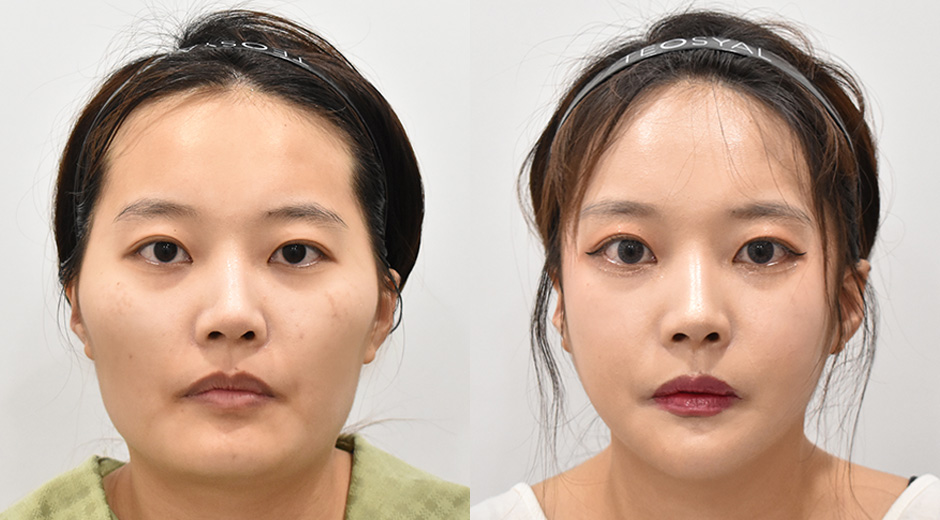
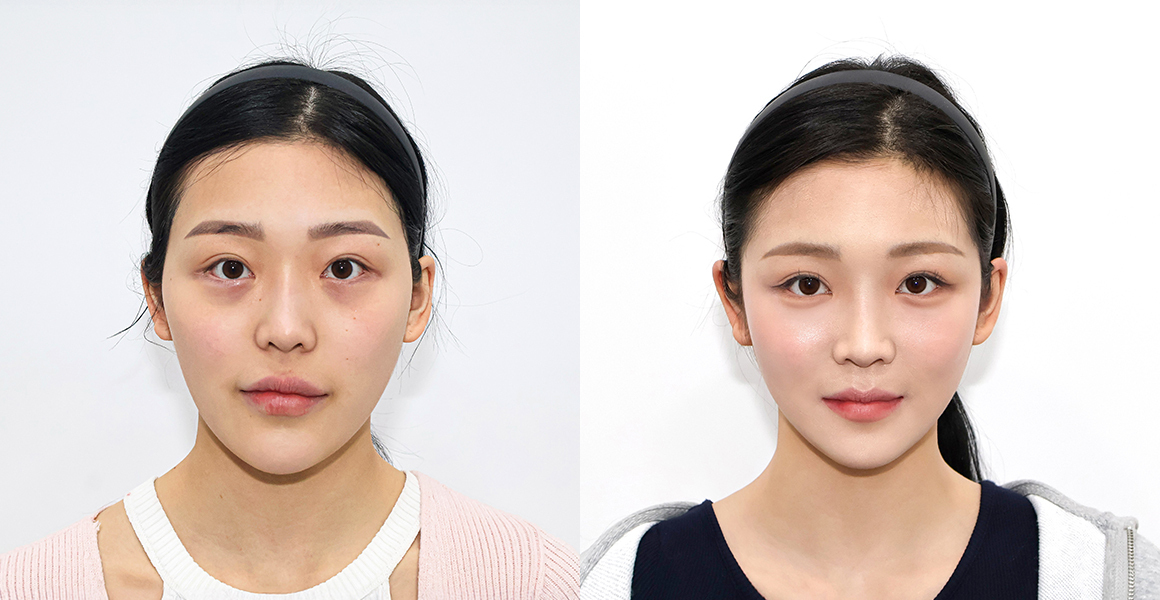
Faceline bone-preserving lifting zygoma reduction (무삭제 리프팅 광대축소술)
Rather than removing a large amount of bone, the method evaluates cheekbone position, size, projection and direction, then plans how the zygomatic body and arch should move. Only the amount that needs correction is repositioned.
“No sagging” should not be read as an absolute guarantee. It means the surgical concept prioritizes preserving support and minimizing a loose or hollow look from the planning stage.
View Faceline clinic information
1. Swelling, volume redistribution and true laxity are different
2. Which contouring procedures need more soft-tissue planning?
| Procedure | Main change | Soft-tissue focus | Ask at consultation |
|---|---|---|---|
| Zygoma reduction | Midface width, 45-degree body and arch | Cheek fat, elasticity, movement and fixation | Shaving or osteotomy and repositioning? Where are the fixation points? |
| Jaw-angle reduction | Angle below the ear and lower-face bony width | Jawline fat, skin reserve and masseter contribution | How does the osteotomy connect, and will frontal width change? |
| V-line / genioplasty | Chin length, width, projection and symmetry | Mentalis, lower-lip support and submental tissue | Advance, set back, narrow or shorten? How much tissue reserve remains? |
View Faceline clinic information
View Faceline clinic information
3. How to reduce the chance of looking smaller but looser
- Identify whether width comes from bone, masseter muscle, fat or lax skin.
- Do not add a three-piece package unless every component matches a real issue.
- Assess elasticity, cheek fat, weight-loss history, folds and the jawline.
- Ask the surgeon to show movement, fixation and volume preservation on CT.
- Lifting can be discussed, but it is not an automatic add-on.
4. If the face looks loose after contouring
| Current finding | First step | Possible direction |
|---|---|---|
| Early swelling or uneven settling | Follow the original review schedule and exclude hematoma, infection or fixation problems | Avoid repeatedly adding short-term treatments |
| Bone is stable; jawline or cheek fat remains blurred | Separate fat volume, elasticity and submental issues | Energy-based tightening, precise fat management or staged threads |
| Persistent midface or jawline descent | Review osteotomy, fixation, bone healing and available tissue planes | Small-incision lift, lower-face lift or another structural lift |
5. How to read Korean contouring quotations
“Facial contouring” may mean one area or a two- or three-procedure package. Compare the same scope before comparing totals.
Request a written breakdown for each bone procedure, CT, general anesthesia, admission, medication, compression garment, follow-up and 10% VAT.
6. Eight questions to ask in Korea
- Is my width mainly bone, masseter, fat or laxity?
- What problem does each osteotomy solve on CT?
- How far will the zygoma move and where will it be fixed?
- Where are the nerve canal, roots and osteotomy lines?
- Do my elasticity and cheek volume require a soft-tissue plan?
- If lifting is staged, when should it be reassessed?
- Does the quote include anesthesia, CT, admission, medicine, reviews and tax?
- How are urgent concerns handled after I return home?
Frequently asked questions
Does cheekbone reduction always cause sagging?
No. Faceline plans controlled repositioning rather than extensive shaving, aiming to preserve midface support.
How is Faceline different from simple cheekbone shaving?
It preserves bone structure and repositions the zygoma instead of simply thinning it, with the aim of reducing a loose or hollow look.
Can cheekbone surgery alone narrow the frontal face?
It can when the 45-degree body and lateral arch are the main causes. Jaw angle or masseter width needs separate assessment.
Does pushing the cheekbone farther inward make the face smaller?
Not necessarily. Only the needed amount should move; excessive reduction can flatten midface volume.
Cheekbone alone or add jaw angle and chin?
Use CT and standardized views. Every procedure should correspond to a real bony issue.
This guide explains facial-contouring and soft-tissue planning. Exact movement, fixation and the need for lifting require CT review and an in-person consultation.