
Choosing a hair transplant in Korea involves more than asking for FUE. A natural hairline depends on single-hair grafts and growth direction; crown work must account for the whorl and future hair loss; women need an assessment of whether their donor hair is also thinning. The central question is how to use a limited donor supply.
1. Hair counts and follicular units are different
A follicular unit (FU), often called a graft, is a naturally occurring group of hairs. One FU may contain 1–4 hairs, so 3,000 hairs must not be treated as 3,000 FU.
Ask for a written plan showing the expected FU count, total hair count, treatment area, planned density, harvesting method and whether the donor area needs trimming.
2. Hairline, crown and women’s hair transplantation need different plans
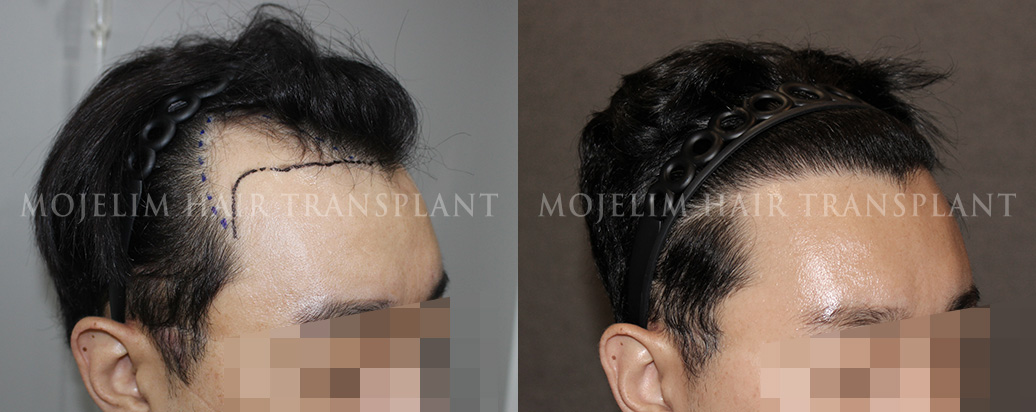
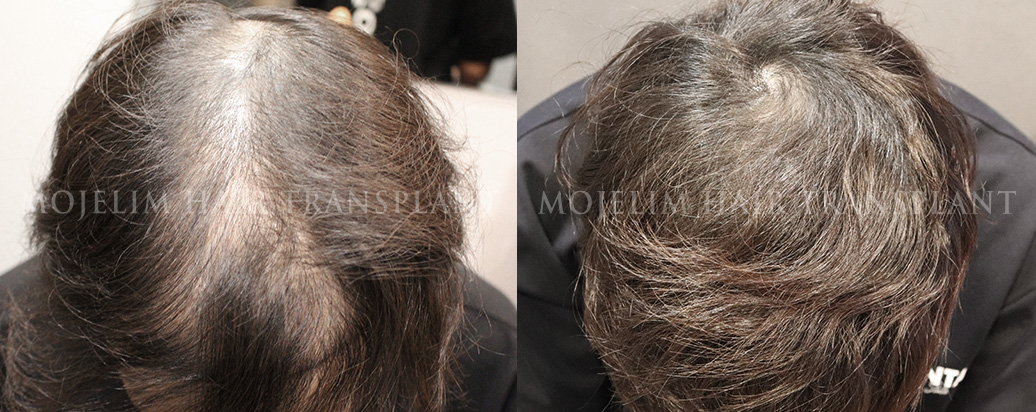
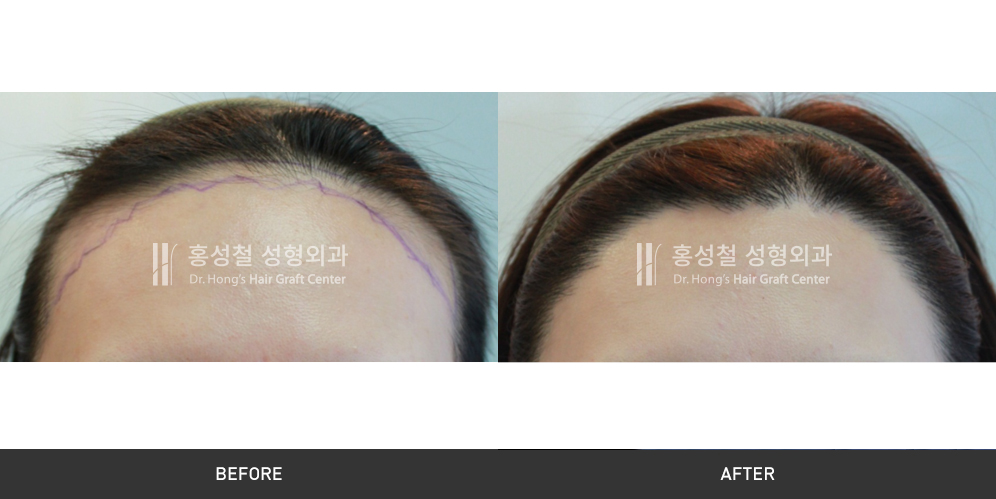
Hairline: lower is not always better
A hairline design must account for forehead height, temples, existing growth direction and future loss. Setting it too low uses more donor hair and may leave an isolated front row if the hair behind it later recedes.
Crown density: manage continuing hair loss first
Diffuse crown thinning can cover a large area. Limited FU should be allocated where they will make the most visual difference. If existing hair is rapidly miniaturizing, discuss medical stabilization before deciding the surgical area.
Women: check for thinning in the donor area too
A woman may have a high hairline, recessed temples or a widening part. Transplantation relies on sufficiently stable donor density, hair-shaft thickness and miniaturization at the back of the scalp, so that hair is moved from a stable area to a sparse one.
3. How do FUE and FUT compare?
| Comparison | FUE: individual follicular unit excision | FUT: strip harvesting |
|---|---|---|
| Harvesting | FU are removed individually with a small circular punch | A strip of scalp is removed from the back of the head and dissected into FU under magnification |
| Donor scarring | Scattered small dot scars; not scar-free | A linear scar that longer hair may conceal |
| Shaving | Fully shaved, partially shaved or unshaven options; difficulty and cost differ | Large areas usually do not need to be shaved |
| Common considerations | Preference for short hair, avoiding a linear scar and smaller to moderate graft requirements | Larger FU requirements, suitable scalp laxity and acceptance of a linear scar |
| Recovery experience | No donor sutures; small extraction wounds form crusts | Donor sutures, tightness and possible altered sensation |
| The technique name is only one part of the decision | Both methods require planning of recipient sites, direction and graft placement. Results also depend on design, harvesting injury, time outside the body and the team’s technique. | |
FUT remains a valid method for suitable donor areas and larger graft requirements. FUE often fits patients who prefer dispersed scars and short hairstyles. After a previous FUE procedure, the remaining donor supply must be measured; the first operation’s graft count cannot simply be repeated.
4. Five donor-area checks before deciding the number
The same 3,000 hairs can create very different visual density depending on hair thickness, curl and color contrast. Ask the surgeon to mark the safe donor area and assess coverage before choosing a 3,000-hair package.
5. Reading a real case: method, count and follow-up time
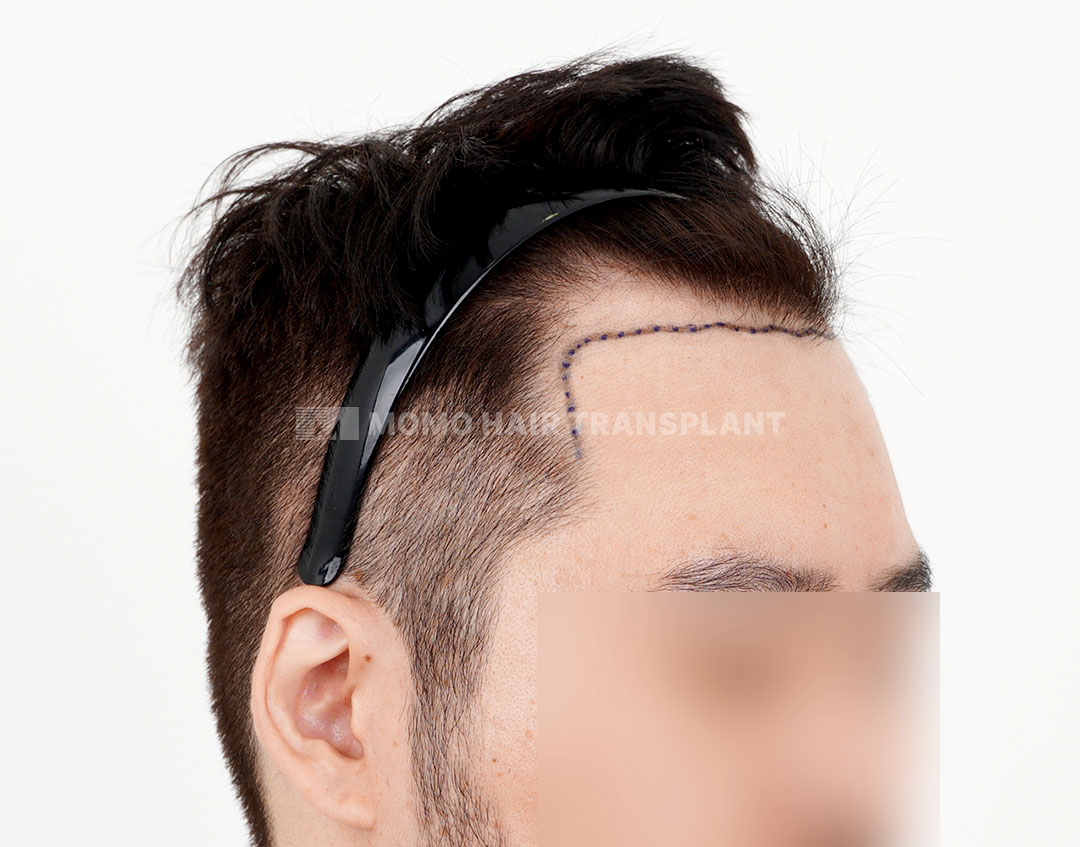
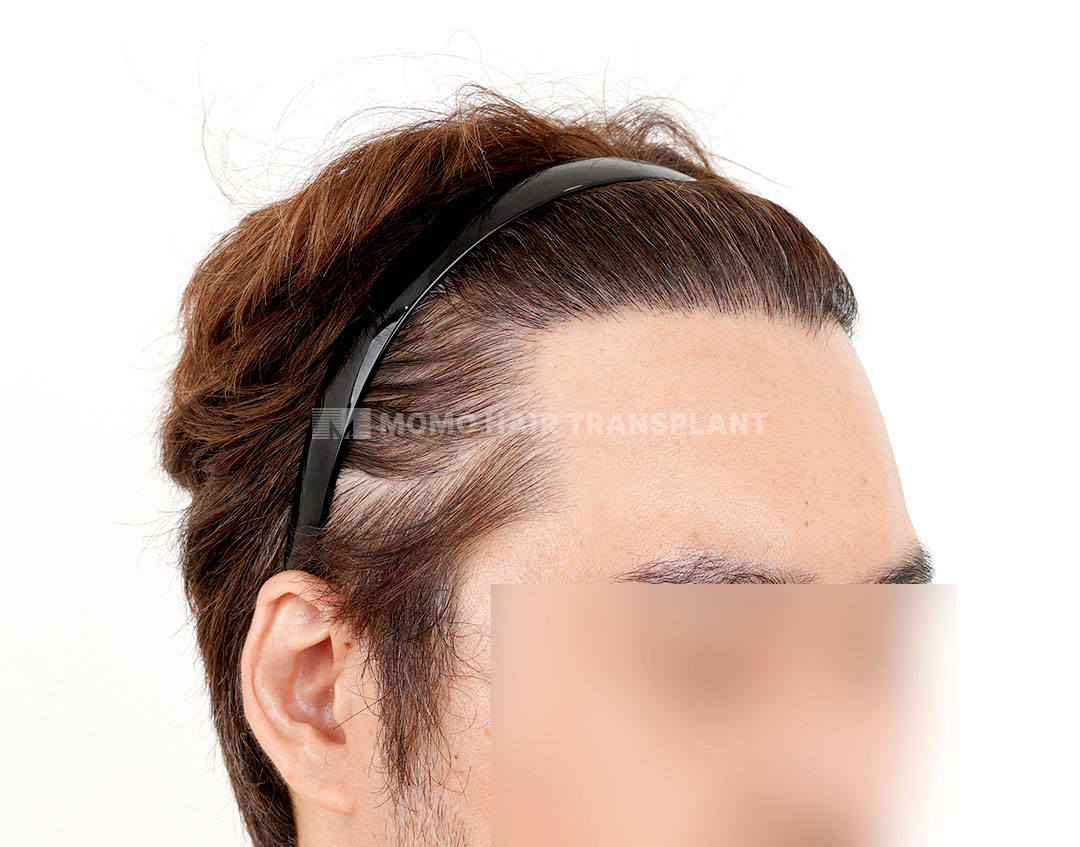
Do more than judge whether the hair looks denser. Check the area, harvesting method, whether the count means hairs or FU, and whether photographs were taken at 3 months, 6 months or about a year. This case is shown at 349 days, which is more useful for assessing growth than early postoperative crusting photographs.
6. Recovery: shedding comes before regrowth
| Time | Common changes | Travel and care planning |
|---|---|---|
| Surgery day | Harvesting and implantation under local anesthesia; large sessions can take several hours | Avoid a tight return schedule; allow for next-day washing or review |
| Days 2–5 | Swelling, tightness, minor oozing and crusting in the recipient area | Avoid rubbing the grafts while sleeping; follow the clinic’s spray and washing instructions |
| Days 6–14 | Gradual crust removal through washing; non-absorbable FUT sutures are often removed around days 10–14 | Allow 1–2 weeks if appearance is important for work or social plans |
| 2 weeks–3 months | Transplanted hair shafts often shed; existing hair may also shed temporarily | Shedding at this stage does not by itself mean graft failure; keep follow-up appointments |
| Months 3–6 | New hair emerges gradually and may initially be fine, soft and uneven in length | The hairline and crown may grow at different rates |
| Months 10–18 | Density, shaft thickness and the overall appearance become more settled | Compare photographs with the same angle, hair length and lighting |
7. Korea hair transplant prices in 2026: read the specifications
| Published price sample | Hair count and method | Reference price | What to confirm |
|---|---|---|---|
| MODUMO Hair Clinic | Shaved FUE, 500–4,000 hairs | KRW 2,650,000–21,200,000 | Quoted by hairs; confirm tax and the actual FU count |
| MODUMO Hair Clinic | Partially shaved FUE, 500–4,000 hairs | KRW 3,600,000–28,800,000 | Easier concealment may involve higher costs and longer surgery |
| MODUMO Hair Clinic | Unshaven FUE, 500–4,000 hairs | KRW 4,740,000–37,920,000 | Prioritizes concealing signs of recovery; does not guarantee better growth |
| MOJELIM Plastic Surgery | Women’s hairline, 500–4,000 hairs | KRW 2,000,000–19,000,000 | Published price includes VAT; confirm method and surgeon |
| MOJELIM Plastic Surgery | Men’s hair transplant, 1,500–5,000 hairs | KRW 4,400,000–20,000,000 | Published price includes VAT; clarify hairline versus crown coverage |
| MOMO Plastic Surgery | 1,000 / 3,000 / 5,000 hairs, depending on method | KRW 3,025,000–4,840,000 / 7,260,000–14,520,000 / 9,680,000–24,200,000 | Published price includes VAT; distinguish FUT, FUE and unshaven options |
Price differences may reflect hairs versus FU, shaving, FUE versus FUT, surgeon, procedure length, tax, and whether washing and medication are included. These published reference ranges cover different specifications; the lowest figure is not a universal price for every patient.
8. Korean clinics to discuss your plan with

MOMO Plastic Surgery, Korea
Offers information on FUT, FUE, repeat transplantation, men’s and women’s services and crown density. Suitable for comparing harvesting methods, with published cases specifying hair counts and follow-up times.

MOJELIM Plastic Surgery, Korea
Has separate men’s and women’s hairline centers, with published FUT, FUE, hairline and crown cases. Discuss women’s hairline design or larger crown areas in the context of your donor assessment.

MODUMO Hair Clinic, Korea
Focuses on FUE and lists fully shaved, partially shaved and unshaven pricing. Useful for comparing concealment, budget and the safely available hair count in one consultation.
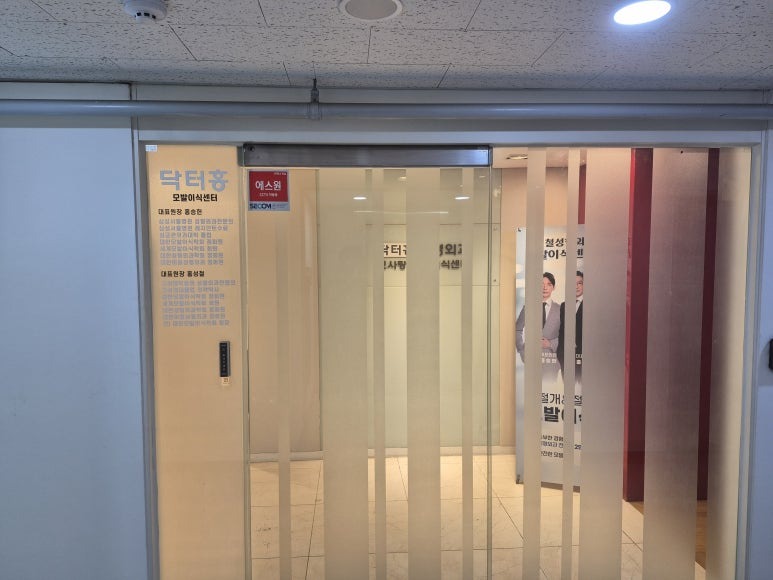
Dr. Hong Plastic Surgery & Hair Transplant Center, Korea
Published cases cover men’s crowns and hairlines, women’s hairlines and other transplant areas. Start with cases matching your own area before discussing the extent of surgery.
9. Eight questions to take to your consultation
2. How many FU and total hairs are planned?
3. What are my donor density, miniaturization rate and safe harvesting area?
4. Why do you recommend FUE, FUT or unshaven FUE?
5. How many single-hair FU will form the leading hairline edge?
6. Is my crown hair loss progressing, and should medication come first?
7. Which steps are performed by the surgeon, graft preparation team and implantation team?
8. Does the total include tax, anesthesia, medication, next-day washing and remote follow-up after I return home?
Frequently asked questions
Are 2,000 hairs the same as 2,000 follicular units?
No. One FU may contain 1–4 hairs. A quote for 2,000 hairs differs from one for 2,000 FU. Ask the clinic to state the billing unit, planned harvested and implanted FU, and estimated total hair count.
Is FUE completely scar-free?
No. FUE leaves scattered small dot scars in the donor area, which may be visible with very short hair. FUT leaves a linear scar. Choose according to donor supply, required count, usual hairstyle and willingness to shave, not just the technique label.
Why can crown work use more donor hair than filling the temples?
The crown often covers a larger area and requires changing angles to follow the whorl. Existing hair may continue to thin, so both present density and future loss need planning. Chasing dense coverage in one area can use up a limited donor reserve too soon.
Can women with crown thinning go straight to surgery?
Do not skip diagnosis. Diffuse thinning in women may also affect the donor area or relate to iron deficiency, thyroid conditions, postpartum changes or alopecia areata. Surgery should be discussed only after the cause is understood, progression is relatively stable and enough healthy donor follicles remain.
When can the final result be assessed?
The first two weeks focus on protecting grafts and washing away crusts. Transplanted shafts often shed after a few weeks. New growth may appear around months 3–4, with more noticeable changes by month 6. Overall results are better judged around months 10–18; the crown can be slower than the hairline.
Is unshaven FUE always better than standard FUE?
No. It can make the donor area easier to conceal initially, but often costs more and takes longer, and may limit the number safely harvested in one session. For a large crown area, donor planning, budget and operating time can matter more than avoiding visible shaving.
Related reading
- MOMO Plastic Surgery clinic guide
- MOJELIM Plastic Surgery clinic guide
- MODUMO Hair Clinic guide
- Korea consultation and medical interpreter checklist
This guide helps you prepare for a hair transplant consultation in Korea and does not replace a scalp examination. Risks include bleeding, infection, folliculitis, temporary shedding, scarring, altered sensation and unsatisfactory density or direction. Outcomes depend on donor supply, ongoing hair loss, the surgical plan and aftercare.