
Before booking a laser package in Korea, find out what you are treating. Red marks, brown marks, indented scars and recurring facial redness can look similar but need different approaches. Several can occur on the same face. A dermatologist’s assessment is more useful than choosing a device first.
Which type of acne mark or scar do you have?
| Appearance | Possible concern | Approaches commonly considered in Korea | Do not confuse it with |
|---|---|---|---|
| New spots, pustules or comedones | Active acne | Diagnose and control inflammation to limit further marks and scarring | A package that only treats existing marks |
| Flat pink or red marks | Post-inflammatory erythema, sometimes with vascular changes | Monitor and control acne; consider vascular lasers such as Vbeam or IPL for persistent, prominent redness | Brown pigmentation |
| Flat brown or grey-brown marks | Post-inflammatory hyperpigmentation | Sun protection and prescribed topical treatment; consider pigment-targeting lasers cautiously when appropriate | Indented scars |
| Deep narrow pits, sharply edged depressions or wave-like unevenness | Ice pick, boxcar or rolling atrophic scars | Consider TCA CROSS, fractional lasers, RF microneedling or subcision according to scar type | A single device that treats every scar |
| Raised, firm, thick scars | Hypertrophic scars or keloids | A doctor may consider treatments such as intralesional injections | Indented acne scars |
| Recurring central facial flushing, burning, bumps or eye discomfort | Possible rosacea | Dermatological diagnosis, medication, gentle skincare and trigger management; light-based treatment for selected symptoms | Ordinary acne |
Treat active acne before tackling the marks and scars it leaves
Ongoing inflammation can keep producing new marks and scars even while old marks are being treated. A dermatologist will assess comedones, inflammatory lesions and nodules before choosing topical or oral treatment. Flat red and brown marks may gradually fade as inflammation settles, but established indented scars generally do not disappear with hydration, cleansing or one laser-toning session.
Photographs of the front and both sides of the face under consistent lighting can help document active acne, flat marks and depressions. They do not replace diagnosis, but they make follow-up comparisons more useful and reduce the chance of mistaking different lighting for a scar being filled in.
Red acne marks and persistent redness: what Vbeam targets
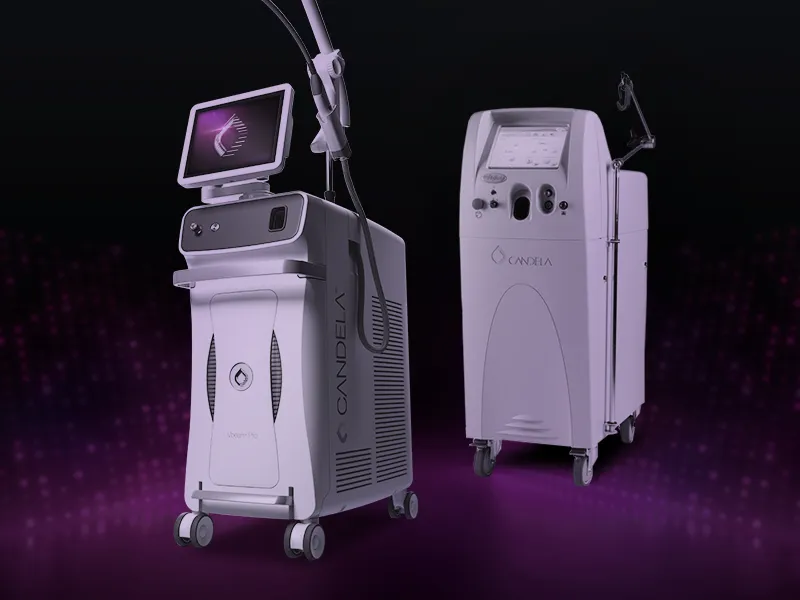
Post-inflammatory redness may persist after acne clears, but not every red area needs laser treatment. For marked redness or visible vessels, a doctor may consider Vbeam pulsed dye laser or, in some cases, intense pulsed light (IPL). Vbeam targets vascular redness; it does not resurface indented scars. Rosacea with flushing, burning and recurring bumps needs a separate assessment rather than settings copied from a routine acne-mark treatment.
One checked Korean promotion listed a Vbeam Perfecta session at around KRW 110,000. This does not establish the price of other models, areas or a full-face session. Confirm the device, treatment area, session or course, tax and soothing aftercare. Temporary redness or swelling can occur, and some settings may cause purplish spots. Ask the doctor about recovery before fitting treatment into a busy trip.
Brown acne marks: stronger picosecond laser settings are not always better
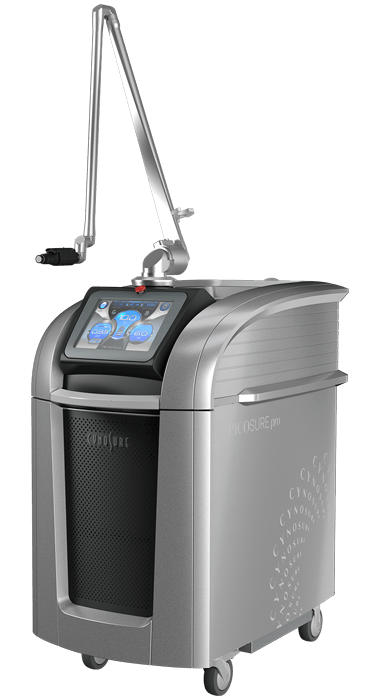
Brown marks are commonly post-inflammatory hyperpigmentation. Sun protection and controlling new acne are the foundation. Depending on tolerance, a doctor may consider topical azelaic acid or retinoids. Picosecond and other pigment-targeting lasers are options for selected patients, not a reason to increase energy whenever a mark is darker. Recent sun exposure, darker skin, a tendency to pigmentation, peeling or irritated skin and active breakouts all warrant careful assessment of post-treatment darkening.
Public Seoul promotions show basic picosecond laser-toning sessions at roughly KRW 40,000–100,000. This is not a standard price for every device or mode. Check the model, area, mode, number of sessions, tax and aftercare. Flat brown marks should not automatically be sold a more intensive scar-treatment package.
Indented scars: assess their shape before choosing POTENZA
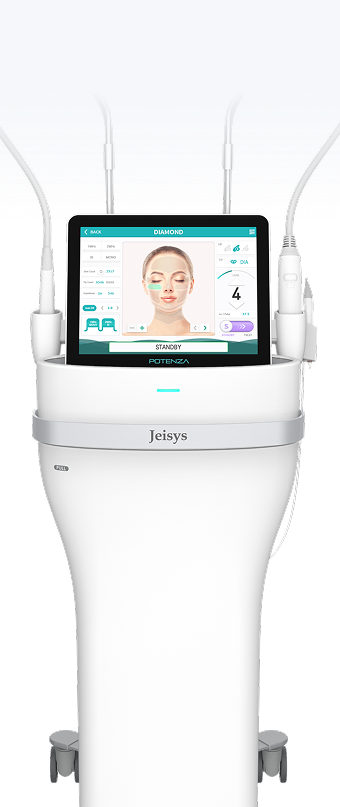
POTENZA delivers radiofrequency energy through needles inserted into the skin. It may be used for some shallow to moderately deep atrophic scars, enlarged pores and texture concerns. It does not automatically release every tethered rolling scar or guarantee correction of narrow, deep ice pick scars. RF microneedling with product delivery is not one fixed treatment: the tip, depth, area and additional products affect the plan and price.
Korean promotional prices for basic full-face POTENZA treatment range around KRW 130,000–320,000 per session. Scar-specific tips, LDM or products such as Juvelook can change both the treatment and cost. These are examples, not fixed prices across clinics. Ask for the tip type, area, disposable supplies, product and amount to be itemised.
Why ice pick, boxcar and rolling scars need different approaches
| Scar type | What a doctor may consider | Why one laser protocol is not enough |
|---|---|---|
| Ice pick: narrow openings with deep, pin-like depressions | Focal TCA CROSS using high-concentration trichloroacetic acid; small-scar excision or punch techniques when appropriate | Superficial full-face treatment may not reach the problem. TCA requires precise application by an experienced doctor; incorrect treatment may widen scars or cause pigmentation |
| Boxcar: depressions with relatively distinct, steep edges | Fractional laser or RF microneedling depending on depth; deeper, steep-sided scars may need focal treatment | Shallow and deep boxcar scars can require different settings and techniques |
| Rolling: broad depressions with less defined edges and an undulating appearance | Subcision if fibrous bands tether the scar, followed by assessment for fractional laser, RF microneedling or adjunctive filler | Surface resurfacing alone may not release tethering; subcision carries risks including bruising and haematoma |
| Mixed: several scar shapes in the same area | Map each type and combine treatments by area and across sessions | One setting applied across the entire face may not address every depth |
Subcision means a doctor uses an instrument to release fibrous bands beneath a scar. It is not automated injection or needle-free delivery. TCA CROSS is focal chemical reconstruction of individual scars, not a full-face acid peel. Raised scars and keloids require a different approach from the atrophic scars in the table.
Combining fractional laser, RF microneedling and injectable products
Fractional lasers, including fractional CO₂ or erbium lasers, create small treatment zones to encourage skin remodelling. RF microneedling uses needles and radiofrequency energy. Both may suit certain atrophic scars, but their recovery, pigmentation risks and appropriate scar types differ. Skin tone, current inflammation, previous darkening and acceptable downtime should guide the choice.
Some plans combine subcision, fractional laser or RF microneedling with hyaluronic acid filler or products such as Juvelook. These injectables are adjuncts for selected depressions, not a way to cure every scar by filling it. The doctor should specify the injection depth, product variant, amount and sequence. Juvelook powder content, diluted volume and the amount actually used are different measures. Different procedures should not be forced into one day.
Some Korean clinics offer MiraJet with collagen-stimulating products. The manufacturer describes laser-induced pressure delivering liquid into the skin through microjets without needles. This does not make MiraJet equivalent to subcision, fractional laser or RF microneedling simply because it is promoted for scars. For a MiraJet and Juvelook plan, confirm the Juvelook variant, amount, treatment area and scar type being targeted.
Why rosacea needs more than an acne package
Rosacea can involve repeated flushing, persistent central facial redness, burning, stinging, visible vessels or acne-like bumps and pustules. Some people also develop eye symptoms. It can coexist with acne, and appearance alone is not enough for self-diagnosis. Treatment follows the main symptoms: topical or oral medication for bumps and pustules, and vascular laser such as Vbeam or IPL for selected redness and vessel concerns. Gentle cleansing, moisturising, sun protection and avoiding personal triggers remain part of care.
During a rosacea flare, pronounced stinging or an unstable skin barrier, intensive peeling, frequent acid treatments, fractional resurfacing and multiple energy-based procedures should not be stacked together. Laser and light treatments help selected symptoms; they do not replace ongoing management or guarantee that symptoms will not return.
Planning treatment during a short stay in Korea
- Start with classification: document active acne, flat red and brown marks, the three main atrophic scar patterns and possible rosacea.
- Address active problems first: during breakouts, marked irritation or a rosacea flare, discuss inflammation control and skin tolerance before scheduling multiple devices.
- Choose a specific treatment goal: vascular redness, pigment, tethering and surface depressions need different approaches. Ask why the proposed treatment fits and whether sessions should be separated.
- Allow time for recovery and review: ask about redness, bruising, crusting and pigmentation, and how to contact the clinic after returning home. Avoid cramming multiple invasive procedures into a short trip.
Six questions to ask at your consultation
- Do I have active acne, redness, pigmentation, atrophic scars, rosacea or a combination?
- Which scars are ice pick, boxcar or rolling? Is there tethering or raised scarring?
- Why this device, TCA CROSS or subcision? Is there an option with less downtime?
- Can the quote specify the device, model, mode, area, tip or applicator and any injectable product?
- Is the price per spot, area, full face, session or package? Does it include tax, anaesthesia, consumables and follow-up?
- How are redness, bruising, crusting, darkening or infection managed, and whom do I contact after returning home?
Frequently asked questions
Are red marks, brown marks and indented scars the same?
No. Red marks commonly reflect post-inflammatory erythema; brown marks often reflect post-inflammatory hyperpigmentation. Atrophic scars are depressions in the skin’s structure. They can occur together.
Can Vbeam or picosecond laser toning flatten indented scars?
Usually not. Vbeam mainly targets vascular redness and picosecond toning targets pigment. Indented scars first need assessment as ice pick, boxcar or rolling scars.
Do all rolling scars need subcision?
No. A doctor may consider it when there is significant fibrous tethering. Whether to combine it with fractional laser or RF microneedling depends on scar shape, skin characteristics and risk.
Is laser alone enough for rosacea?
Usually not. Rosacea needs dermatological diagnosis and may require medication, gentle skincare and trigger management. Lasers and light primarily address selected persistent redness and vascular changes.
Can acne scars be treated in one session?
This cannot generally be promised. Mixed scars often need different techniques over several sessions. Recovery, session count and results vary with scar depth and the individual’s skin.
This article provides general information and does not replace individual diagnosis or treatment by a dermatologist. Prices are examples from public clinic promotions; confirm the exact treatment, tax and itemised quote with the clinic.