
Does a nose operation always require cartilage from your ribs? Usually not. The bridge, tip, columella and nostril rims need different types of support. The choice depends on how much tissue is missing, how much support is needed and any previous surgery. Some patients need only septal or ear cartilage; others may need rib cartilage after repeated revisions, contracture or congenital tissue deficiency.
Five common materials: what is each used for?
| Material | Common uses | Main advantages | Questions for your consultation |
|---|---|---|---|
| Septal cartilage | Supporting the tip and columella; modest lengthening or projection | Relatively straight and available within the nose; often among the first autologous graft options considered | Is enough left? Have you had septal surgery? Could harvesting affect support or breathing? |
| Ear cartilage | Tip coverage, alar rims and softer contours | Curved and flexible, with a natural feel where a soft transition is needed | Harvest site and incision; whether it provides enough support; scarring and ear asymmetry |
| Autologous rib cartilage | Greater projection or lengthening, columellar reconstruction, contracted noses and multiple revisions | An abundant, strong source that can be carved into larger structural grafts | Chest incision, pain and recovery; warping, infection, resorption and possible further surgery |
| Donor rib cartilage | Structural support without creating a chest donor site | Avoids harvesting your own rib cartilage and the associated surgical step | Source and product identity, processing, storage and traceability; infection, resorption and warping |
| Silicone and other synthetic implants | Primarily bridge height and profile | Shape and height can be planned without harvesting your own tissue | Placement, edges and skin tension; displacement, visibility, infection and capsule-related problems |
Septal and ear cartilage: different roles, not a lower grade
Septal cartilage is inside the nose, relatively straight and close to the operative site. It is often used to support the tip and columella. The American Society of Plastic Surgeons lists it as the most commonly used autologous cartilage source for rhinoplasty. However, a small nose, previous septal surgery or repeated revisions may leave insufficient cartilage.
Ear cartilage has a natural curve and is softer, making it useful for tip coverage or the nostril rims. It is not a universal substitute for structural support. Harvesting aims to preserve the main framework of the ear, but ask about the incision, scarring, local depressions and asymmetry.
Your own rib cartilage: strong support, with an additional donor site
Autologous rib cartilage may be useful when larger structural grafts are needed, such as in a markedly short or contracted nose, severe septal deficiency, repeated revision surgery or congenital deformity. Its volume allows the surgeon to carve and secure grafts for the bridge, tip or columella.
The trade-off is a chest incision and additional recovery. A 2026 systematic review reported generally low infection and warping rates with both autologous and donor rib cartilage, but differences between studies mean neither is risk-free. Ask which rib will be used, the incision length, how warping is addressed, and the expected chest discomfort and return to activity.
Donor rib cartilage: no chest harvest, but the source still matters
Processed donor rib cartilage can be used for revision rhinoplasty or structural reconstruction. Its main practical advantage is avoiding a second surgical site on your chest. This differs from a living organ transplant, so organ-rejection terminology cannot simply be applied. The tissue source, processing or sterilization method, storage conditions and traceability remain important.
Do not accept a quote that only says “donor rib.” Ask for the material name, manufacturer or tissue-bank details, identifiable packaging and records, and the plan if infection, resorption or shape changes occur. Avoiding a chest scar does not eliminate graft-related risks.
Silicone, cartilage and “implant-free” surgery are not the same thing
- Silicone: a synthetic implant generally used for bridge height and profile; the tip may be supported separately with your own cartilage.
- All-autologous cartilage: your own cartilage is used mainly for both the bridge and tip, usually requiring more harvesting and shaping.
- Implant-free rhinoplasty: usually means no silicone or other synthetic implant, such as ePTFE. It does not mean no grafts; septal, ear or rib cartilage, fascia or dermis may still be used.
“Comprehensive rhinoplasty” is therefore not one fixed package. A quote should itemize bridge and tip materials, nasal bone osteotomies, alar reduction, septal correction and any functional nasal surgery.
Why material choices differ between first-time and revision surgery
In primary surgery, septal and ear cartilage and the skin-soft tissue envelope are usually more intact. Revision surgery may involve an old implant, scars, adhesions, cartilage loss or contracture. Grafts may need to rebuild support, not simply add height. Rib cartilage may be considered more often after several operations, but remaining tissue ultimately determines the plan.
Bring previous operation records, implant or cartilage details, photographs from different recovery stages, and information about nasal obstruction or breathing difficulties. Implant removal, capsule or scar treatment and septal reconstruction all affect the material choice and price.
Rhinoplasty prices in Korea: 2026 reference ranges
| Procedure | Published price range (KRW) | What to confirm in the quote |
|---|---|---|
| Primary rhinoplasty: septal/ear cartilage, implant-free or combined approach | Approximately KRW 1,450,000–3,200,000 | Materials for the bridge and tip; whether anesthesia, medication, VAT and follow-up are included |
| Autologous rib cartilage rhinoplasty | Approximately KRW 3,300,000–5,200,000 | Rib harvesting and chest wound care; extra charges for osteotomy, alar reduction or functional surgery |
| Standard revision rhinoplasty | Approximately KRW 2,700,000–4,800,000 | Old implant removal, capsule treatment, cartilage reconstruction and material fees |
| Contracted nose, multiple revisions or complex reconstruction | Written quote after an in-person assessment | Previous operations, infection history, skin tension, available cartilage and functional reconstruction needs |
These ranges summarize Korean promotional and procedure listings in 2026, not standard fees at every clinic. Lower advertised prices may cover only a basic operation. Osteotomies, alar reduction, septal correction, sedation, rib cartilage, revision surcharges and VAT can change the total. Compare written, tax-inclusive quotes for the same materials, surgical scope and operating surgeon.
Recovery: splint removal is only the first stage
- Around one week: packing and external support depend on the operation; the splint is commonly removed at about one week.
- One to two weeks: prominent bruising and swelling usually start to settle, and some routine activities may resume. The final shape is not yet visible.
- One to three months: swelling continues to decrease in the bridge and tip; texture and contours keep changing.
- Six to twelve months: tip definition and complex revision results gradually settle. Assessing the final result often takes close to a year.
If your own rib cartilage is used, allow for chest wound recovery and activity restrictions when planning your return home. “Splint removal on day seven” does not mean “fully recovered on day seven.”
Korean rhinoplasty clinics to consider
The following three clinics publicly list rhinoplasty, functional nasal surgery or revision rhinoplasty. Take the same questions to each consultation and compare explanations of graft choice, bridge and tip structure, breathing and the limits of revision surgery.
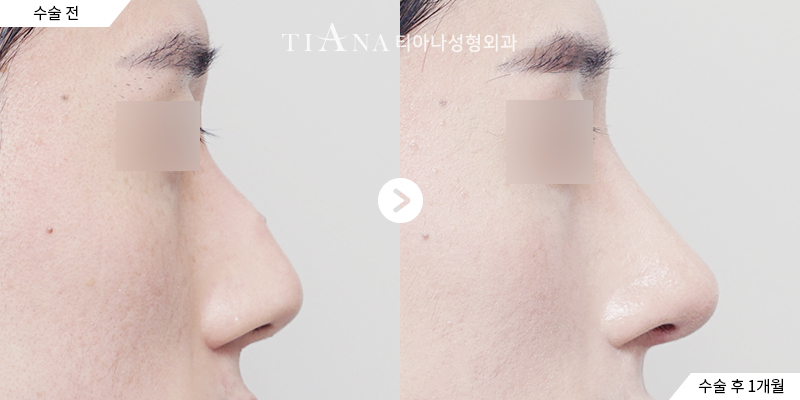
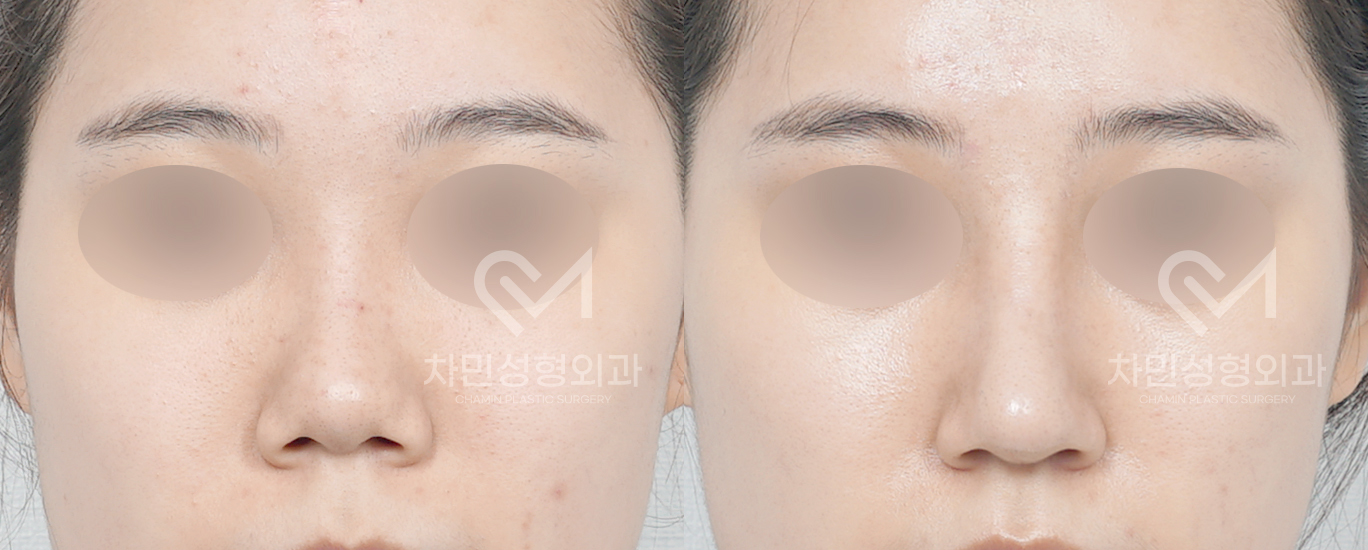
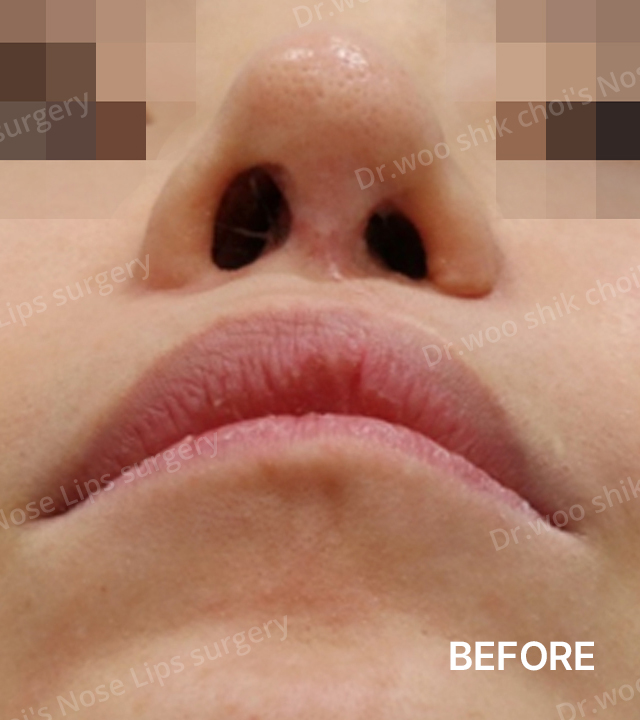
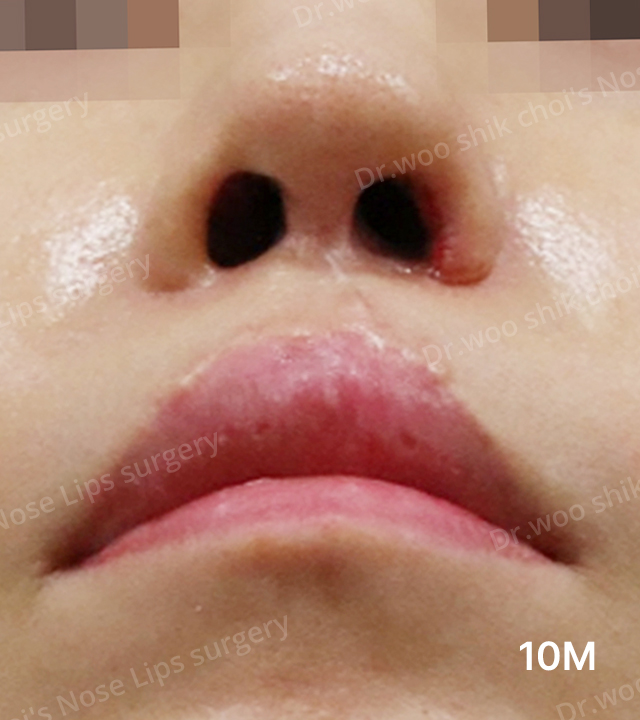
Consultation photograph from the clinic’s official website
Tiana Plastic Surgery
Listed procedures include primary, revision, functional and male rhinoplasty. It may be relevant if you want to discuss appearance, septal anatomy and breathing concerns together.
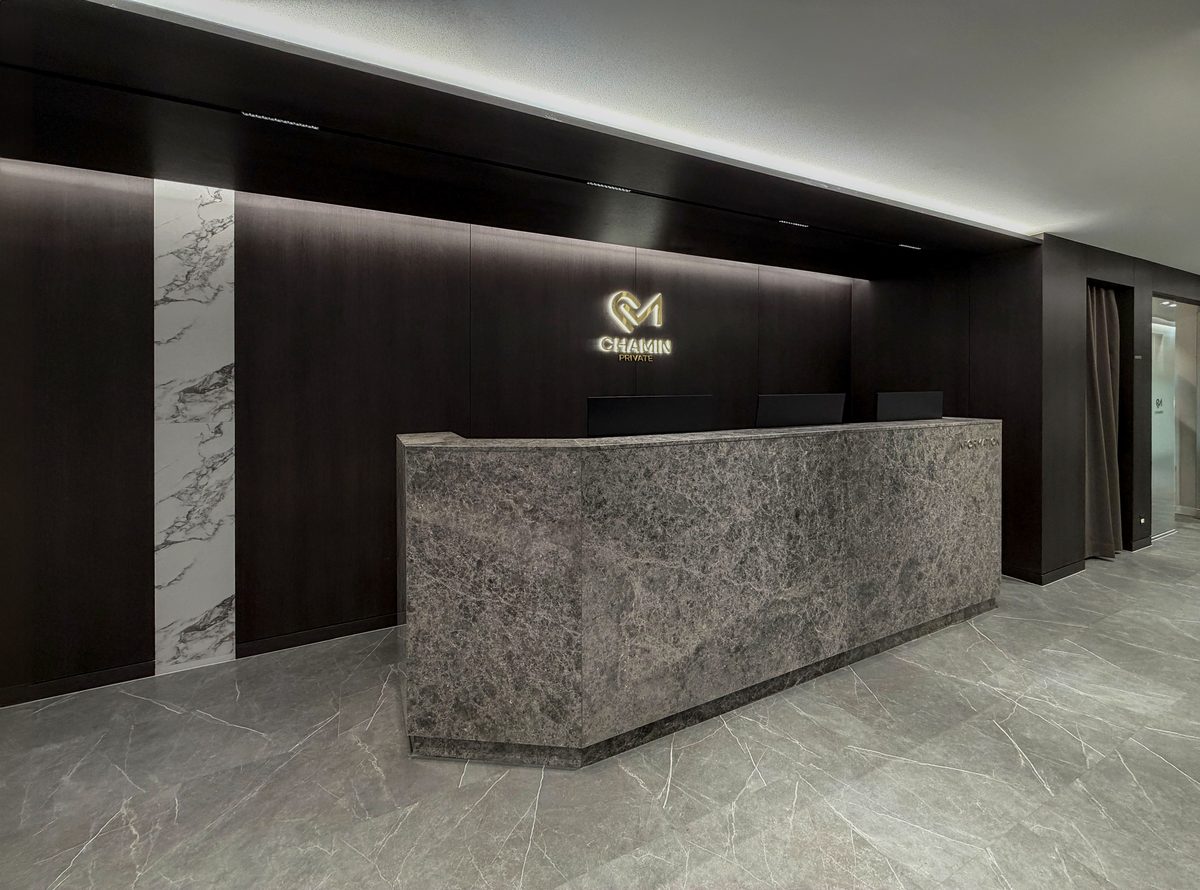
Chamin Plastic Surgery
Listed procedures include primary and functional rhinoplasty, contracted noses, multiple revisions and autologous rib cartilage surgery. A consultation may be relevant where available cartilage is limited or stronger reconstruction is needed.

Noselips Plastic Surgery
Listed services focus on complex revision, contracted noses, nostril asymmetry, functional nasal surgery and secondary cleft-lip nasal deformity. It may be relevant for patients with a complicated surgical history who need revision planning.
Frequently asked questions
Is my own rib cartilage always the best option?
No. It provides abundant material and strong support for major reconstruction or insufficient septal cartilage. Where existing anatomy allows, septal or ear cartilage may be enough; a chest harvest is not necessary just to choose a supposedly “premium” material.
Will ear cartilage harvesting change the shape of my ear?
Careful harvesting aims to preserve the main framework and usually avoids an obvious shape change. Still, discuss the incision, scarring, asymmetry and possible localized depressions beforehand.
Is donor rib cartilage rejected like a transplanted organ?
It differs from a living organ transplant, but it is not risk-free. Check sourcing, processing and storage, and discuss infection, resorption, warping and the possibility of further surgery.
Does implant-free rhinoplasty mean no material is added?
No. It usually means avoiding synthetic implants such as silicone. Septal, ear or rib cartilage, fascia or dermis may still be used.
Is the nose in its final shape when the splint comes off?
No. The splint is often removed at around one week, while swelling continues to change for months. Tip definition and complex revision results commonly take six to twelve months to settle.
This guide helps you prepare for a rhinoplasty consultation in Korea. It does not replace a plastic surgeon’s assessment of nasal anatomy, breathing and previous implants or grafts. Prices reflect public 2026 listings; obtain a final written quote including taxes from the clinic.